To strengthen the public trust in the healthcare system, more transparent procedures, clear outcomes for reported cases of suspected corruption, and consistent sanctioning of abuses are essential. This would be supported by introducing a uniform procedure that would standardize the work of all ethics committees and clearly define how complaints are investigated, facts are established, and decisions are made.
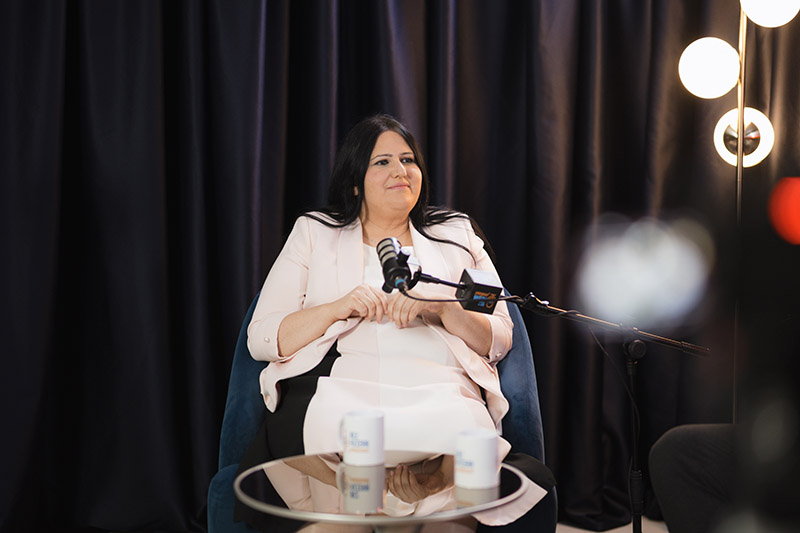
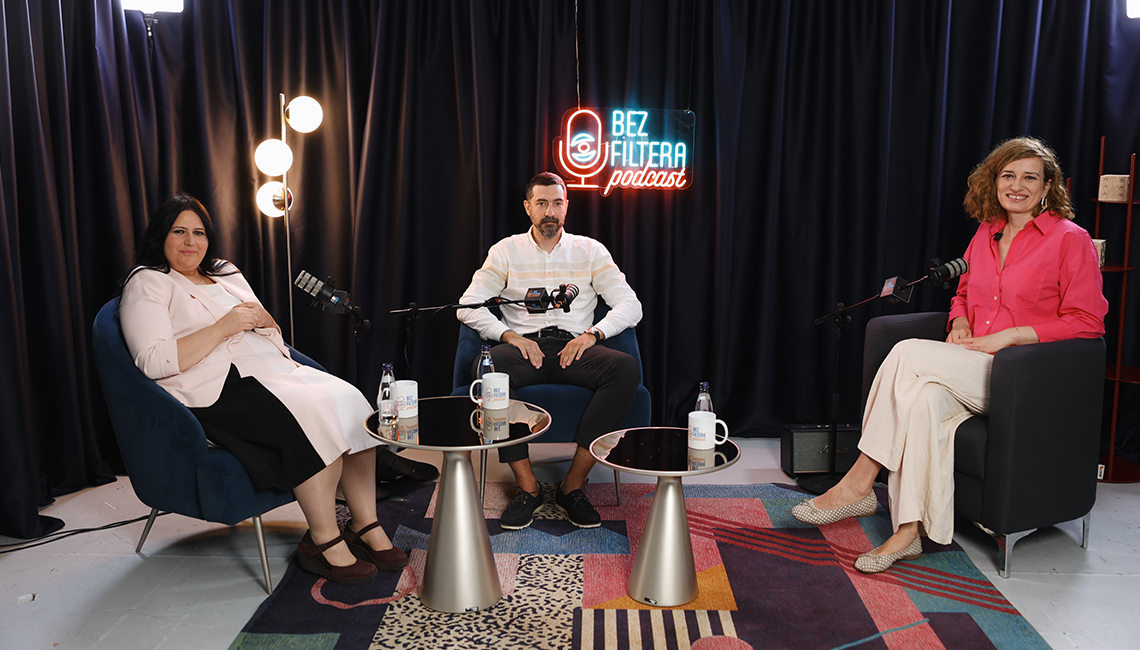
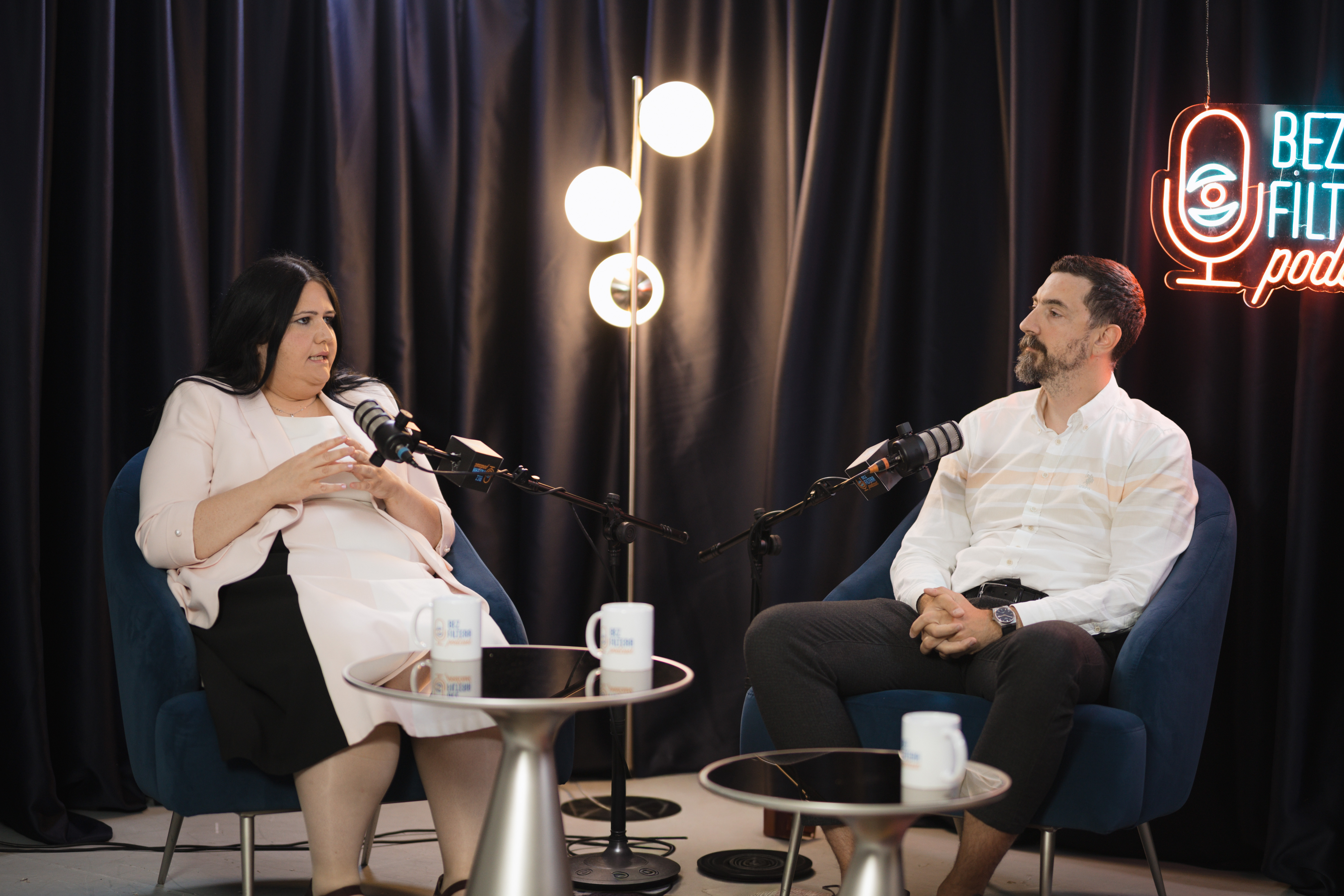
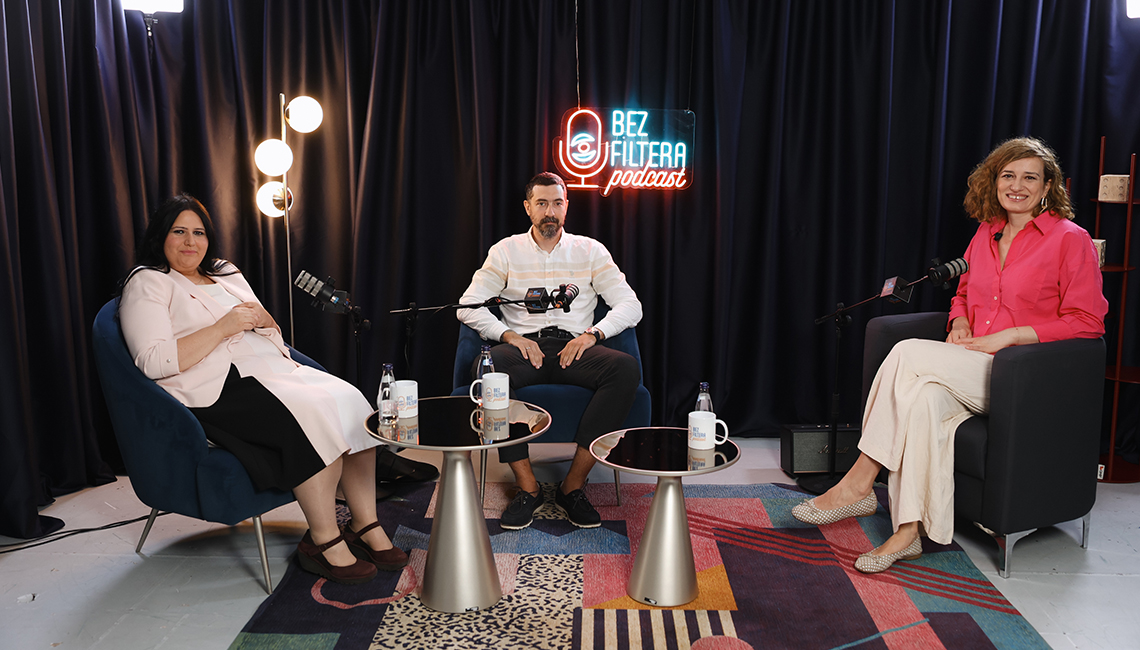
This was emphasized in the tenth episode of our podcast "Without Filter," titled "How Much Do We Trust the Healthcare System?", featuring Assoc. Prof. Milena Cojić, MD, PhD, State Secretary at the Ministry of Health, and Dr. Nemanja Stankov, Head of the Public Policy Research Department at CeMI.
Cojić stated that citizens recognize certain forms of corruption in healthcare, but are not always aware that certain everyday practices can also constitute corrupt behavior or a conflict of interest.
"Citizens most commonly recognize giving money or gifts, but there are other behaviors that may constitute corrupt acts or raise suspicions of corruption, which we often fail to perceive as such," Cojić said.
As examples, she cited unjustifiably jumping the line when scheduling appointments through personal connections, intentionally creating artificial waiting lists to redirect patients to the private healthcare sector, and accepting money, gifts, or other benefits in connection with healthcare delivery.
"If someone gets an examination before others without medical justification simply because they know someone, that constitutes unequal treatment of patients and can be a form of corrupt behavior. The same applies to any intentional creation or maintenance of waiting lists to benefit anyone or to redirect patients to the private sector," Cojić noted.
According to her, there have been no officially reported corrupt acts in the healthcare system to date, nor any final convictions confirming corruption in this field.
Cojić stated that over the past three years, 11 laws and 41 bylaws have been adopted, including the Law on Healthcare and legislation governing data management and digital health.
She particularly highlighted that the Law on Healthcare recognizes medical error for the first time, as well as the option to report a healthcare worker to an ethics committee.
"Anyone who has noticed and suspected a medical error can report the healthcare worker to the ethics committee, which then makes an appropriate decision," Cojić said.
As she explained, the Ministry of Health was also granted the authority to restrict the operations of a healthcare facility or an individual department if serious failures, medical errors, or neglect of professional duties are established.
Cojić clarified that the operation of quality control commissions has also been modified, noting that foreign experts are now included in their work to ensure evaluations are more objective and transparent.
"Commissions should not only serve to punish, but also to implement measures that prevent errors from recurring. The point is not just finding fault and handing out punishment, but doing everything possible to ensure such mistakes do not happen again," she stated.
According to her, the investigation into several fatal cases that reached the public resulted in the adoption of new guidelines and protocols.
The introduction of more than 3,000 protocols into the healthcare system was announced, ensuring that patients receive equal treatment whether they are being treated in Bar, in the northern part of the country, or in Podgorica.
"Introducing these protocols means that a patient in Bar will receive the exact same treatment as a patient in the north or in Podgorica," Cojić said.
Speaking about public dissatisfaction, Cojić cited waiting lists as an example. Previously, appointments were only opened for limited time slots, leaving a large number of patients unable to schedule an examination at all.
"You used to have patients who managed to snag an appointment for a month or two out, while an entire group of patients couldn't access an appointment at all," Cojić explained.
"By introducing transparent waiting lists, the true number of citizens waiting for a specific healthcare service became visible for the first time. Previously, some patients managed to schedule an examination within a month or two, while many others had no appointment at all and were not even registered as waiting. Today, every patient receives an appointment, even if it might be several months away. This may give the impression that waiting lists are longer than before, but in reality, we finally have an accurate picture of citizens' needs.
Only when we know how many people are genuinely waiting for a given service can we strategically expand capacity, reallocate resources, organize additional work, and measure the impact of measures taken. In other words, waiting lists can only be systemically shortened once they are fully transparent and account for every patient requiring that service."
Cojić emphasized that while public perception is important, it cannot be the sole indicator of the state of the healthcare system.
Stankov noted that regardless of the research agency or methodology used, healthcare has consistently ranked near the top of sectors perceived by Montenegrin citizens as the most corrupt.
"You will almost always find the healthcare sector near the top of all sectors in Montenegro when it comes to how widespread citizens perceive corruption to be," Stankov said.
He identified the way healthcare services are accessed as a key source of this negative perception—specifically the ability to shorten waiting times through money, favors, acquaintances, or personal connections.
"Most people believe they can shorten their waiting time, whether through informal payments, favors, money, or by leveraging acquaintances and connections," Stankov said.
He assessed that relying on personal connections is part of a broader social pattern where people do favors for one another with the expectation that they will be returned.
"If you have a system built on the exchange of social capital, where we like doing favors for others expecting a return favor down the line, it is completely logical that this pattern bleeds into every fiber of society, healthcare included," Stankov said.
For this reason, as he noted, many citizens do not view the so-called "tipping" or gifting of doctors as an act of corruption, but rather as an expression of gratitude and a practice that has long been socially acceptable.
"Most people in Montenegro do not view giving gifts or money to doctors as a corrupt act, but as a form of gratitude, because, quote-unquote, that is how it has always worked," Stankov said.
Changing this mindset, Stankov believes, cannot be confined to healthcare alone; it must be part of a broader societal transformation.
He warned that corruption in healthcare is not limited to interactions between patients and medical staff.
"Corruption in healthcare can be a multilayered issue. We primarily focus on how an individual accesses healthcare services, but corruption can also be systemic and institutional," Stankov said.
Risks also exist in the public procurement of medical equipment, pharmaceuticals, and other supplies, making complete transparency of the entire process essential.
"Healthcare is also vulnerable to corruption in the context of non-transparent procurements of various equipment, pharmaceuticals, and other items that must remain under public scrutiny," Stankov warned.
As an important measure, he mentioned the establishment of a "track and trace" system, which would digitally monitor the process from assessing the need for equipment and pharmaceuticals to their procurement and delivery to end users.
CeMI's research, as Stankov recalled, shows that citizens most often do not report corruption because they do not believe a report would lead to concrete change or improve their access to healthcare.
"The predominant response from citizens when asked why they did not report corruption is that they do not believe a report would fundamentally change anything or improve their access to healthcare," Stankov said.
As he explained, citizens see no long-term benefit in entering the reporting process.
Stankov also noted that since 2016, there have been no individual convictions for corruption in healthcare within the Montenegrin judicial system.
Under the new legal solutions, ethics committees in healthcare institutions have been assigned the role of first instance in handling complaints and suspicions of corruption between patients, doctors, and other medical staff.
Stankov, however, warned that it remains unclear whether these bodies are properly equipped for this new role.
"I think we need to examine whether ethics committees in their current form are equipped to deal with complaints and allegations of corruption," Stankov said.
Ethics committees are mostly composed of healthcare workers, yet they are expected to establish facts and assess whether corrupt behavior has occurred.
"As an ethics committee, you are expected to establish facts, yet you are mostly doctors and not from a profession trained to determine whether a corrupt act actually took place," Stankov explained.
An analysis of the rules of procedure for committees in healthcare institutions, as he noted, showed that the procedures for handling complaints are not detailed enough.
"Those rules of procedure lack a detailed framework for handling cases in this context," Stankov said.
For this reason, he proposed drafting a uniform procedure applicable to all ethics committees, so that it is clear exactly how a complaint is investigated, how facts are established, and what the outcome of the process is.
"A uniform procedure needs to be created for how committees proceed when a suspected case of corruption is actually reported," Stankov stated.
He identified another issue: most patients are likely unaware that bodies exist within healthcare institutions where they can report suspected corruption.
"The vast majority of patients would probably not know that a body exists within the institution itself to deal with these issues," Stankov said.
Cojić supported the proposal for ethics committee members to undergo additional training and for their work to be standardized through protocols and standard operating procedures.
"Educational workshops should definitely be organized, and protocols and standard operating procedures should be adopted to unify the work of all ethics committees in Montenegro's healthcare institutions," Cojić said.
According to her, many citizens, as well as healthcare workers, are not sufficiently familiar with all forms of corruption and conflicts of interest.
"Not everyone is aware of what constitutes a corrupt act in healthcare. Sometimes a citizen feels they are not committing a corrupt act, but when you analyze the consequence, you see it has a corrupt effect," Cojić said.
She urged citizens to report any suspicion of corruption, but also to show greater solidarity and responsibility toward the healthcare system, keeping in mind that certain patients must take precedence due to their medical condition.
"We must realize that we all share this healthcare system and that not everyone can be seen immediately. There are people whose need for an appointment at that given moment is far greater," Cojić said.
At the same time, healthcare workers and associates must improve communication with patients and better understand which behaviors may carry a corrupt character.
Cojić stated that the Ministry of Health monitors patient complaints daily, alongside both quantitative and qualitative indicators of healthcare institutions' performance.
"A large number of complaints arrives every day. Some are grounded, others unfounded, but grounded complaints are always routed to the appropriate institution, and we are constantly updated on the actions taken," Cojić said.
Cojić emphasized that the success of public policies must be evaluated by combining patient experiences and complaints with measurable data on the number of examinations, surgeries, service availability, and quality of care.
"A combination of qualitative, quantitative, and objective parameters is required, along with cooperation with citizens and the non-governmental sector," Cojić concluded.
The tenth episode of the podcast was produced as part of a sub-grant under the project "Society Against Corruption in Montenegro and Western Balkans Region."