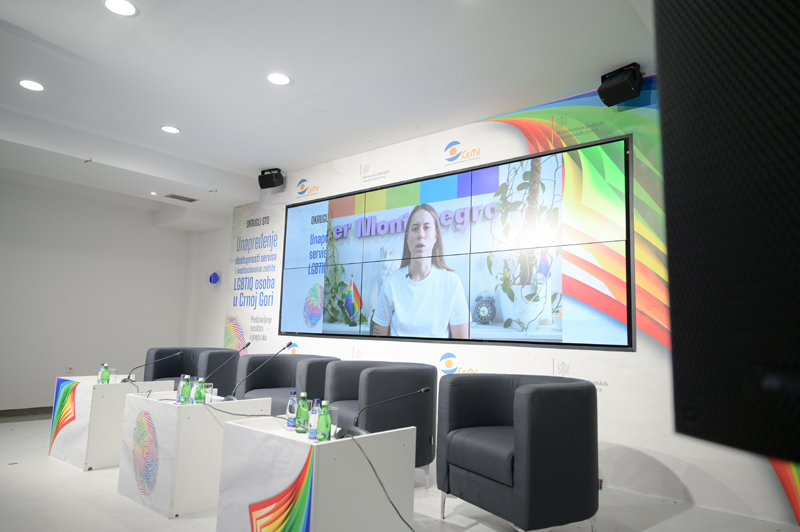
An interactive support map for LGBTIQ individuals, which aggregates data on trained health and social workers as well as contact persons in local self-governments, will facilitate access to services; however, high-quality institutional protection requires empathy in addition to professional qualifications.
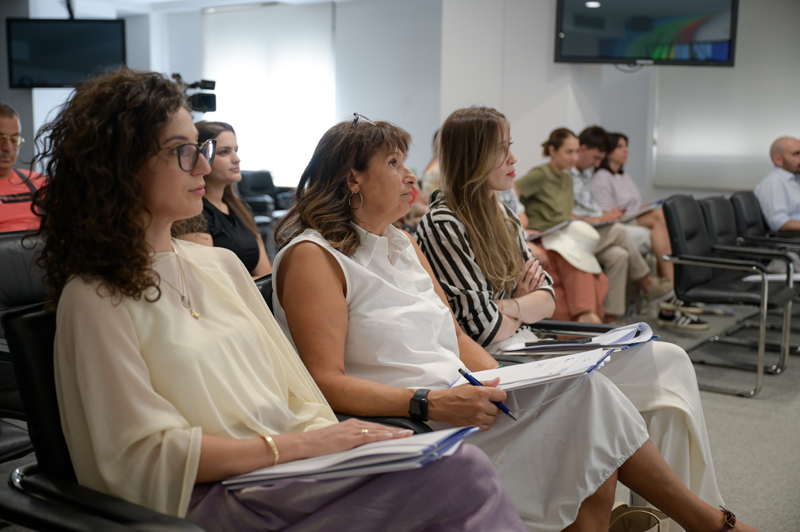
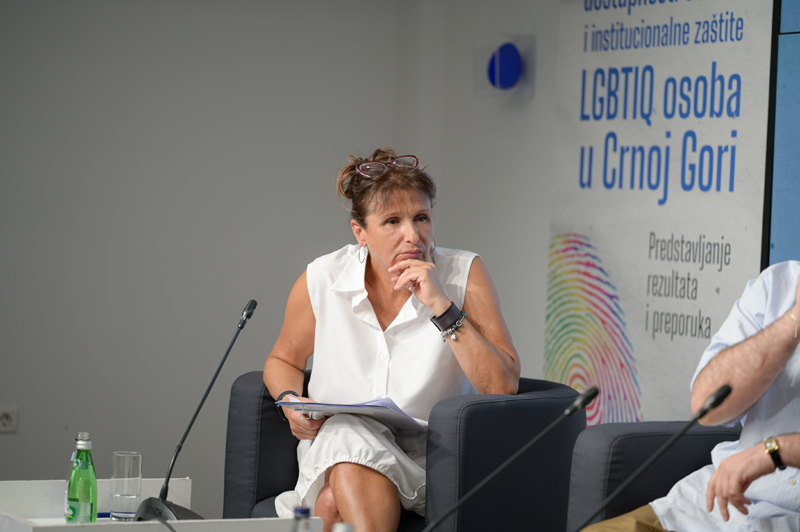
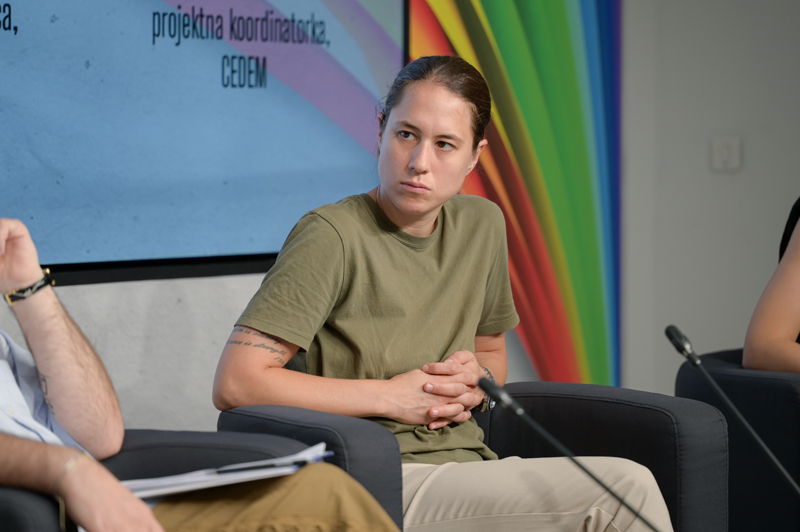
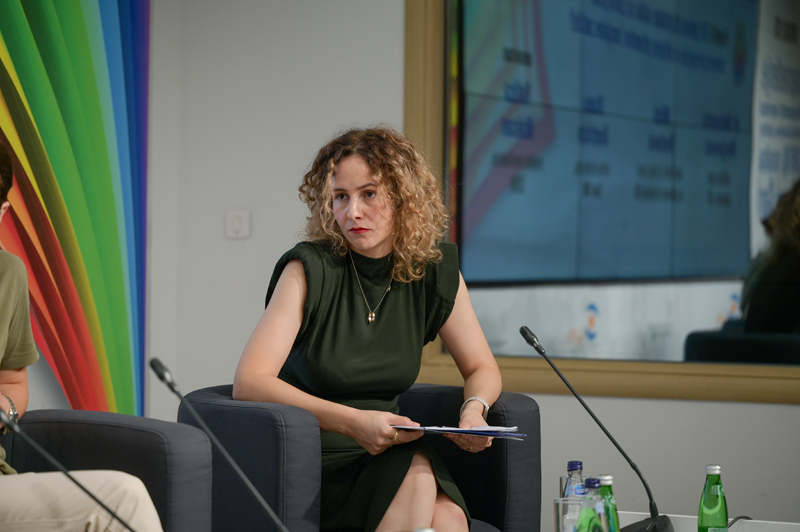
This was the message delivered at the round table “Improving the Accessibility of Services and Institutional Protection for LGBTIQ Persons in Montenegro Presentation of Results and Recommendations,” organized by CeMI.
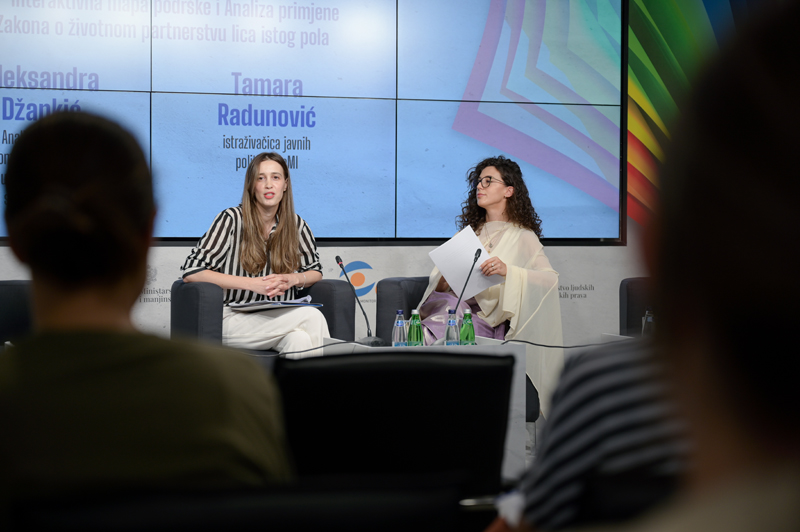
Public Policy Researcher at CeMI, Tamara Radunović, emphasized that in recent years Montenegro has made significant progress in establishing a legislative framework for the protection of human rights and the advancement of the position of LGBTIQ individuals.
“However, the adoption of laws is not the end of the process. Their true value is reflected in how consistently they are applied and to what extent the rights they guarantee are actually accessible to citizens in their daily lives. This is particularly important in the fields of healthcare and social protection, where citizens exercise some of their most sensitive rights,” Radunović stated.
She pointed out that it is crucial for citizens to be able to exercise their rights without obstacles, to have trust in institutions, and to know where they can receive appropriate support.
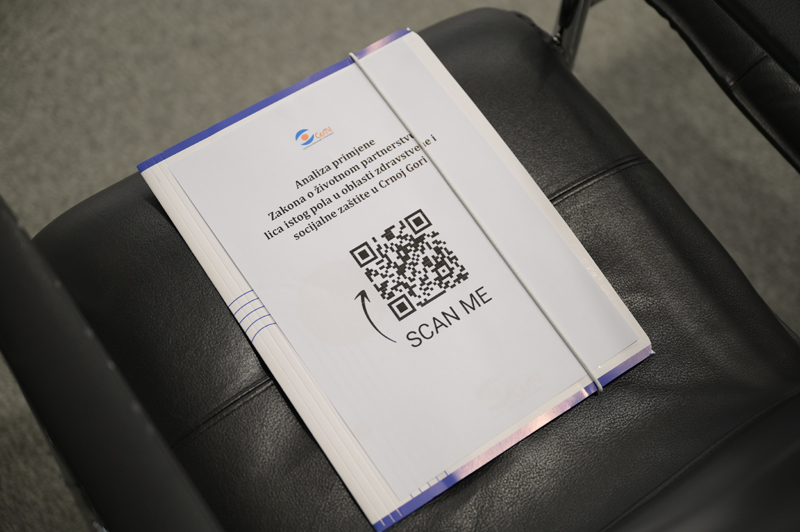
Radunović said that within the scope of the project, they prepared the Analysis of the Implementation of the Law on Same-Sex Life Partnership in the Field of Healthcare and Social Protection, as well as an Interactive Support Mapa publicly available digital tool designed to simplify access to information.
“Through the analysis of the legislative and institutional framework, institutional practices, decisions of the Protector of Human Rights and Freedoms, and interviews with representatives of institutions and service users, we sought to examine how the rights guaranteed by law are exercised in practice and where room for improvement exists,” Radunović said.
Parallel to this, as she added, they collected and systematized data on healthcare and social workers who completed specialized training for working with LGBTIQ persons, as well as contact persons for LGBTIQ rights in local self-governments operating within the Network for LGBTIQ Rights.
“In this way, a foundation was created for the development of the Interactive Map, which aggregates information on available support mechanisms in one place,” Radunović explained.
She noted that they also included the community itself in this process, stating that they spoke with members of the LGBTIQ community about their experiences in exercising rights within the healthcare and social protection systems.
“Their insights helped us better understand the obstacles they encounter, while also enabling us to shape the interactive map in accordance with the real needs of its future users,” Radunović said.
Radunović stated that CeMI believes the map will contribute to easier access to information, greater availability of support, and the strengthening of trust between citizens and institutions.
She explained that to create the Interactive Map, they gathered data from all public healthcare and social welfare institutions, as well as contact persons who are part of the Network for LGBTIQ Rights in local self-governments.
“We then drafted standardized questionnaires one used to map trained staff in public healthcare and social institutions, and another serving as a Semi-Structured Interview Guide for the interviews we conducted with LGBTIQ individuals,” Radunović stated.
Speaking about mapping trained staff in public health and social institutions, Radunović pointed out that the questionnaire was sent to 48 institution addresses, of which 22 responded.
“Out of these 22 institutions, 7 indicated that their staff had not undergone training, while other responses stated that their professional staff pedagogues, psychologists, medical technicians, doctors, etc. had attended training sessions,” Radunović said.
She explained that through additional conversations with institutional representatives, they determined that staff at public health and social institutions had also attended training sessions on their own initiative. These trainings were conducted ad hoc, on individual initiative, and without systematic implementation, mostly organized by non-governmental organizations.
“The main recommendations emerging from this part of our research include: increasing mandatory employee training and education, establishing clearer protocols and procedures, implementing internal oversight and sanction mechanisms, and enhancing cooperation with non-governmental organizations to organize a higher number of training sessions for staff,” Radunović said.
Speaking about the recommendations and conclusions drawn from the analysis of interviews with LGBTIQ persons, Radunović highlighted that a majority of interviewees pointed to distrust and fear of discrimination when having to address a public healthcare and/or social welfare institution.
“Despite a few examples of positive practice from personal experiences or those close to respondents, almost all interviewees noted that they would prefer if possible to keep their identity unknown to avoid potential discrimination, service refusal, and similar issues. Thus, the recommendations of users, i.e., LGBTIQ individuals, overlap with the proposals of institutional representatives regarding the increase in education and training aimed at sensitizing staff,” Radunović said.
She pointed out that additional recommendations from interviewees include greater transparency and accessibility of information regarding already trained staff, especially on institutional websites.
“One of the main needs of the respondents in this regard is the digitization of information, which provided us with additional confirmation that creating the Interactive Support Map can serve as an effective tool,” Radunović said.
She mentioned that a positive example encountered during the collection of materials for the Interactive LGBTIQ Support Map was the cooperation established through data exchange with contact persons in local self-governments who are members of the Network for LGBTIQ Rights.
“Out of 21 local coordinators in 21 local self-governments, in only one municipality was the coordinator unavailable, whereas in all other municipalities we successfully established cooperation via data exchange. All coordinators who responded are available on the Interactive Support Map and can be contacted for support and assistance in exercising rights in the fields of healthcare, social protection, as well as administrative matters,” Radunović said.
The Interactive Support Map for LGBTIQ persons is available on the organization's website via the link: Map of Institutions and the Network for LGBTIQ Rights Montenegro.
During the first panel, Presentation of Project Results – Interactive Support Map and Analysis of the Implementation of the Law on Same-Sex Life Partnership, the author of the Analysis of the Implementation of the Law on Same-Sex Life Partnership in the Field of Healthcare and Social Protection, Aleksandra Džankić, assessed that the adoption of the Law on Life Partnership in 2020 marked an important step forward, but its implementation has not removed all obstacles to exercising the rights of life partners.
She recalled that the law came into effect in 2021 following the adoption of two rulebooks that enabled the registration of life partnerships, but this was followed by a period of stagnation in harmonizing the remainder of the legal system with this law.
In her analysis, Džankić focused on healthcare and social protection as fields that relate to fundamental citizen rights and directly impact their daily lives.
Speaking about the healthcare system, Džankić stated that the Law on Patients' Rights, the Law on Healthcare, and the Law on Mandatory Health Insurance were analyzed. According to her, all three laws are harmonized with the Law on Life Partnership, leading to the conclusion that the issue in this area lies not in the normative framework, but in its practical implementation.
“When it comes to social protection, the situation is significantly more complex. Although the Law on Social and Child Protection was harmonized in 2025, a large number of bylaws have not yet been adapted to the new legal solutions. Rights are formally recognized, but for them to be exercised, they must also be regulated by bylaws,” Džankić said.
She explained that numerous application forms for obtaining social benefits still recognize marital and cohabiting unions, but not life partnerships, causing citizens to encounter practical obstacles when trying to exercise their legally guaranteed rights.
She also highlighted the issue of official records that do not contain data on life partnerships, making it impossible to determine how many individuals who entered into a life partnership have actually exercised the rights guaranteed to them by law.
The analysis also covered annual reports from the Protector of Human Rights and Freedoms of Montenegro. Džankić noted that since 2022, recommendations to harmonize regulations with the Law on Same-Sex Life Partnership have been repeatedly included in these reports year after year.
She also recalled that discriminatory provisions previously existed in certain rulebooks regulating medically assisted reproduction and voluntary tissue and cell donation, but these have since been amended.
Speaking about the research conducted among institutions, Džankić noted that the response rate was very low.
“Out of a large number of queries sent to healthcare institutions and social work centers, only a few responses were received. The responses show that no unified practice exists and that officials are not equally familiar with the Law on Life Partnership. Some state that internal rules exist, while others claim there are none,” Džankić said.
She pointed out that the analysis of local self-government decisions revealed significant differences among municipalities. She cited Budva as a positive example, as it incorporated life partnership into its local decisions, whereas several other municipalities have not yet done so.
This, she warned, could lead to a situation where the exercise of certain social rights depends on a citizen's place of residence.
“A right cannot depend on which municipality someone lives in. Where certain rights are exercised by married and cohabiting partners, they should also be exercised by life partners,” Džankić stressed.
Through conversations with service users, she noted that distrust toward institutions, fear of discrimination and being outed, as well as a lack of awareness regarding their rights were observed.
According to her, many individuals inform themselves about their rights through non-governmental organizations and social media rather than official institutions.
For this reason, she recommended that institutions publish clear procedures, forms, and information on exercising rights on their websites, as well as enhance cooperation with non-governmental organizations.
Džankić concluded that the rights of life partners in Montenegro are formally recognized, but their practical implementation still lags significantly behind legal provisions.
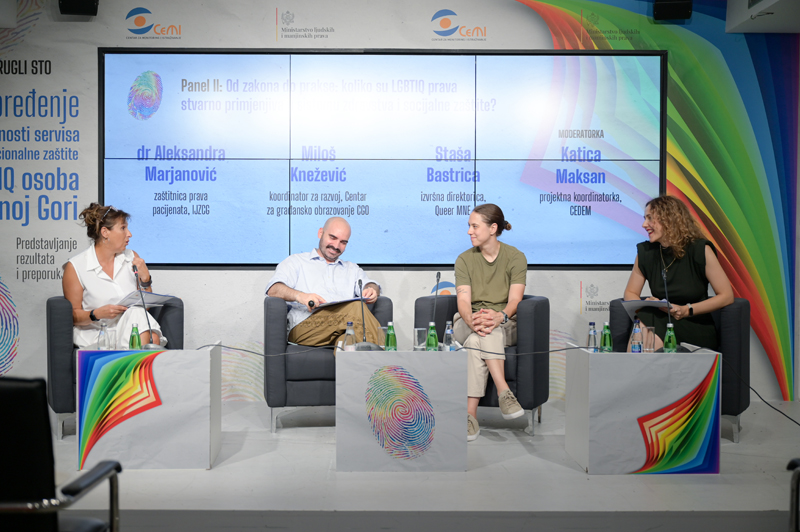
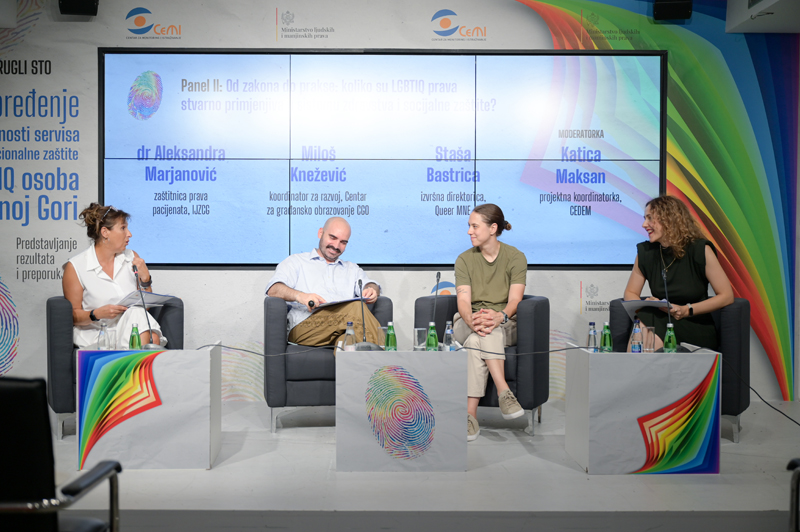
During the second panel, “From Law to Practice: How Applicable Are LGBTIQ Rights in the Health and Social Protection System?”, the Patient Rights Ombudsman at the Institute of Public Health of Montenegro (IJZCG), Dr. Aleksandra Marjanović, stated that the issue of exercising the right to healthcare for LGBTIQ persons is not merely a matter of healthcare accessibility, but also of trust in the healthcare system and the protection of patient privacy.
She believes that healthcare workers and members of the LGBTIQ community often view discrimination from different perspectives.
“Healthcare workers generally consider discrimination to occur if a patient failed to exercise their right to healthcare or did not receive therapy. On the other hand, members of vulnerable groups view discrimination through poor receptions, inappropriate tone, gossiping, and other subtle forms of behavior that undermine dignity and the sense of security,” Marjanović said.
As she emphasized, many members of the LGBTIQ community do not feel safe when visiting healthcare facilities, and the fear that their personal data might become accessible to third parties can deter them from seeking healthcare.
“Patients ask themselves who knows their data, who can access their medical records, and whether information about their health status will remain confidential. At that very moment, exercising their right to healthcare becomes hindered,” Marjanović said.
She believes that merely informing healthcare workers about discrimination is insufficient.
“Information and knowledge are not the same as behavioral change,” Marjanović said, adding that healthcare workers often fail to recognize subtle forms of discrimination.
Speaking about public health research, Marjanović assessed that Montenegro lacks serious analyses that would allow progress to be tracked over time.
“We have many descriptive studies, but we lack baseline indicators against which we can measure progress. We need research that will monitor healthcare workers' attitudes, patient experiences, the number of complaints, and other objective indicators,” Marjanović said.
She added that data collected through research often remains unused, emphasizing the need for better cooperation between institutions and the non-governmental sector to utilize these results to improve the health system.
Regarding the education of healthcare workers, Marjanović stressed that organizing training is not enough; its outcomes must be monitored.
“It is not only important to hold training sessions, but to see what changes they have brought about and whether patients actually have greater trust in the healthcare system,” Marjanović said.
She particularly highlighted the importance of digitizing the healthcare system, stressing that digitization must focus on protecting patient rights.
“We need to build a system where every citizen especially members of vulnerable groups has certainty that their health data is protected, can see who accessed their record and for what reason, and has the ability to file a complaint,” Marjanović concluded.
Executive Director of Queer Montenegro, Staša Baštrica, recalled that Montenegro has laws, public policies, and a Strategy for Improving the Quality of Life of LGBTIQ Persons, noting that the strategy was adopted even before the European Union adopted a similar document.
“The state formally advocated to improve the position of LGBTIQ persons, but I fear this was done over the years primarily to fulfill certain goals in the European Union accession process and send a message to Brussels that Montenegro is working on advancing the rights of marginalized groups,” Baštrica said.
She emphasized that these problems do not pertain solely to the LGBTIQ community, but to other vulnerable social groups as well, assessing that the system remains passive and delegates a large portion of responsibility to civil society organizations.
Queer Montenegro, as she noted, provides support services to LGBTIQ persons precisely because adequately sensitized and appropriate services still do not exist at the local level.
“There is a complete diffusion of responsibility, and it is often unclear who holds jurisdiction over what. This affects the social inclusion of LGBTIQ persons, which is why our services especially free psychological support see an increasing number of users,” Baštrica said.
Speaking about user experiences, Baštrica mentioned that they mostly relate to institutional attitudes toward LGBTIQ individuals.
“LGBTIQ persons are left in the lurch, and their requests often go unanswered,” Baštrica stated.
She also presented the results of Queer Montenegro's research on the prevalence of gender-based violence against lesbians, which encompassed over 150 respondents.
“Only two percent of respondents answered that they believe the system will protect them. That is a devastating statistic and one of the reasons why victims of violence do not report to institutions,” Baštrica said.
According to her, a large number of LGBTIQ persons continue to hide their identity because “hiding one's identity has become a survival strategy.”
“Because of this, when healthcare or social assistance is needed, many seek help through personal acquaintances and recommendations to reach sensitized professionals,” Baštrica noted.
She believes that sensitivity among health and social workers does not arise spontaneously, but through education and direct contact with LGBTIQ persons.
“No one became LGBTIQ-friendly on their own. People go through a process of learning, education, and developing empathy. Theoretical knowledge alone is not enough,” Baštrica emphasized.
Commenting on the implementation of the Law on Same-Sex Life Partnership, Baštrica stated that more intensive work on harmonizing regulations only occurred when it became part of the closing benchmarks in the EU accession process.
“Institutions only began working once the impetus arrived from the European integration process. Unfortunately, the motive was not the improvement of citizens' lives, but fulfilling obligations toward the European Union,” Baštrica said.
She added that while she expects laws and bylaws to be harmonized, the question of their practical implementation remains.
Speaking about the Law on Legal Gender Recognition Based on Self-Determination, Baštrica said its adoption has not yet been realized and that the process remains blocked.
According to her, the European Union continues to insist on the adoption of this law so that transgender individuals can change their gender marker on personal documents without mandatory sterilization.
“We expect the law to be adopted, but if we were to rely solely on political will, I fear political interests would continue to take precedence over human rights,” Baštrica concluded.
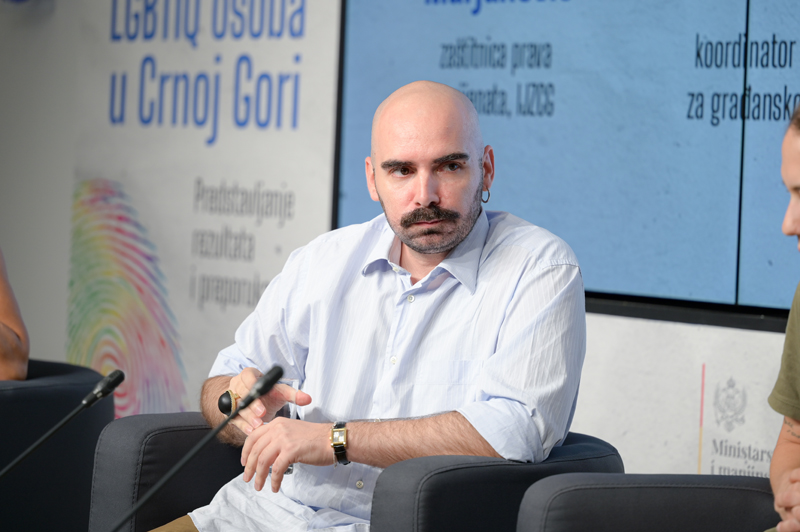
Development Coordinator at the Centre for Civic Education (CGO), Miloš Knežević, assessed that high public trust in non-governmental organizations stems from the fact that the civil sector has spent years providing services and support to marginalized groups that should be provided by state institutions.
According to him, numerous issues crucial to citizens' daily lives remain in the background due to political and identity-driven topics, while a large portion of the responsibility for protecting human rights is left to civil society organizations.
Speaking about LGBTIQ rights, Knežević said that without the non-governmental sector, there would be no Law on Same-Sex Life Partnership, nor would there be any discussion in Montenegro about advancing the rights of that community.
He emphasized that the adoption of the Law on Life Partnership was an important step, but its full significance has not been realized due to years of delay in harmonizing bylaws and other regulations.
“Five years after the implementation of the Law on Life Partnership began, we are still discussing a minimum set of rights that are not enabled in practice,” Knežević said.
He believes a paradox exists in the state's relationship with the civil sector.
“When the time comes to report to Brussels, institutions include in their reports the results achieved by the civil sector: the number of services, trainings, and other activities. Based on these results, Montenegro receives positive evaluations in the European integration process,” Knežević said.
He also pointed to the lack of institutional services for LGBTIQ persons, particularly in the field of mental health.
“There is no licensed service within the system where an LGBTIQ individual can turn for psychological support tailored to their specific needs,” Knežević said.
Speaking about the legislative framework, Knežević emphasized that the LGBTIQ community is currently seeking the fulfillment of basic rights.
“We are talking about the Law on Life Partnership, the Law on Legal Gender Recognition Based on Self-Determination, and protection against discrimination. These are the minimum conditions for a dignified life,” Knežević said.
Knežević considers that citizens in Montenegro generally become aware of their rights only after they have been denied, noting that institutions insufficiently inform the public about procedures and protection mechanisms.
According to him, this is why many still rely on personal connections and civil society organizations to exercise their rights or obtain information.
Regarding the Law on Legal Gender Recognition Based on Self-Determination, Knežević assessed that its non-adoption is not due to technical or professional reasons, but political attitudes.
“We are still trying to convince decision-makers why this law is necessary, even though it concerns a minimum standard of dignity that the state should provide to its citizens,” Knežević concluded.
The round table was organized within the framework of the project “Visibility for Rights – Interactive LGBTIQ Support Map in Montenegro,” implemented with the financial support of the Ministry of