The trilingual digital guide to the civil and political rights of minorities, available in Montenegrin, Romani, and Albanian on the web platform ferizbori.me, will enable members of minority nations and other minority national communities to inform themselves about their rights and protection mechanisms in a simple and clear manner.
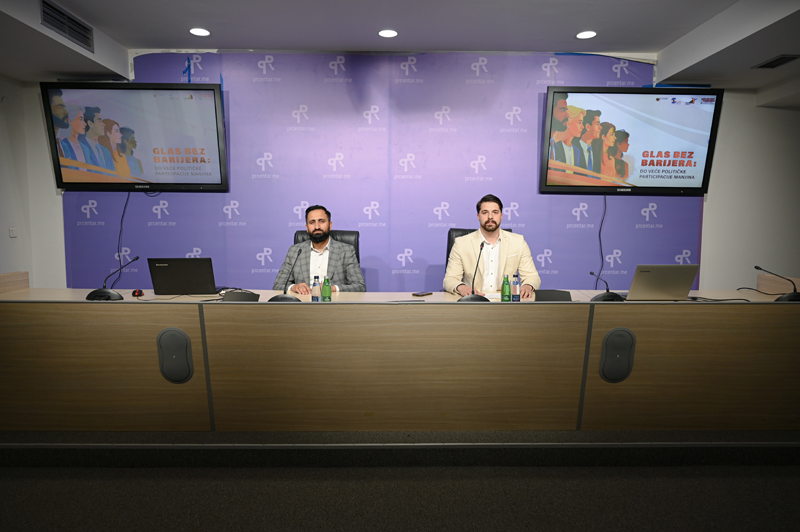
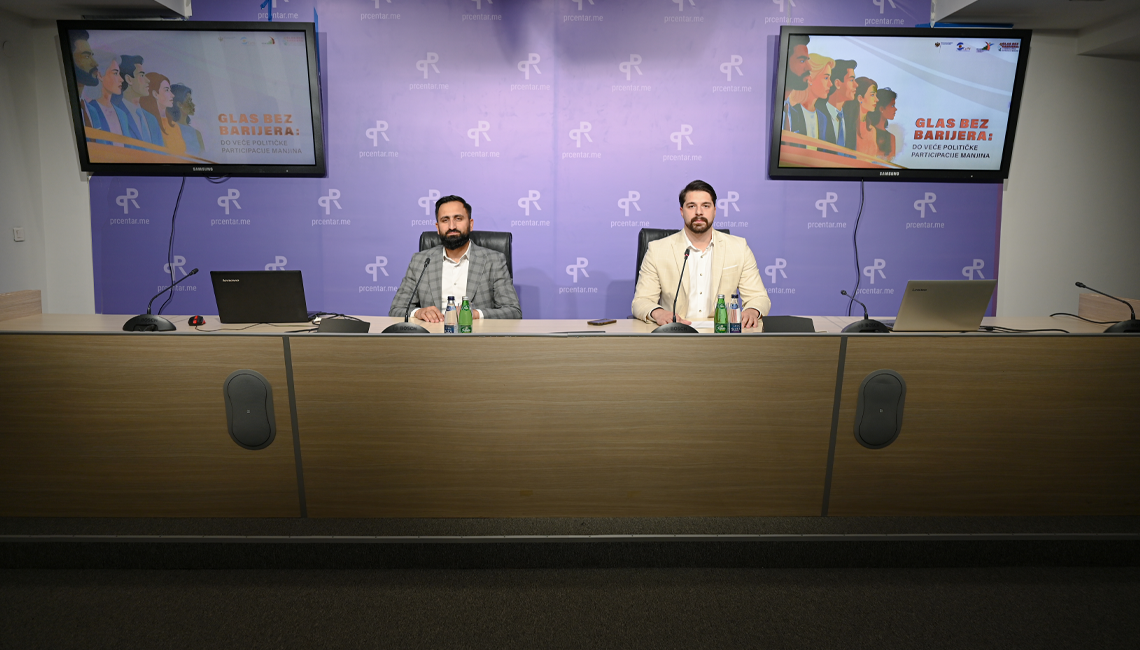
This was announced at our press conference held on the occasion of presenting the trilingual digital guide to the civil and political rights of minorities in Montenegrin, Romani, and Albanian.
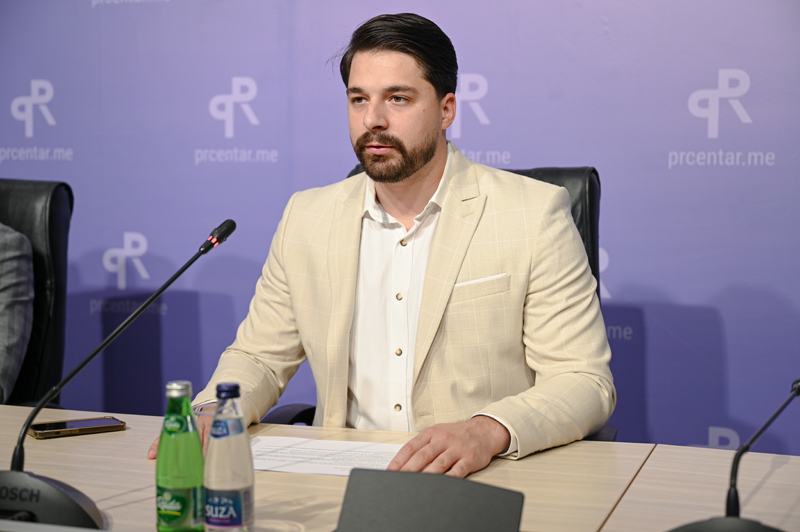
CeMI Project Coordinator, Luka Pavićević, stated that the guide was designed as a comprehensive yet transparent resource encompassing several key sections.
"The first part is dedicated to the concept and definition of minorities, as well as the international standards that define the protection of the rights of minority communities. Following that, the guide presents the national legal framework in detail, including the Constitution of Montenegro, the Law on Minority Rights and Freedoms, and the Law on Prohibition of Discrimination. Special attention was also given to regulations concerning the protection of human rights through the institution of the Protector of Human Rights and Freedoms, as well as laws regulating the use of national symbols and the broader institutional framework of the political system," Pavićević stated.
He explained that a significant part of the guide is dedicated to the topic of political participation, where the mechanisms of minority community participation in political life, as well as the broader framework of civil and political rights, are explained in a simple way.
"This section also addresses issues related to the methods of exercising rights, institutional channels of action, as well as available procedures and mechanisms for protecting rights in practice. The guide also includes a segment dedicated to protection against discrimination, as well as modern challenges through the topic of minority rights in the digital space, which is becoming an increasingly important aspect in today's society," Pavićević said.
He pointed out that the role of the councils of minority nations and other minority national communities is particularly highlighted as institutional mechanisms through which the interests of communities are articulated and represented.
"To make the information as accessible as possible, the guide also contains a section dedicated to frequently asked questions, as well as a glossary of terms, which helps bring complex terminology closer to the general public. Additionally, useful services and institutions are included, such as the platforms Birači.me and Fer Izbori, institutions like the Ombudsman, the Agency for Personal Data Protection and Free Access to Information, and the Agency for Audio-Visual Media Services, alongside a comprehensive directory of relevant institutions," Pavićević noted.
He emphasized that the guide is particularly distinguished by its practical and digital nature.
"It is not a static document, but an interactive and easily accessible tool, optimized for mobile phones, which allows citizens to quickly access the necessary information at any time. Additionally, its structure allows the content to be regularly updated in accordance with changes in legislation and practice, which is especially important in a field that is dynamic and subject to change," Pavićević stated.
He believes that its importance becomes particularly evident in the context of upcoming electoral cycles, when, as he said, timely and clear information for citizens is crucial for their active and informed participation in political life.
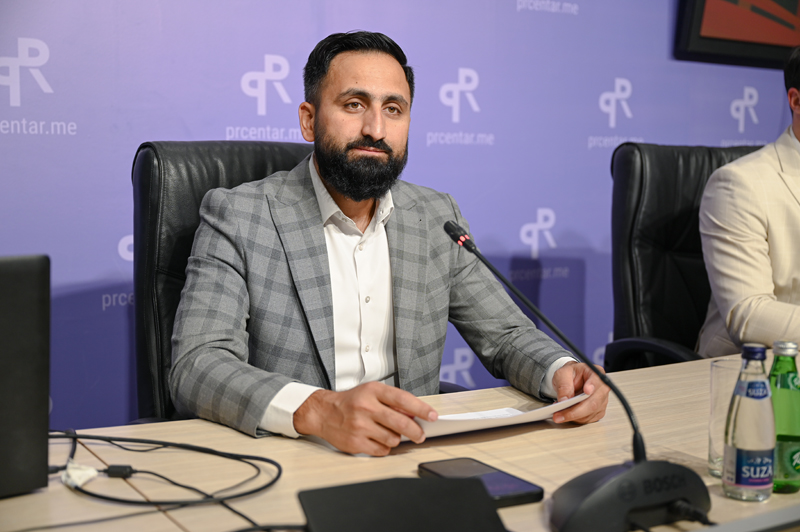
The Executive Director of the NGO "Walk with Us – Phiren Amenca," Elvis Beriša, stated that for them, the guide is not just another project deliverable.
"It is a small but important step toward making civil and political rights truly accessible to everyone, not just to those who already know the laws, procedures, and institutions. In practice, we often see that many citizens, especially members of minority nations and communities, do not exercise their rights not because they do not want to use them, but because they do not know whom to turn to, what they are entitled to, how to check if they are registered in the voter list, how to react if their rights are violated, or where to seek help," Beriša said.
According to him, that is why it is vital that information does not remain locked in complicated legal language.
"If we are talking about equality, then information must be understandable, accessible, and available in the languages of the communities that these rights concern. That is precisely why translating the guide into the Romani and Albanian languages is highly significant," Beriša pointed out.
He assessed that this holds special importance for the Roma community.
"The political participation of Roma cannot be built solely on calls for people to turn out for elections. It is built through trust, through information, through explaining rights in a simple way, and through the feeling that the system recognizes their language, their community, and their needs," Beriša stated.
He believes that when a citizen can read in their own language what voting rights are, how the electoral process works, what discrimination means, to whom they can submit a complaint, and which institutions exist to protect them, "that is when the right becomes closer to the person."
"Then it is no longer just an article of law, but a concrete opportunity for someone to participate, ask questions, report, make decisions, and be a part of public life," Beriša concluded.
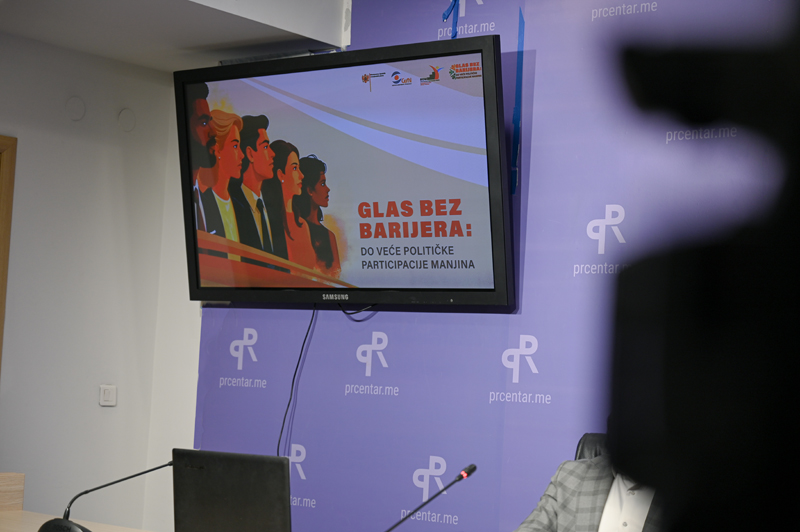
The guide was created within the framework of the project "Voice Without Barriers: Towards Greater Political Participation of Minorities," implemented by CeMI in partnership with the NGO "Walk With Us Phiren Amenca," and financially supported by the Ministry of Human and Minority Rights.