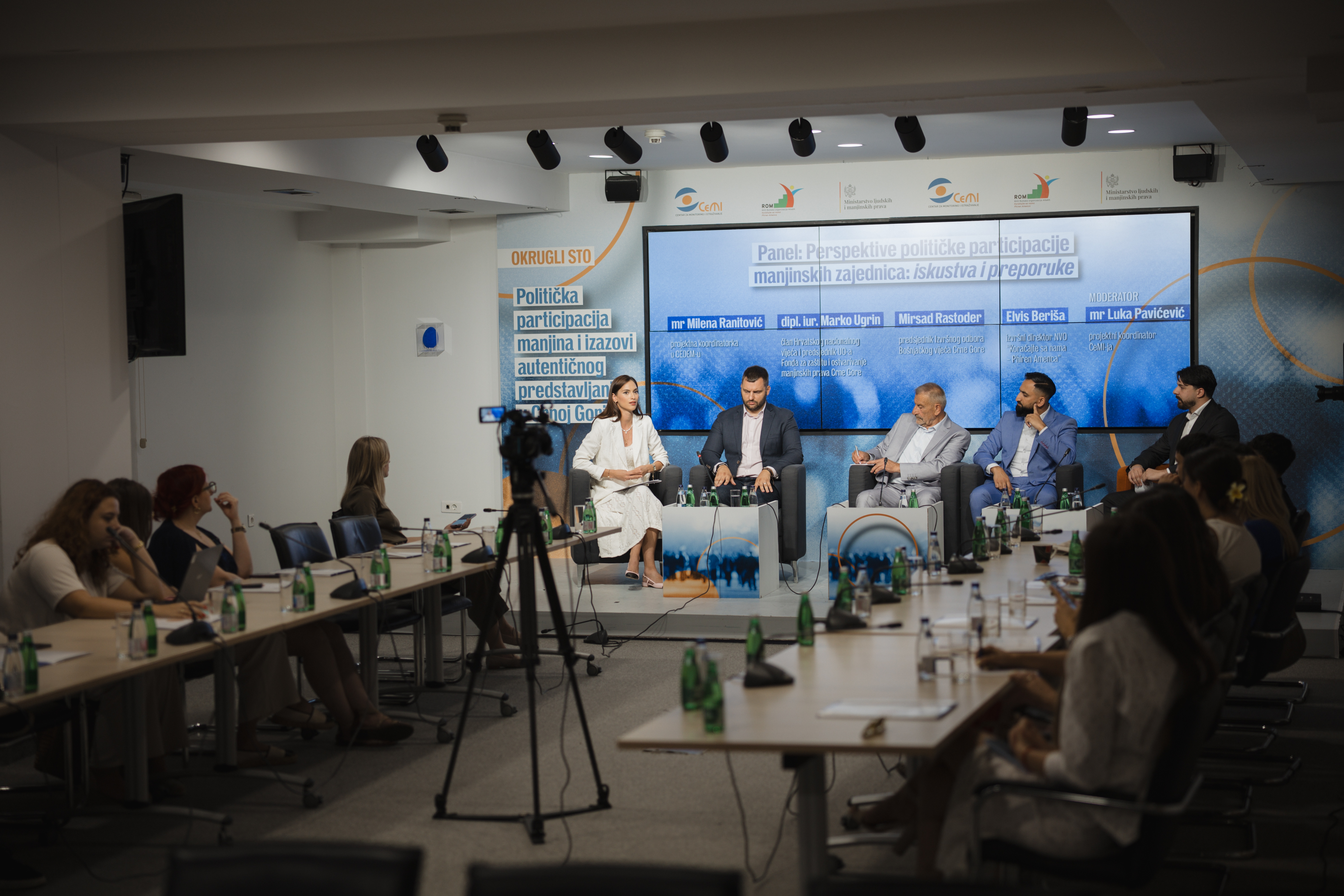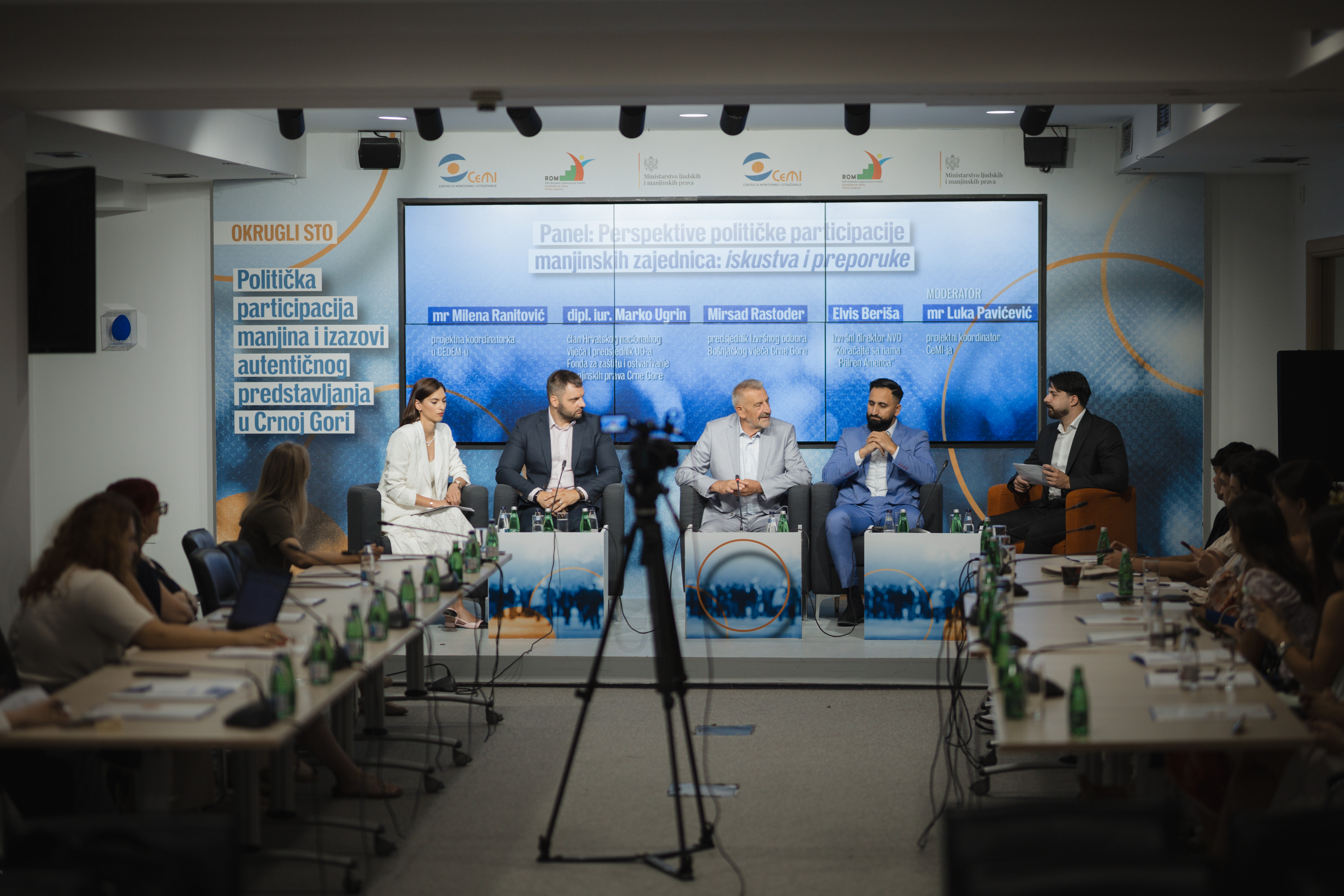
Improving the political participation of minorities is a matter of equal opportunity, the implementation of constitutional principles, and the strengthening of democratic institutions, while formal rights are not enough without the meaningful participation of minority communities in decision-making processes.
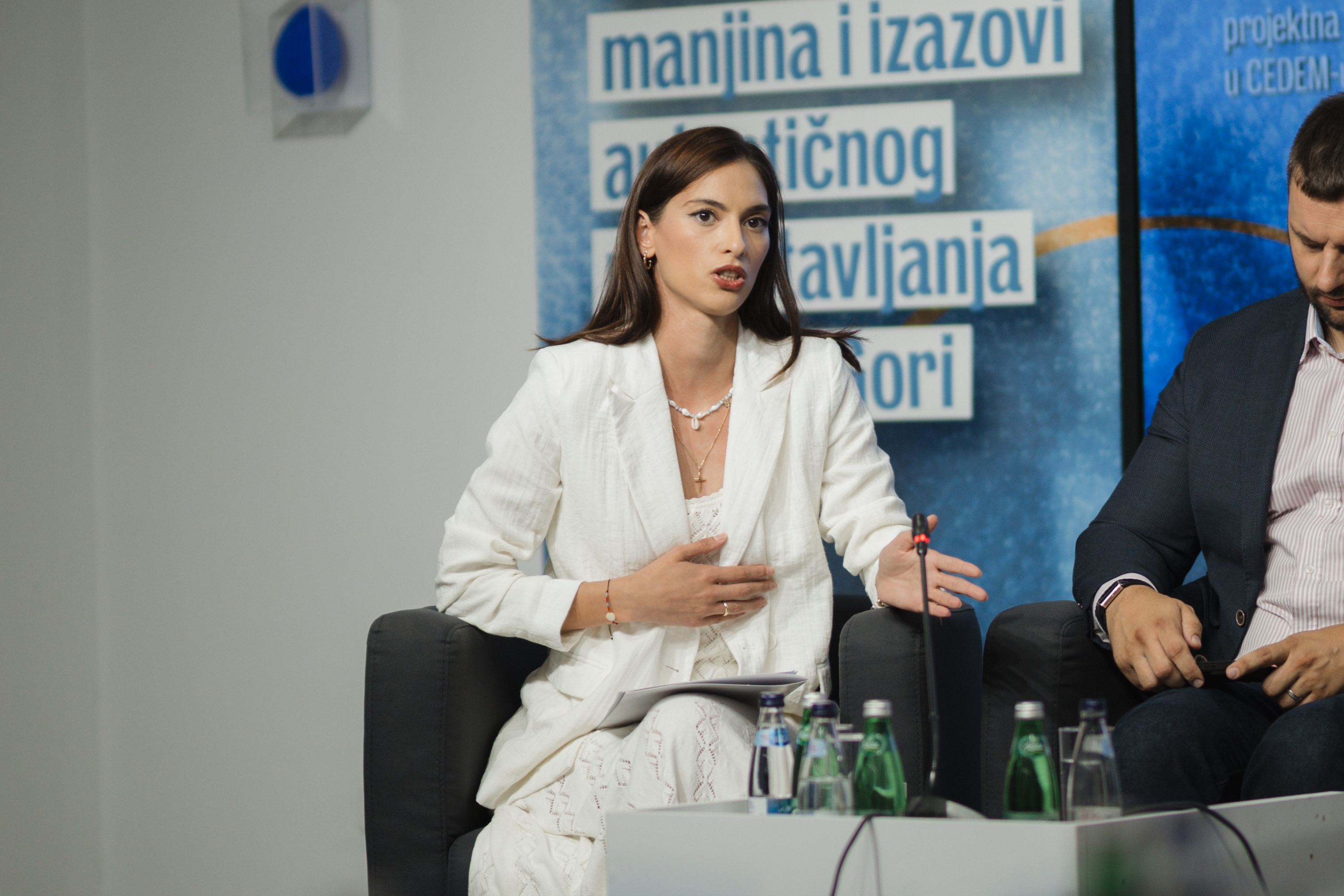
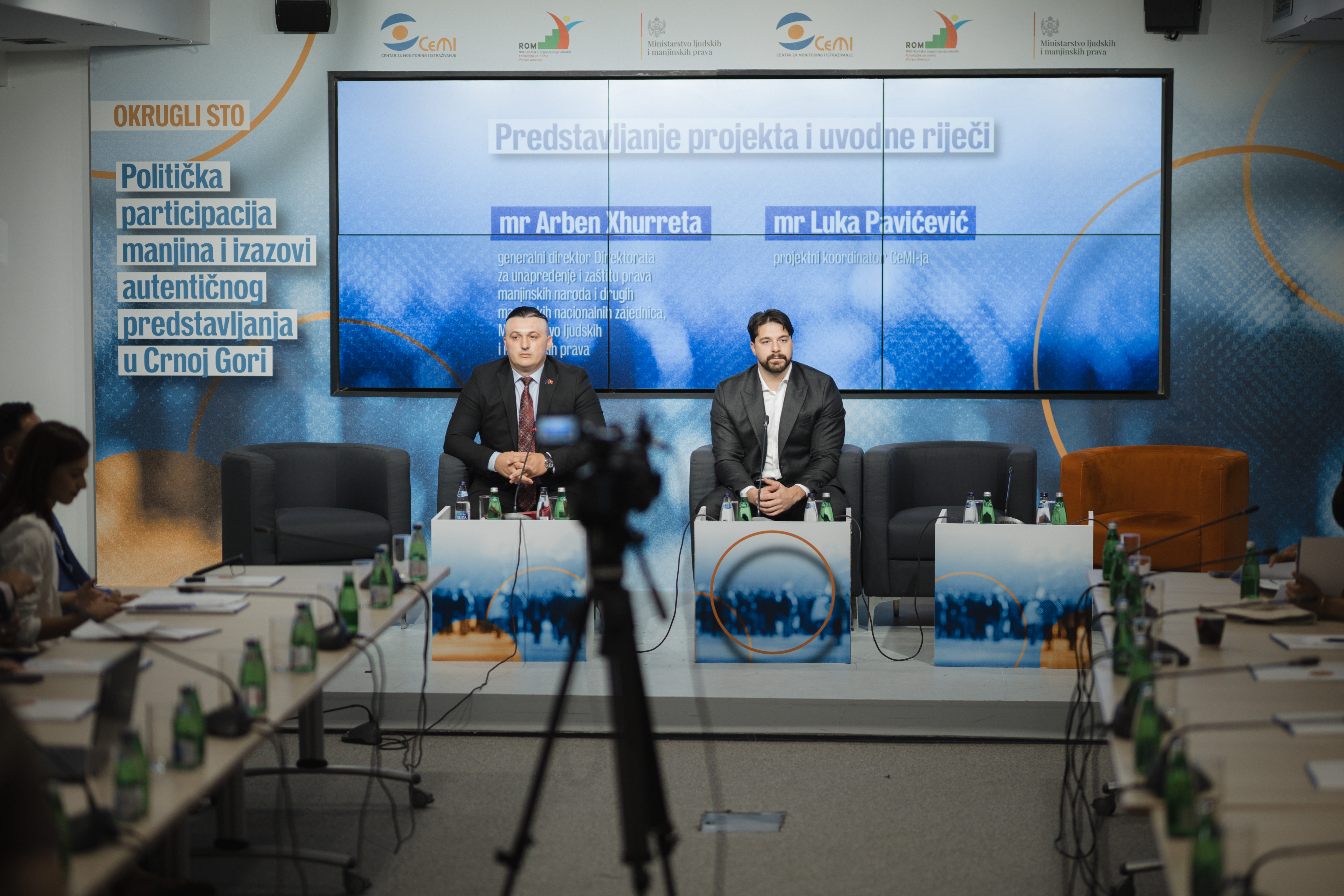
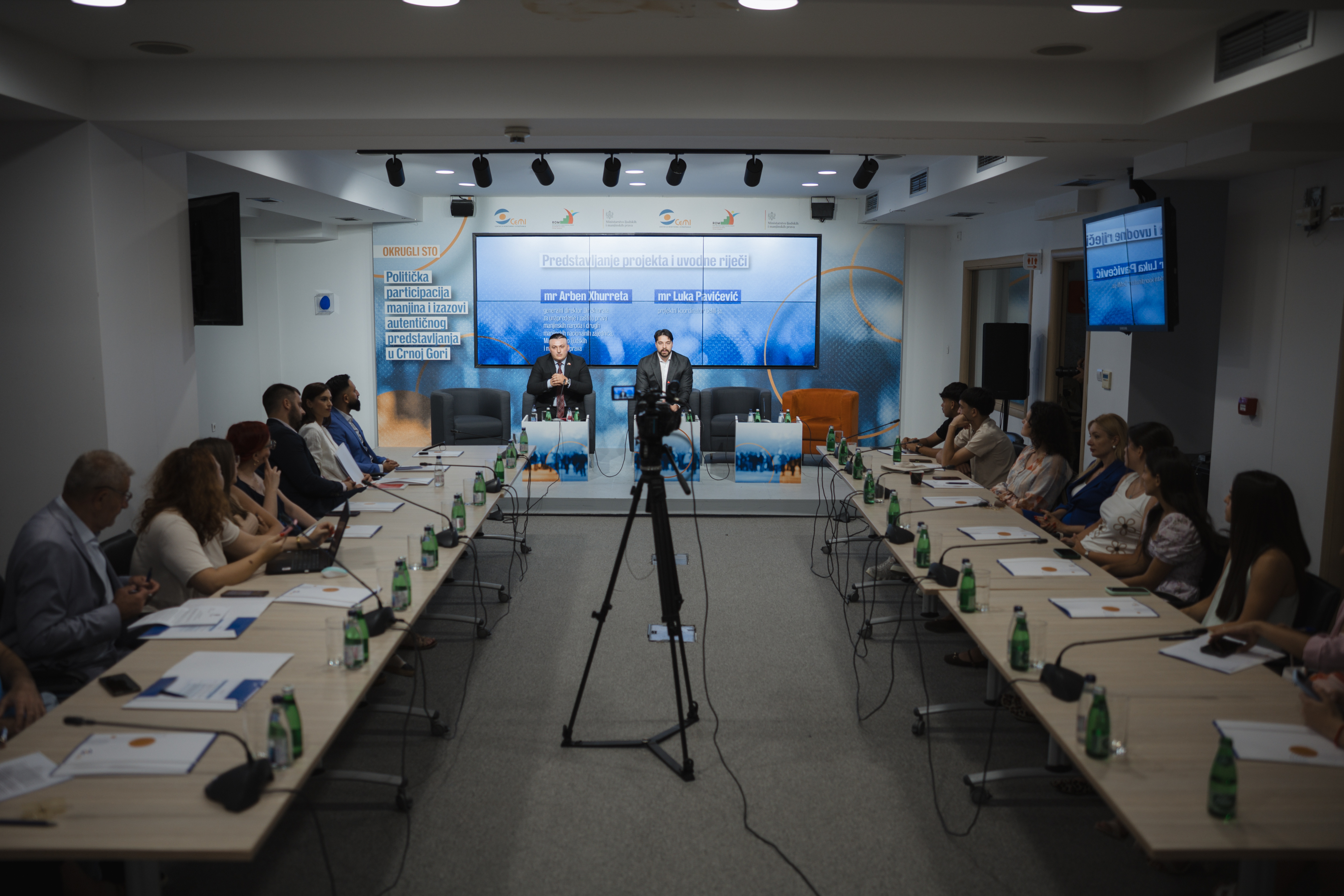
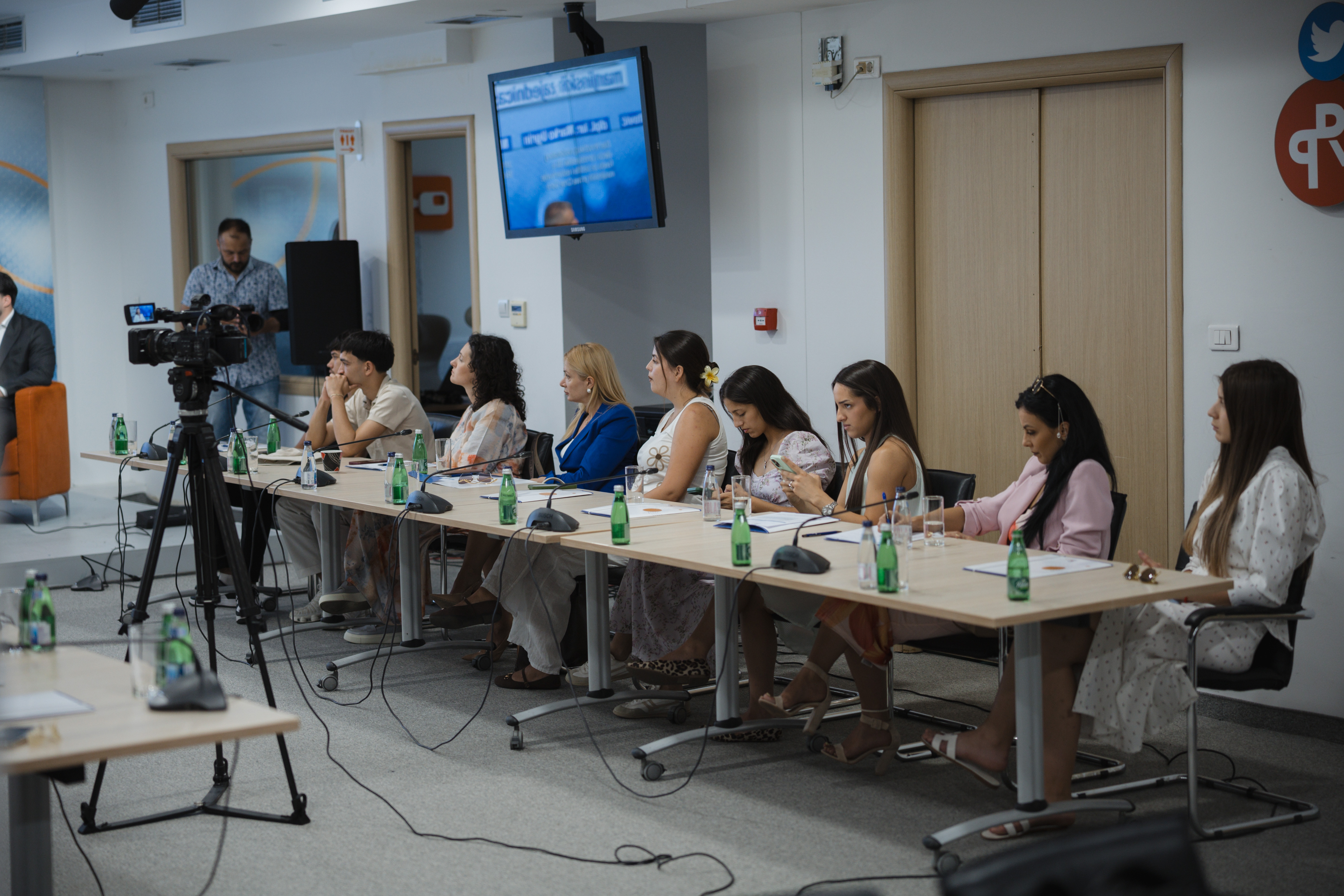
This was stated at the roundtable "Political Participation of Minorities and Challenges of Authentic Representation in Montenegro," which we organized today at the PR Center.
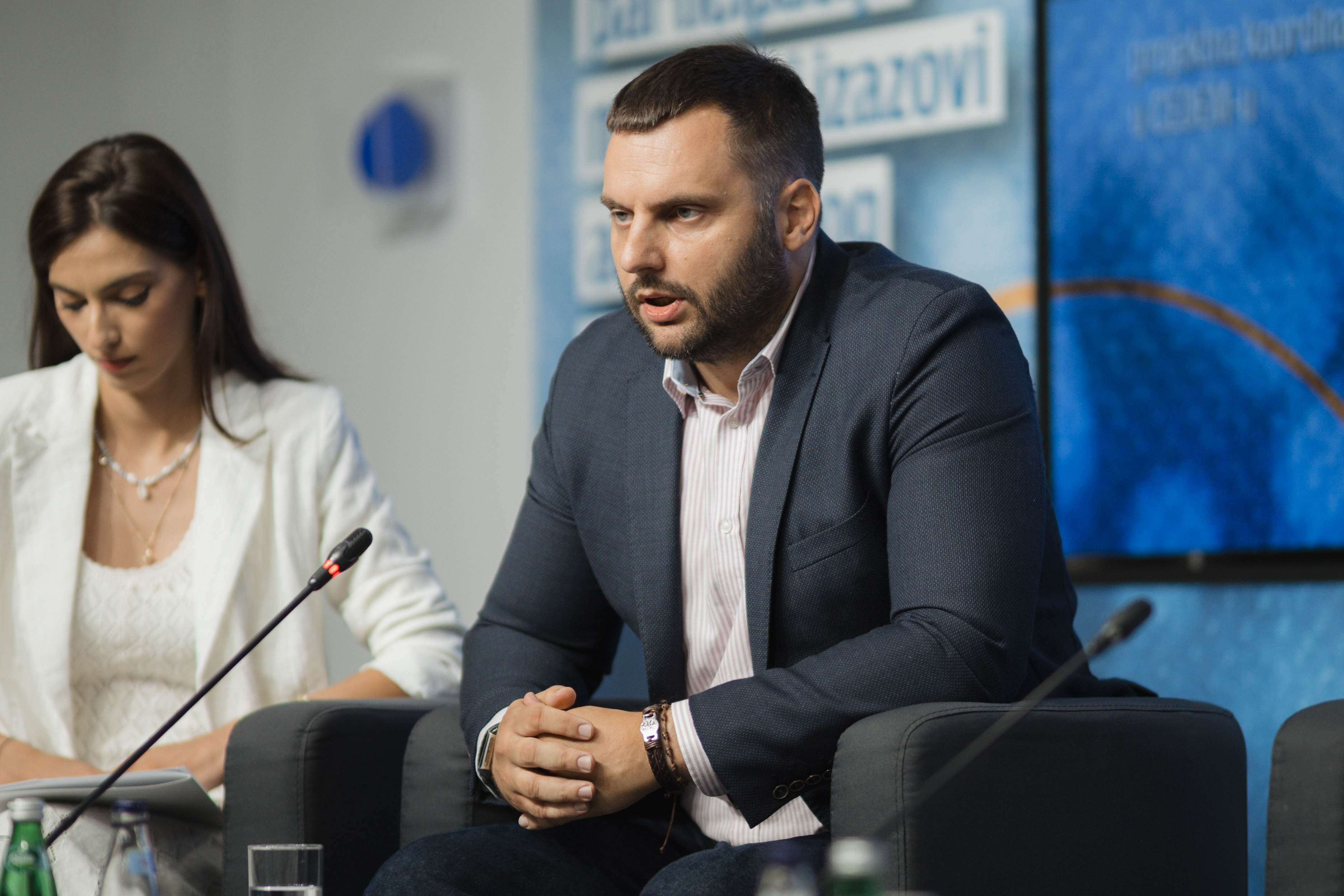
CeMI Project Coordinator Luka Pavićević said that although the Constitution of Montenegro and existing laws guarantee a broad range of rights to minority peoples and other minority national communities, practice shows that formal equality does not always translate into actual equality in exercising political rights.
"Political participation does not merely imply the right to vote. It encompasses the opportunity for citizens to be represented in institutions and to participate equally in decision-making processes. Our analyses and discussions with representatives of minority communities indicate that the current electoral system still fails to provide an equal level of political representation for all minority communities in Montenegro," Pavićević said.
He pointed out that this primarily applies to the Roma and Egyptian communities, which still lack the possibility of authentic parliamentary representation, as well as citizens declaring as Muslim by nationality, who likewise lack authentic representatives in the Parliament of Montenegro.
"Insufficient political participation inevitably leads to underrepresentation, and thus a diminished ability for the needs of specific communities to be recognized and addressed when shaping public policies. For this reason, improving the political participation of minority peoples should not be viewed as a matter of special privileges, but as a issue of equal opportunity, the full application of constitutional principles, and the strengthening of democratic institutions," Pavićević said.
Speaking about the project "Voice Without Barriers: Towards Greater Political Participation of Minorities," Pavićević stated that its goal was to contribute to establishing conditions for full and effective equality of minority peoples and other minority national communities in Montenegro.
"Our starting premise was that political participation is not an end in itself, but rather one of the key prerequisites for the voice of minority communities to be equally represented in decision-making processes, the shaping of public policies, and societal development. This is precisely why we wanted the project's activities to make a concrete contribution to the communities we worked with," Pavićević noted.
He stated that during the project, they signed memorandums of cooperation with the national councils of minority peoples and other minority national communities, organized six workshops in Podgorica, Nikšić, Bar, Ulcinj, Bijelo Polje, and Berane, recorded three podcast episodes with representatives of minority communities, translated the "Fair Elections" platform into Albanian and Romani, and created a Digital Guide to the Civil and Political Rights of Minorities, available in Montenegrin, Albanian, and Romani.
"We see special value in the workshops because they allowed us to hear firsthand the experiences of minority community members from different parts of Montenegro. Although there are challenges common to almost all minority communities, the discussions revealed that needs and priorities vary—not only between different communities, but often even among members of the same community in different municipalities. That is precisely why we believe that improving political participation must be approached in a way that respects the diversity and specific characteristics of each community," Pavićević stated.
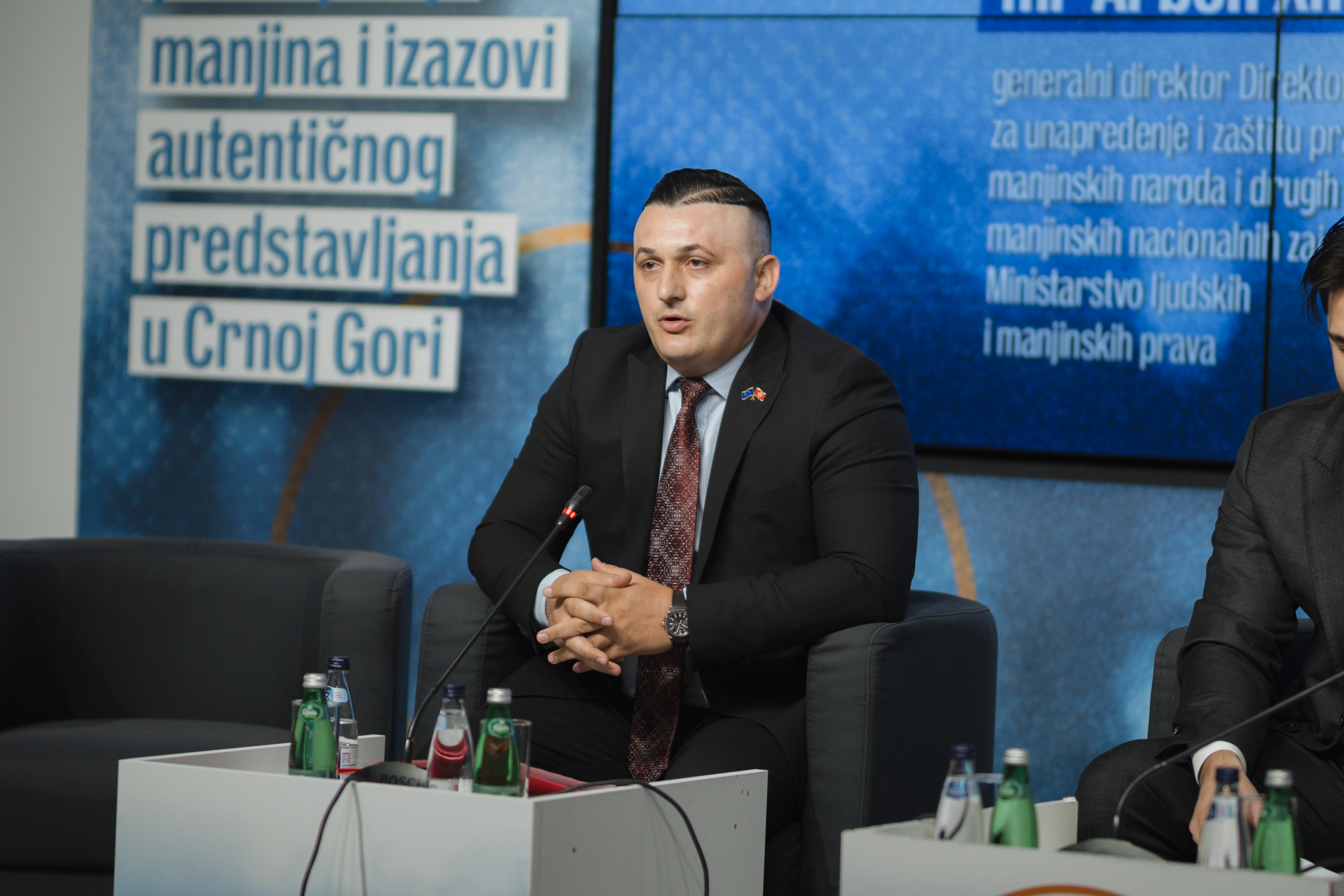
Speaking on the position of minority peoples in Montenegro, Arben Xhurreta, Director General of the Directorate for the Enhancement and Protection of the Rights of Minority Peoples and Other Minority National Communities at the Ministry of Human and Minority Rights, stated that authentic representation and political participation in political life play a significant role in improving their position.
According to him, Montenegro possesses a solid legal and institutional framework for the protection of minority rights, recognizing minorities as partners in all processes that integrate the country into major international initiatives and alliances.
"We are here to build our country together and guide it along the European path toward European standards. We know that things can always move faster and achieve more, but minorities know how to appreciate and justify the respect shown to them," Xhurreta said.
He emphasized that authentic political participation is one of the key factors in the realization and affirmation of the rights of minority peoples.
Xhurreta assessed that the roundtable and similar non-governmental sector activities contribute to the shared goal of all actors in Montenegro—making the state a common home for all its citizens.
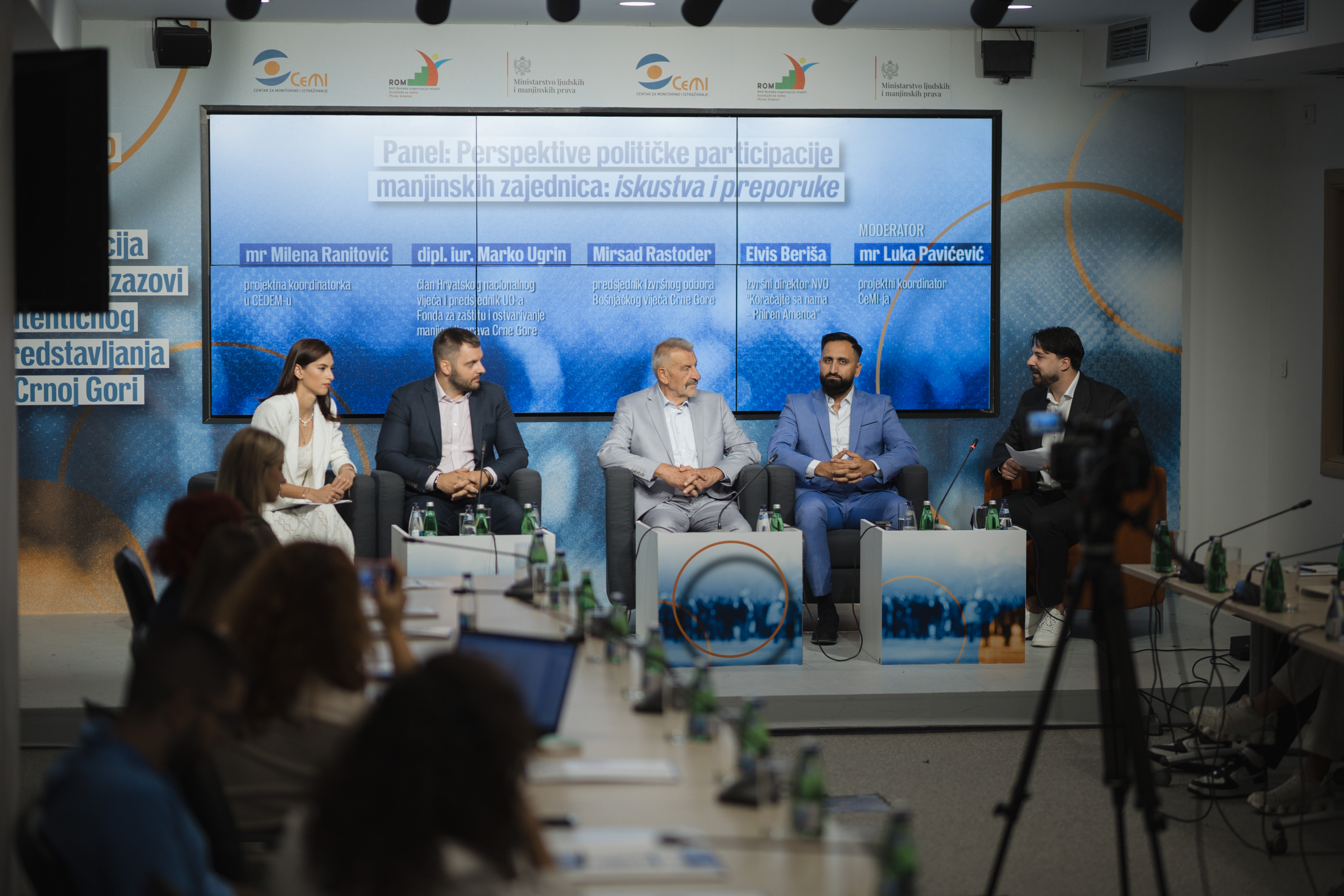
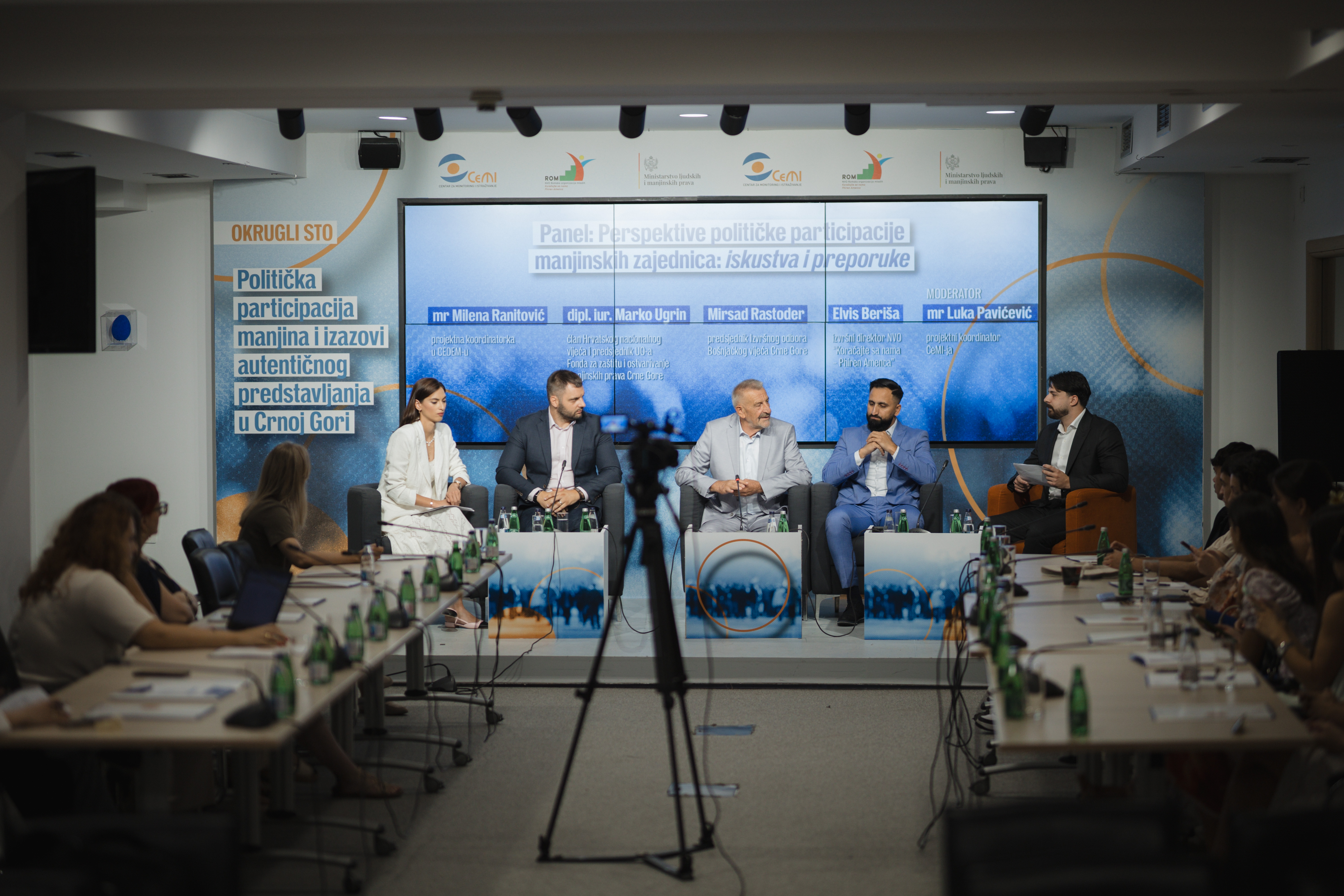
During the panel "Perspectives on the Political Participation of Minority Communities: Experiences and Recommendations," Project Coordinator at CEDEM Milena Ranitović recalled that the organization had conducted a comparative analysis spanning the past 20 years, examining the social and political position of minority communities as well as their perception of political participation.
She stressed that it is insufficient to look merely at formal indicators, such as the existence of national councils or parliamentary representation.
"The essence lies not in the mere form of participation, but in whether the voice of minority communities genuinely influences political decision-making," Ranitović said.
She noted that research findings show that, despite the parliamentary representation of Bosniak political parties and their participation in government, a perception of vulnerability persists among members of the Bosniak community.
She stressed that it is insufficient to look merely at formal indicators, such as the existence of national councils or parliamentary representation.
"The essence lies not in the mere form of participation, but in whether the voice of minority communities genuinely influences political decision-making," Ranitović said.
She noted that research findings show that, despite the parliamentary representation of Bosniak political parties and their participation in government, a perception of vulnerability persists among members of the Bosniak community.
According to her, a similar situation exists with the Albanian community, whose political representatives have been a continuous part of governing structures since the restoration of Montenegro's independence, yet a sense of vulnerability is still recorded among its members.
On the other hand, she highlighted that research shows members of the Serb community currently feel a lower degree of vulnerability compared to previous years.
Ranitović believes this demonstrates that citizens perceive political power as a guarantee of security and the protection of their rights, assessing that such a perception is not healthy.
"We need to build public trust in independent institutions that will protect the rights of all citizens, regardless of their national or ethnic affiliation," Ranitović said.
Speaking on research regarding ethnic distance, she recalled that CEDEM has been continuously conducting surveys and tracking changes in inter-ethnic relations since 2000.
As she stated, ethnic distance among different ethnic communities in Montenegro has been declining since 2007, showing an overall reduction of 15.9 percent.
She emphasized that the continuity of this trend is a positive indicator, but warned that there are communities toward which ethnic distance remains highly pronounced.
According to research results, the highest ethnic distance continues to exist toward the Roma and Egyptian populations. She noted that an exceptionally high percentage of citizens would not want close family ties with members of the Roma and Egyptian communities, with that distance reaching 78 percent.
She added that, although overall ethnic distance is declining, marked distances still persist between certain communities, including Bosniaks, Serbs, and Albanians, while the lowest ethnic distance was recorded between Serbs and Albanians.
Speaking on the connection between ethnic and political distance, Ranitović highlighted that the two processes are closely intertwined.
"The lower the ethnic distance, the greater the likelihood of political participation by minority communities," Ranitović concluded.
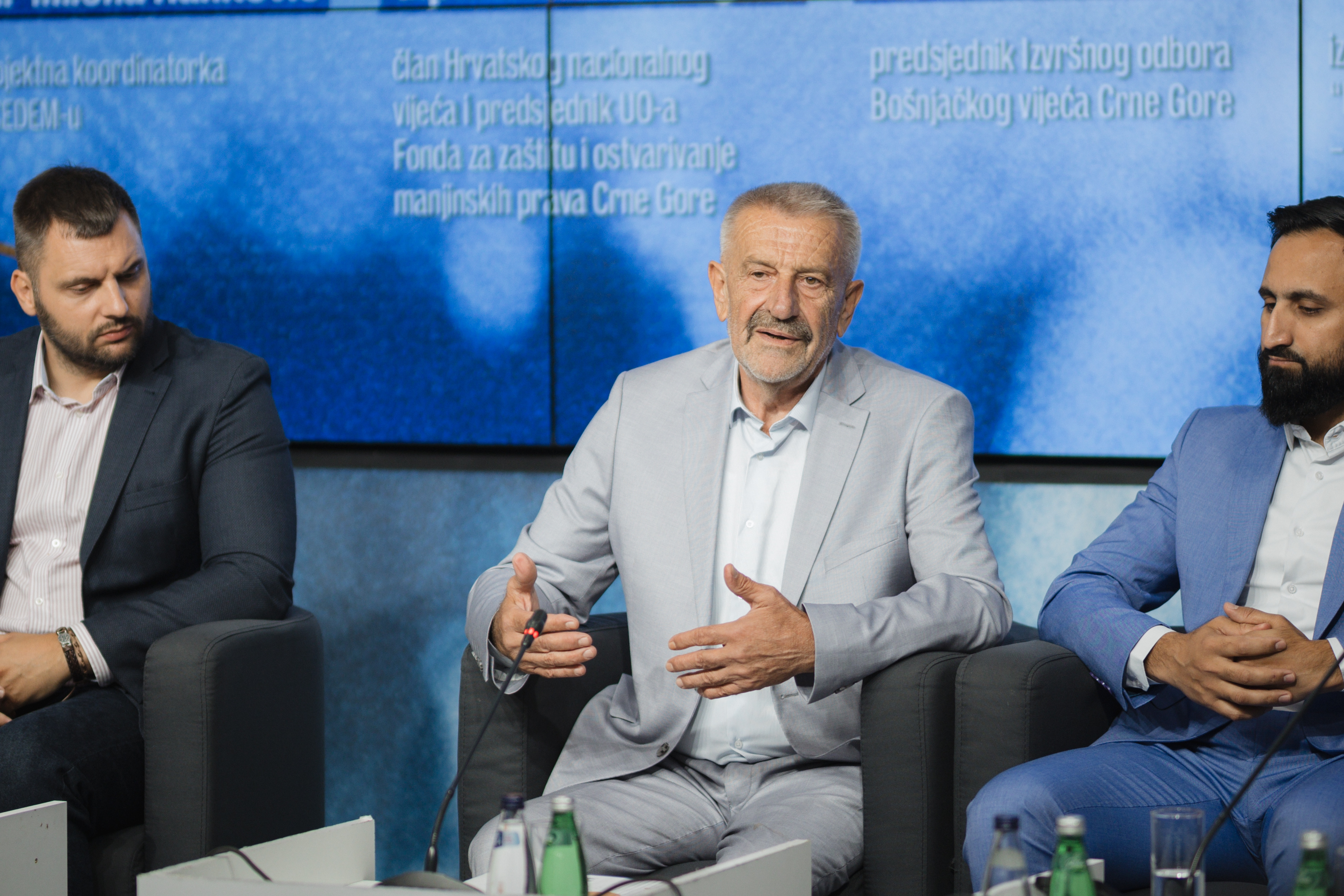
Marko Ugrin, member of the Croatian National Council and President of the Management Board of the Fund for the Protection and Realization of Minority Rights of Montenegro, stated that minority peoples played a decisive role in achieving Montenegro's independence in the 2006 referendum, emphasizing that this underscores the importance of their political participation.
Speaking about the Croatian community in Montenegro, Ugrin recalled that the Croatian Civic Initiative (HGI) was founded in 2002, four years prior to the independence referendum, with programmatic goals that included Montenegrin independence, NATO membership, and accession to the European Union.
As he noted, two of those three goals have been achieved, while the Croatian community actively participates in Montenegro's political life through the Croatian Civic Initiative.
Ugrin highlighted that the Croatian Civic Initiative achieved a historic result in the 2023 elections, assessing that it was the product of years of dedicated work by the party's members.
According to him, one of the Croatian community's most significant contributions is the establishment of good relations with the Republic of Croatia, which, as he noted, has provided substantial support to Montenegro on its path toward European integration through technical assistance and expert teams.
Speaking on the improvement of minority political participation, Ugrin assessed that there is always room for progress, particularly regarding the electoral threshold.
He recalled that the electoral threshold for the Croatian minority is 0.35 percent, while according to the latest census results Croats make up around 0.83 percent of Montenegro's population, emphasizing that the electoral results of the Croatian Civic Initiative confirm strong voter support.
He believes Montenegro could consider regional models, citing Croatia as an example where parliamentary seats are guaranteed for minority communities.
Ugrin specifically pointed to the challenges faced by numerically smaller minority communities, including the Croatian community.
As a positive example, he highlighted the practice of flying the Croatian flag alongside state and municipal flags on municipal buildings in Tivat and Kotor on January 13, the Day of the Croatian People in Montenegro.
Speaking about amendments to legal framework, he recalled serving on the working group tasked with amending the relevant law, but emphasized that a need still exists to improve the position of national councils.
According to him, national councils play a vital role in preserving the identity of minority peoples, which is why he believes funding for their operation should be increased, particularly in municipalities where minority communities are most numerous.
Ugrin also recalled the provisions of the Framework Convention for the Protection of National Minorities, which mandate special care for numerically smaller communities, such as the Croatian and Roma populations.
As he noted, in previous years, projects submitted by representatives of the Croatian, Roma, and Muslim communities received the lowest funding, which, in his view, is not in line with the principle of protecting the most vulnerable minority groups.
Speaking from his perspective as President of the Management Board of the Fund for the Protection and Realization of Minority Rights, Ugrin stated that efforts are being made to improve the situation, but that a broader societal consensus is required for more substantial changes.
Mirsad Rastoder, President of the Executive Board of the Bosniak Council of Montenegro, assessed that the existing legal framework provides sufficient space for minority peoples and other minority national communities to participate politically, but that there is still room for improvement.
"Certain amendments should primarily target less numerous national communities, while open lists could offer more opportunities for their representation," Rastoder said.
He considers that authentic representatives of minorities are not exclusively politicians from minority parties, but rather all those who genuinely advocate for the realization of human and minority rights, regardless of their political affiliation.
Speaking on the role of national councils, Rastoder stated that they serve as the natural representatives of minority peoples and carry the task of safeguarding the long-term interests of national communities, unlike political parties, which operate in accordance with political and party interests.
He recalled that national councils, within the proposed amendments to the Law on Minority Rights, suggested granting council representatives the right to participate in parliamentary debates concerning minority peoples and other minority national communities, without voting rights.
Rastoder emphasized that national councils view issues of importance to minority peoples from a broader perspective than political parties do, noting that members of a single nation may belong to various political parties, yet through national councils, they collectively represent the interests of their community.
Speaking on the status of national councils, he assessed that their financing needs to be improved.
"Councils currently find themselves stuck between the status of non-governmental organizations and public institutions, which prevents them from competing for funds either through the Fund for the Protection and Realization of Minority Rights or through ministries, leaving them to be financed primarily from funds intended for administrative operations. Consequently, national councils are forced to seek donor support for the implementation of numerous programs," Rastoder said.
He stated that local self-governments should also assume part of the responsibility for cooperating with national councils—particularly in municipalities where minority communities constitute a significant portion of the population—as well as support programs of importance to minority peoples and consult national councils when making decisions concerning their identity and position within the local community.
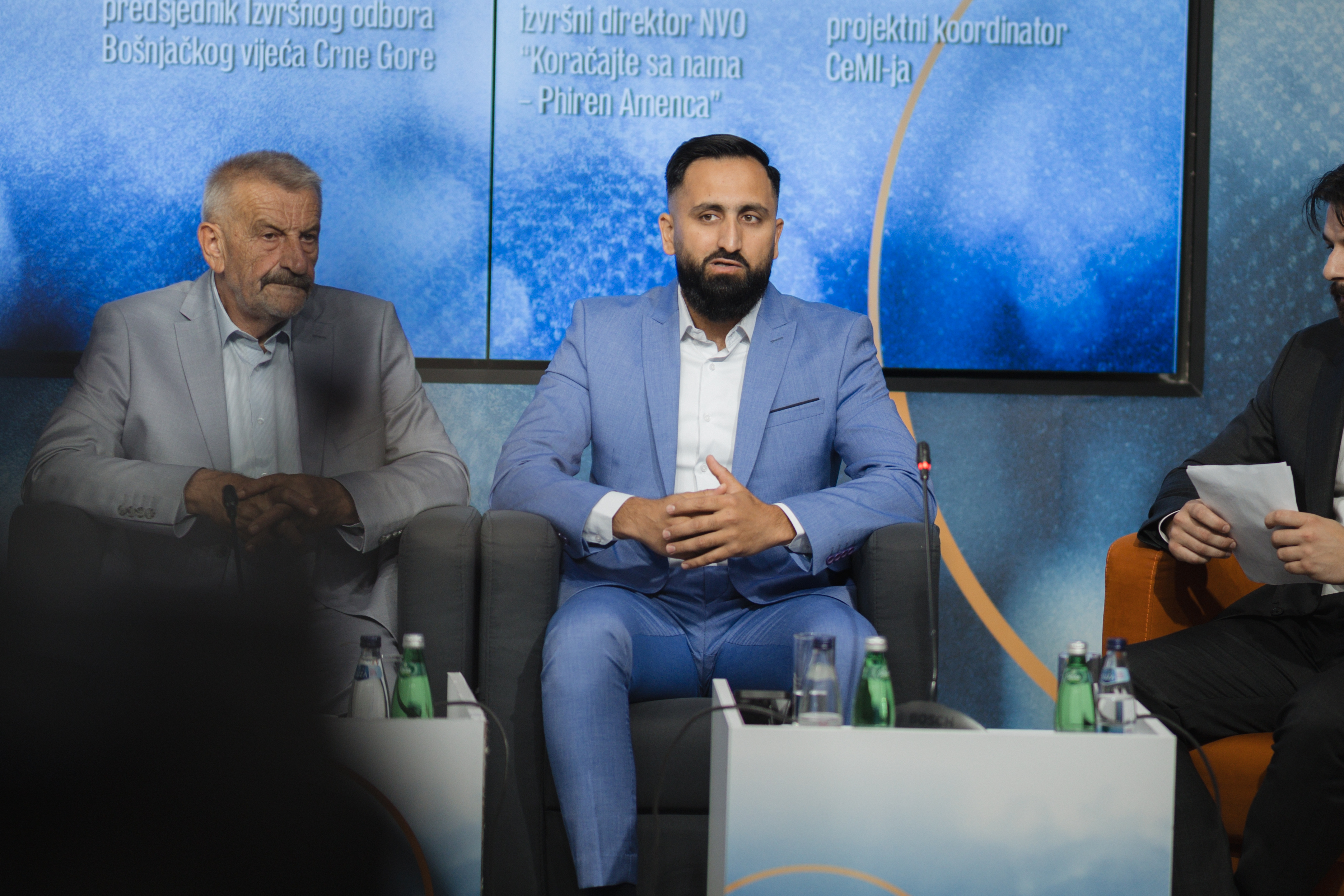
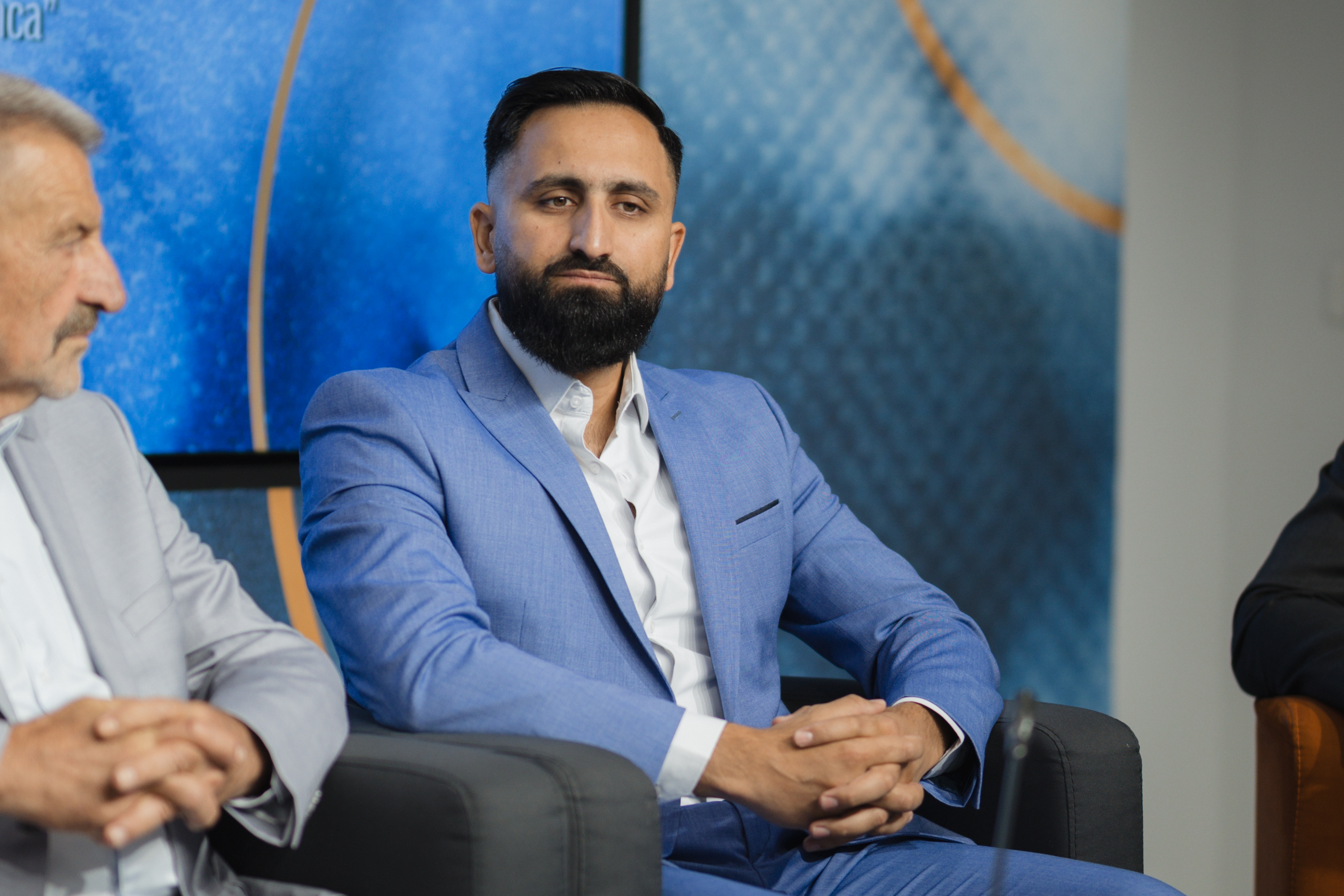
Elvis Beriša, Executive Director of the NGO "Walk With Us – Phiren Amenca," assessed that the issue of political participation of the Roma community in Montenegro remains inadequately addressed, despite years of initiatives and attempts to engage in dialogue with decision-makers on the topic.
Beriša said that representatives of the Roma community and civil sector have repeatedly raised the issue of Roma political participation in the public sphere, but have not met with significant success.
"When it comes to the political participation of the Roma community, I believe there is a lack of political will to concretely resolve the issue of its political representation," Beriša said.
He emphasized that political participation does not simply mean turning out to vote every four years, but also includes the ability of a community to identify problems, propose solutions, and actively participate in addressing them.
According to him, there is a gap between the formal rights granted to the Roma community and the actual influence it can exert over decision-making processes.
Beriša recalled that the Constitution of Montenegro, the Law on the Election of Councilors and Members of Parliament, and other legislative frameworks enable members of the Roma community to take part in elections, working groups, and consultative processes. However, he considers the question of their actual influence to remain an open one.
As he noted, an additional challenge stems from the fact that the Roma community is small in size, insufficiently organized, and often left out of decision-making processes right from the outset.
Speaking on electoral legislation, Beriša pointed to the need for a better understanding of the specific position of the Roma community. He recalled that a significant number of community members lack voting rights for various reasons, including the unresolved legal status of a portion of the population, while the Roma demographic as a whole remains exceptionally young.
According to him, the number of community members eligible to vote consequently fails to reflect its overall share of the total population.
Beriša assessed that the issue of Roma political representation is not merely a request from the community itself, but an obligation assumed by Montenegro through international instruments and recommendations from European institutions.
He recalled that the European Commission, the Council of Europe, and other international bodies have addressed the issue of Roma political participation, and that Montenegro has recognized the need to improve the standing of the Roma community through various international commitments.
"After more than two decades, we have still failed to make a breakthrough that would grant the Roma community tangible representation in the highest legislative body, or adequate participation in executive power," Beriša concluded.
The roundtable was organized within the framework of the project "Voice Without Barriers: Towards Greater Political Participation of Minorities," implemented by CeMI in partnership with the NGO Roma Youth Organization "Walk With Us – Phiren Amenca," with financial support from the Ministry of Human and Minority Rights of Montenegro.