Roma and Egyptians in Montenegro remain underrepresented in political life, and the lack of concrete inclusion measures alongside long-unfulfilled promises have led to a loss of trust in electoral reforms, making a lower electoral threshold essential for their increased participation in decision-making.
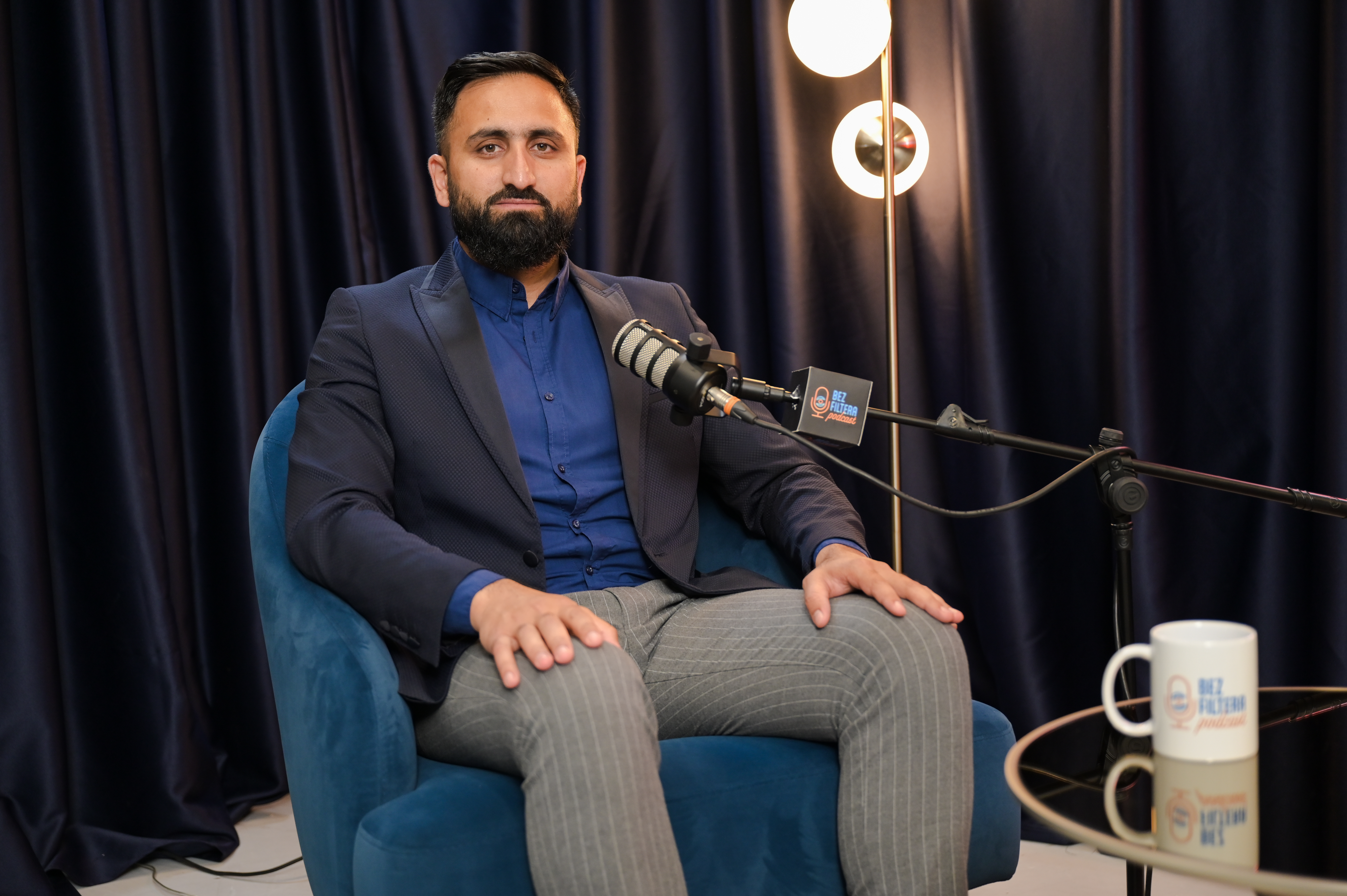
This was assessed by the Executive Director of the non-governmental organization "Walk with Us," Elvis Beriša, in the seventh episode of the "Bez Filtera" (Unfiltered) podcast, titled "Roma and Political Parties - Between Representation and Marginalization," which we produced.
He stated that he would describe the current position of the Roma community as "highly unequal" compared to other minority communities in Montenegro, noting that he would have given the exact same answer ten years ago.
"Things change very little. The perception of the Roma community is changing slowly, as is the awareness that they can not only participate but also actively take part in creating policies at the state and local levels," Beriša said.
According to him, the Roma community is still not sufficiently recognized by political actors, while the attitude of institutions and ruling structures toward the community remains inadequate.
Speaking about the period before Montenegro began negotiations with the European Union, Beriša recalled that very little was known or said about the Roma community, stating that more significant activities only began after the launch of the Decade of Roma Inclusion and the European integration process.
He believes the greatest strides have been made specifically in the field of education.
"Fifteen years ago, a very small number of young Roma were enrolled in secondary and higher education, or even in primary schools. Today, we can say that the situation is different and that the statistical data is significantly better," Beriša stated.
However, he added that similar progress cannot be seen in the areas of housing, employment, healthcare, and the fight against discrimination and anti-Gypsyism.
Speaking about the political representation of Roma, Beriša noted that there are currently only two local councilors of Roma nationality in local parliaments—one in Podgorica and one in Herceg Novi.
"At the state level, not a single member of the Roma community has served as a member of the Parliament of Montenegro since the introduction of the multi-party system," Beriša said.
Beriša clarified that neither of the two councilors was elected as a representative of a Roma political party; instead, they secured their mandates through civic and coalition lists.
Regarding the councilor in Podgorica, Beriša noted that he is the president of the first Roma political party in Montenegro, who obtained his mandate through a pre-election agreement within a broader coalition. In Herceg Novi, he explained, the councilor of Roma nationality was seventh on the electoral list but received the mandate through a subsequent political agreement.
"These are positive examples that should be promoted in other municipalities where Roma live, but the question remains as to how much the Roma community actually knows about these councilors and how much they communicate with the community they represent," Beriša assessed.
He believes it is important to question how many initiatives directly addressing the problems of the Roma community these councilors have actually launched, and to what extent they consulted citizens beforehand.
"I haven't noticed any particularly initiated activities or initiatives concerning the Roma community. This leaves room for the impression that the Roma community is being used to achieve other political interests, while the issues of their inclusion are pushed aside," Beriša said.
According to him, authentic representatives of the Roma community should speak out much more frequently about the problems Roma face, communicate with citizens, and use their mandates to advocate for the community's interests.
"We would love to see them speak about the problems of the Roma community during at least one local parliament session, address the citizens in the Romani language, or establish communication channels with the community they represent," Beriša stated.
He also recalled that members of the Roma community have been present on the electoral lists of major political parties for years, but usually in positions from which it was impossible to win a mandate.
"They were placed 62nd or 70th on the lists, which clearly showed how those parties view them and what their actual chances are to influence decision-making processes," Beriša said.
He believes that over time, the Roma community has lost trust in electoral reform and the promises of political parties.
He recalled that following the political changes in 2020, a segment of the Roma community expected significant transformations, but those did not materialize.
"The parties that came to power did not approach the Roma community with concrete programs and solutions. The community was left stranded between old and new political structures, and interest in Roma mostly arises just before elections," Beriša assessed.
Speaking about a potential lowering of the electoral threshold, Beriša said he is not optimistic that it will happen anytime soon, despite recommendations from the European Commission, the Ombudsman, and other international organizations.
"The Law on the Election of Councilors and Members of Parliament directly discriminates against the Roma community. Even if every single Roma with the right to vote cast their ballot for a single Roma political party, they would not be able to win a mandate under the current electoral threshold," Beriša explained.
He believes that lowering the threshold would allow for greater political representation of Roma and create space for stronger community involvement in decision-making processes.
At the same time, he assessed that political parties do not sufficiently recognize the needs of Roma, pointing out that pre-election programs contain almost no concrete measures relating to their social inclusion.
"We haven't even resolved the basic problems of the Roma community yet to be able to talk about full equality. A specialized approach is needed to resolve issues that have been piling up for decades," Beriša said.
Beriša warned that because of this, stereotypes against Roma persist, often portraying them as uneducated, politically uninformed, and susceptible to manipulation during electoral processes.
As a crucial step toward improving the position of Roma, he proposed their greater inclusion within institutions and decision-making processes.
"First and foremost, the Roma community needs to be seen where policies are created and where decisions about its future are made," Beriša urged.
He believes a dedicated body should be established under the Government of Montenegro to deal with creating, implementing, and monitoring policies concerning Roma and Egyptians, as well as tracking the international obligations the state has undertaken.
"Today we have educated and professional Roma men and women who can make a major contribution. Their inclusion would increase trust in institutions, boost political participation, and help combat stereotypes and discrimination," Beriša concluded.
The podcast was produced as part of the project "Voice Without Barriers: Towards Greater Political Participation of Minorities," implemented by the Center for Monitoring and Research (CeMI) in partnership with the NGO Roma Youth Organization "Walk With Us Phiren Amenca," and financially supported by the Ministry of Human and Minority Rights of Montenegro.