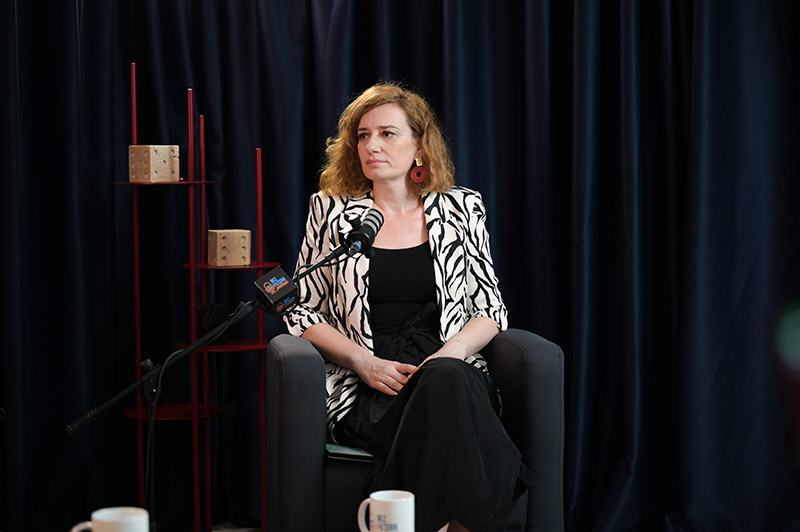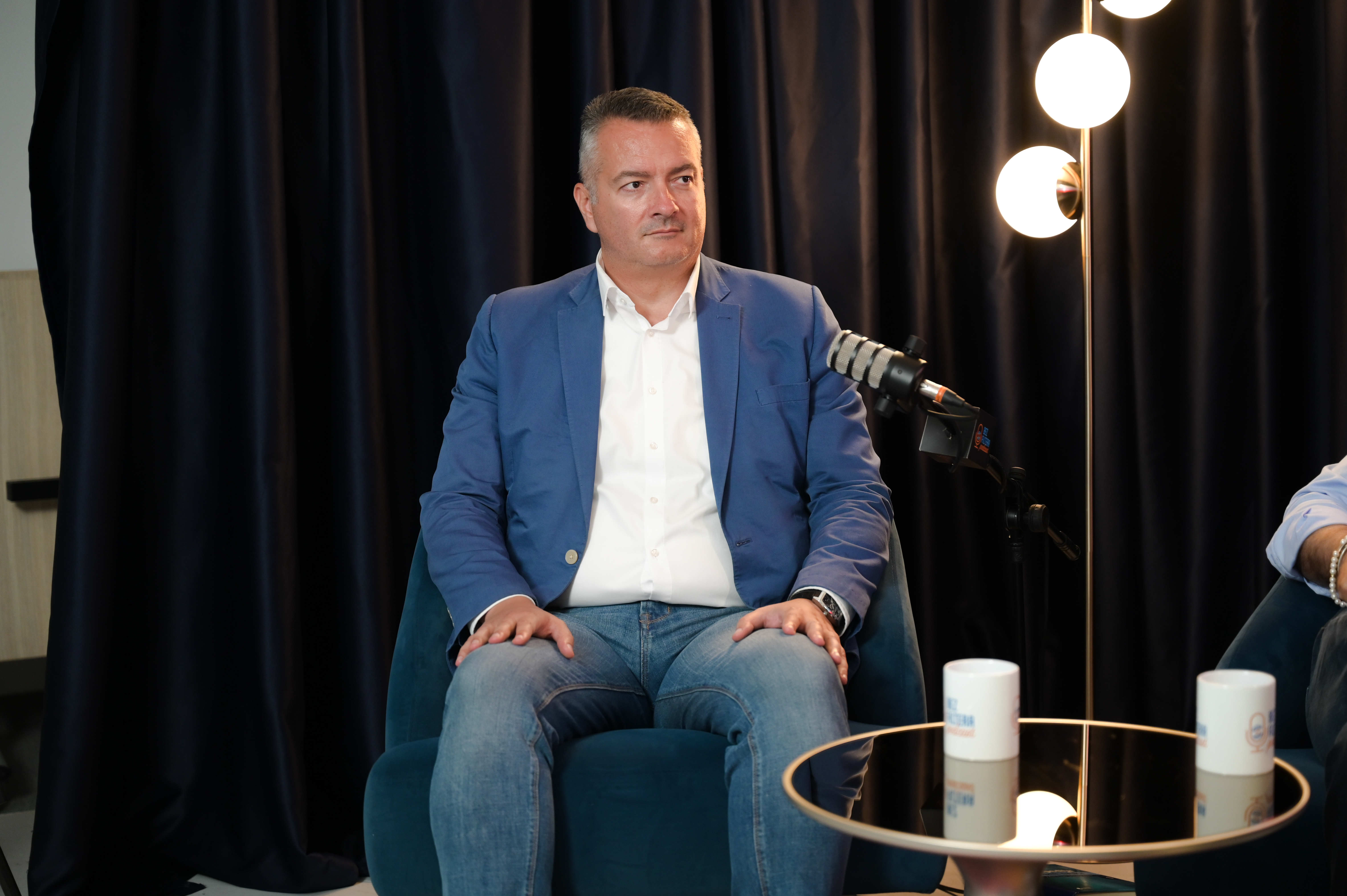
Minority parties should be viewed as important political actors who have made a crucial contribution to the state-building and European processes in Montenegro, but their position in the electoral system is not fairly resolved and must be improved through guaranteed mandates.
This was assessed by the President of the Democratic Union of Albanians, Mehmed Zenka, and the President of the Croatian Civic Initiative, Adrijan Vuksanović, in the eighth episode of the "Bez Filtera" (Unfiltered) podcast, titled "Minority Parties and Models of Authentic Representation," which we produced.
Speaking about the position of minority parties in the political and electoral system, Zenka pointed out that their existence is important because, as he said, they articulate the demands of the communities they represent in the most authentic way.
"It is important for minority parties to exist in the political landscape of Montenegro. They represent the identity of a nation living in Montenegro and know how to articulate the demands of minorities, not only political but also economic," Zenka said.
He assessed that in previous decades, minorities have shown loyalty to the state of Montenegro and support for its key developmental and foreign policy directions.
"Over the last 36 years, minorities have shown that they are loyal citizens of this country and that they have always favored all the progressive processes taking place in Montenegro," Zenka stated.
According to him, the position of minority nations today is better than it was before the 1990s, but it is still not at the level he believes it should be.
"We are much better off than we were before the nineties, but we are halfway to where we need to be," Zenka stated.
Speaking about the relationship between the national and civic concepts, Vuksanović assessed that these two principles are not mutually exclusive in Montenegro.
"The national and the civic do not exclude one another, and we can see this best precisely in the example of Montenegro," Vuksanović said.
He noted that minority communities, with their cultural and spiritual capital, enrich Montenegro and reaffirm the value of multiculturalism.
"We from national minority communities, with all our spiritual and cultural capital, confirm that multiculturalism implies the existence of distinct cultures within Montenegro, thereby enriching Montenegro itself," Vuksanović pointed out.
He reminded that minority parties supported the restoration of Montenegrin independence, NATO membership, and European integration.
"All minority parties were in favor of the restoration of Montenegrin independence, Montenegro's membership in NATO, and Montenegro's membership in the EU," Vuksanović said.
He emphasized that minorities should not have to prove their loyalty to a state where they are indigenous.
"It would be humiliating if we had to prove our loyalty to anyone regarding the home where we are indigenous a home where both our graves and our cradles lie," Vuksanović stated.
Speaking about the influence of minority parties on the government, Zenka said that the Democratic Union of Albanians participated in power not for the sake of positions, but for the opportunity to influence decisions.
"We agreed to participate in government not for the sake of power, but so that we wouldn't watch the match from the stands, but rather be participants in the game," Zenka said.
He stated that through political engagement, certain important demands of the Albanian community have been achieved, but numerous economic issues remain open, especially in areas where minority nations live.
As an example, he singled out Ulcinj, assessing that it is a municipality that was once an important center of Montenegrin tourism, whereas today, as he said, it is economically neglected.
"Our demands are not only political but also economic. No one can articulate our economic needs better than we ourselves, who live in those areas," Zenka pointed out.
Speaking about the electoral system, Vuksanović assessed that it is not fair to minority parties and that guaranteed mandates should be introduced.
"The system is not fair. There should be guaranteed mandates in Montenegro for the Albanian, the Bosniak, and the Croatian national communities," Vuksanović said.
He cited Croatia as an example, where national minorities have guaranteed mandates in parliament, noting that the attitude of the majority toward minorities is clearly visible through such solutions.
"The character of the majority is measured by its attitude toward the minority. For a national minority to survive, it must also have its own political identity," Vuksanović stated.
Zenka agrees that the current electoral solutions are not satisfactory and that minority parties should act together toward securing guaranteed mandates.
"We are not satisfied with this electoral law. I think that we will act together—all national parties and communities—to fight for a solution involving guaranteed mandates," Zenka said.
He assessed that previous amendments to the electoral legislation revoked certain acquired rights of the Albanian community, recalling the period when a special electoral district existed.
"It turned out that the Albanians have the most expensive mandate in the Parliament of Montenegro. This was perceived as a great injustice toward Albanians and their electoral rights," Zenka stated.
Vuksanović also reflected on the relations between Montenegro and Croatia, assessing that Croatia did not play a destructive role in Montenegro's European integration, but rather, as he said, strongly supported its path toward NATO and the EU.
"Montenegro and the Republic of Croatia are two friendly countries; they are partners in the NATO alliance and will be partners in the European Union," Vuksanović pointed out.
He noted that open questions between two countries are not unusual, but that a problem arises when they turn into open conflicts.
"It is not uncommon for two countries to have open questions. The problem occurs when certain policies lead to those open questions becoming open conflicts," Vuksanović concluded.
The podcast was produced as part of the project "Voice Without Barriers: Towards Greater Political Participation of Minorities," implemented by the Center for Monitoring and Research (CeMI) in partnership with the NGO Roma Youth Organization "Walk With Us Phiren Amenca," and financially supported by the Ministry of Human and Minority Rights of Montenegro.