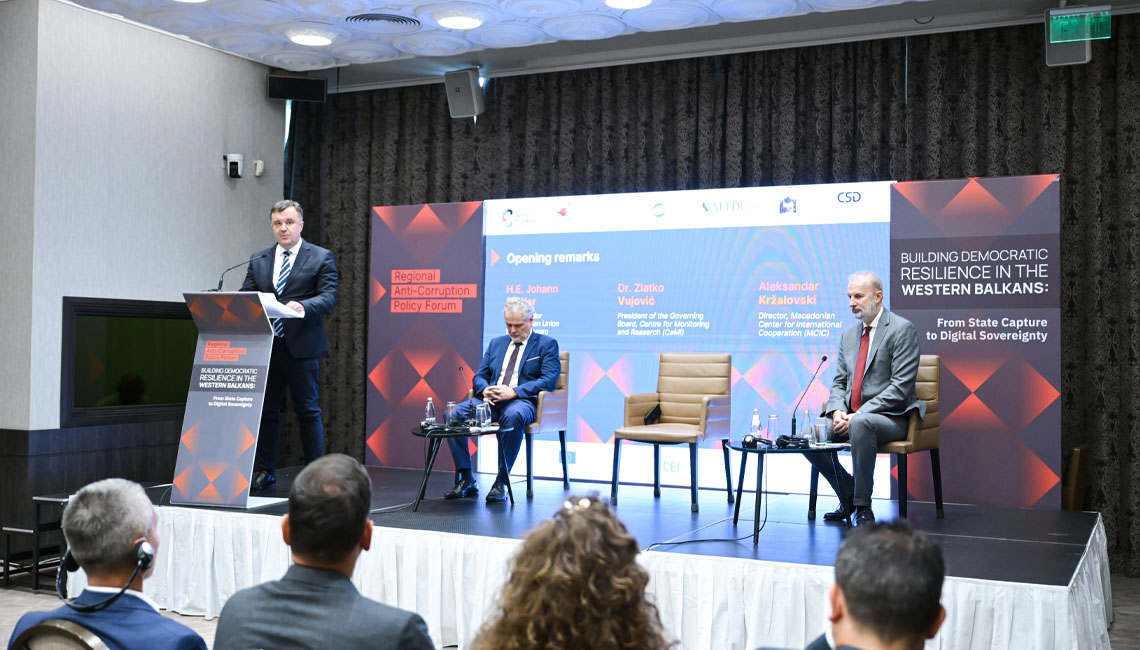
Montenegro is closer to the European Union than ever, but closing negotiation chapters in itself will not solve the problems of corruption, political influence, and state capture, which is why European integration must bring fundamental changes and independent institutions.
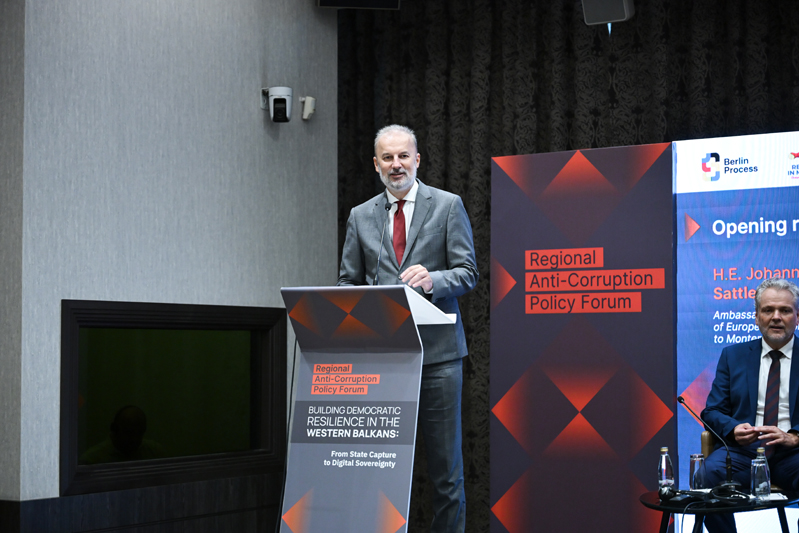
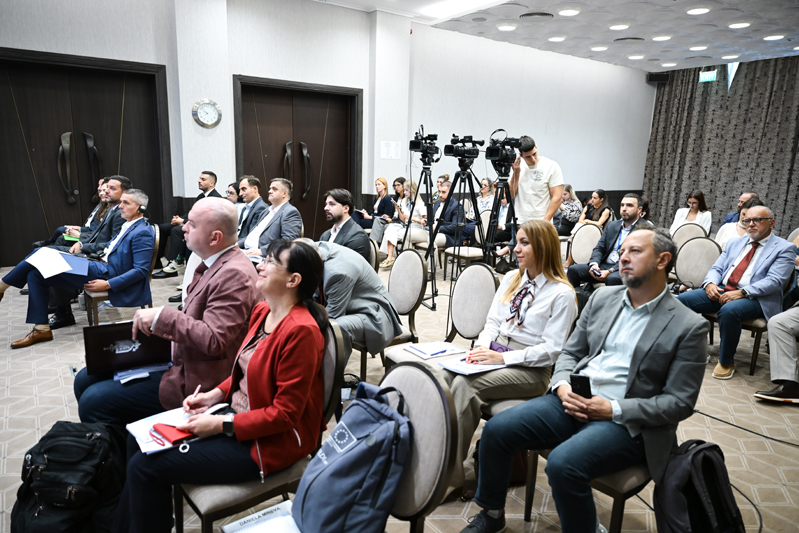
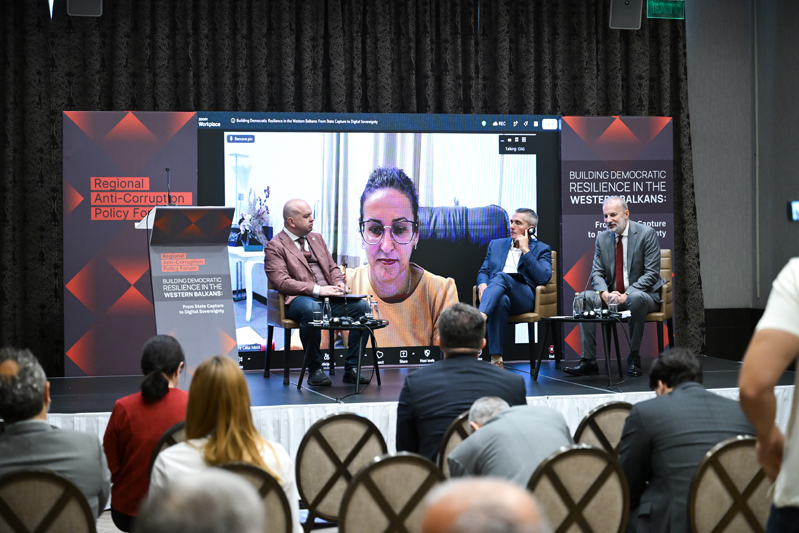
This was stated at the opening of the Regional Anti-Corruption Policy Forum titled "Building Democratic Resilience in the Western Balkans: From State Capture to Digital Sovereignty," organized by the Centre for Monitoring and Research (CeMI) within the project "Civil Society for Good Governance and Anti-Corruption in Southeast Europe: Building Capacity for Evidence-Based Advocacy, Policy Impact, and Citizen Engagement" (SELDI.net).
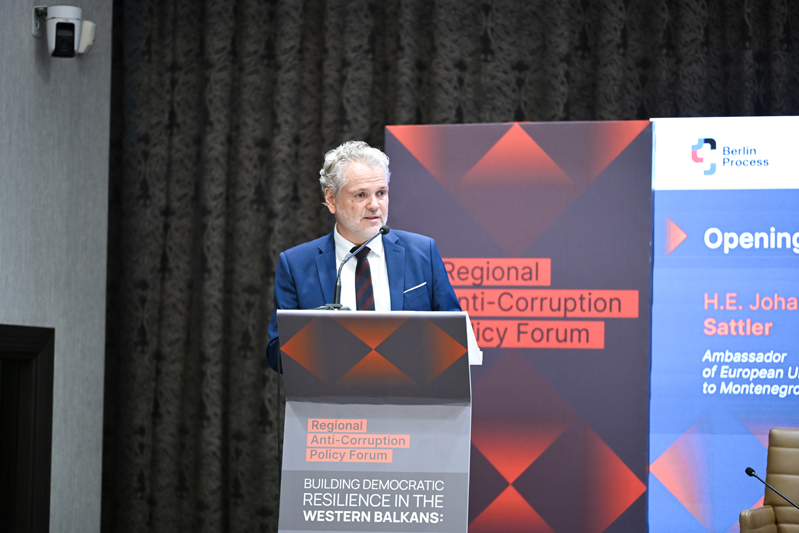
The Ambassador of the European Union to Montenegro, Johann Sattler, stated that strengthening the resilience of democracies against modern challenges is a strategic necessity today rather than just an academic topic, noting that countries in the region should learn from one another to be better prepared to respond to various types of attacks on democratic institutions.
Sattler noted that attacks on democracy are happening across Europe, including attacks on electoral systems, media space, and social cohesion.
"I think it is very important that we stand together and learn from each other," Sattler said, citing as examples the challenges related to electoral systems and the media, as well as attempts to divide societies and incite hatred.
According to him, Podgorica and Montenegro are the right place to discuss these issues, particularly because, as he assessed, a significant portion of the progress Montenegro has made over the last three years has stemmed from its European aspirations and work on implementing European reforms.
Sattler especially praised the work of Montenegrin institutions during the previous summer, stating that significant work had been accomplished.
He recalled that the Montenegrin Parliament worked virtually without interruption through July and August, adopting constitutional changes, electing two judges to the Constitutional Court, and passing numerous legal acts that are to be incorporated into the Montenegrin legal system.
"I think that is a good sign. We feel there is wind in our sails here, and I am happy about the stage we have reached," Sattler said.
He stated that Montenegro has so far closed 18 negotiation chapters, with a very intensive calendar scheduled through the end of the year, during which three to four chapters are expected to be considered per month. As he added, among the most difficult chapters at the end of the negotiation process will be Chapters 23 and 24.
Sattler also announced that EU member states have agreed to begin drafting Montenegro's Accession Treaty, while the European Commission presented a financial package establishing the arrangements that would apply following accession.
"These are not symbolic steps. They would have been unimaginable just a few years ago. This tells us that a new enlargement is happening, which is good news not only for Montenegro, but for the entire Western Balkans and the European Union," Sattler said.
However, Sattler warned that the job is not yet finished and that, as Montenegro gets closer to membership, the quality and sustainability of reforms become increasingly important.
"There can be no shortcuts when it comes to the fundamentals," Sattler said, pointing to the rule of law, independent institutions, the fight against corruption and organized crime, media freedom, and a professional public administration as the foundations of a functional European democracy.
Speaking about the fight against corruption, Sattler stated that it is not merely a governance issue, but increasingly a security issue as well.
As he noted, economic dependencies, illicit financing, disinformation, cyber tools, and foreign interference can be used to exert influence, while weak institutions create additional vulnerabilities.
"That is why the fight against corruption is inextricably linked to strengthening security and democratic resilience," Sattler said.
He emphasized that the EU and Montenegro are cooperating on these challenges from countering hybrid threats and illicit financing to strengthening institutions and professional capacities.
However, he stressed that ultimately, it is the results that will count.
"The results must be effective criminal prosecutions and final court decisions, not just the initiation of proceedings or reaching a certain stage. Assets need to be traced and confiscated, and genuinely independent and professional institutions must be established," Sattler said.
He warned that even after closing negotiations and acceding to the EU, there must be no backsliding regarding fundamental principles.
Addressing the frequent views that corruption is "traditional" for the Western Balkans and that the region is condemned to constantly search for direction, Sattler rejected such assessments.
"Corruption may be a serious problem in parts of the region, but like any problem, it has a solution. This is not about a predetermined destiny, but about hard work on institutional building," Sattler said.
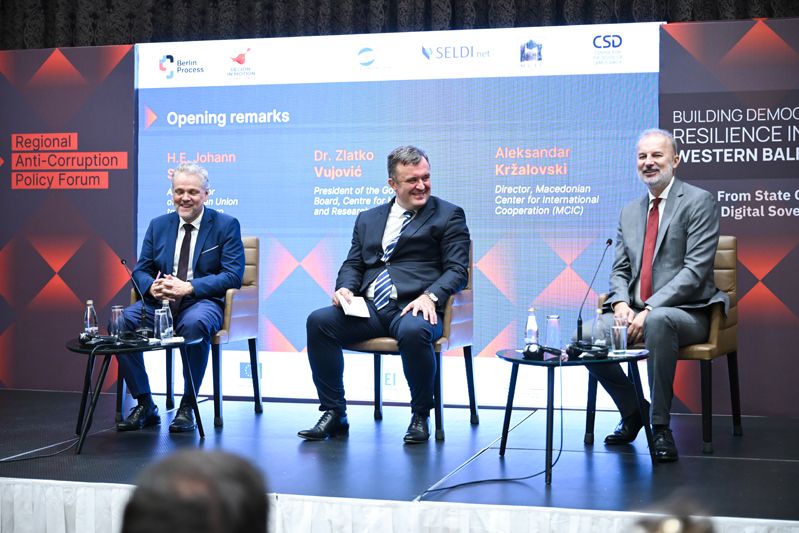
The President of the Governing Board of the Centre for Monitoring and Research (CeMI), Dr. Zlatko Vujović, stated that although Montenegro is closer to the European Union than ever before, it must speak openly about what still needs to be done in the fight against corruption, political influence, and state capture.
He highlighted that European integration requires political actors to recognize moments when achieving a strategic goal for the country is more important than securing an immediate advantage for a political party.
According to him, European integration sometimes demands relinquishing short-term party interests and understanding that, should Montenegro become the next EU member state, the credit would belong to everyone both the government and the opposition just as everyone would share the responsibility to make it happen.
Vujović warned that closing negotiation chapters in itself does not mean that the space for corruption, political influence, and state capture has been closed.
"We can close all negotiation chapters, but that does not mean we have closed the space for corruption, political influence, and state capture," Vujović said.
He added that EU membership alone will not make institutions independent, stating that "that is something we must achieve ourselves."
Speaking about political changes in Montenegro, Vujović recalled the change of government in 2020, which he described as a historic democratic change namely, the first transfer of power through elections after three decades of uninterrupted rule by the same political structure.
He particularly emphasized the manner in which the transition of power occurred: peacefully and orderly, through democratic institutions.
"There was no institutional breakdown, no attempt to block the transfer of power, nor any serious challenging of the results. That was very important for us," Vujović said.
However, six years after those changes, as he noted, the question remains whether a fundamental change in political practice has actually taken place.
"There may have been a change in the political elite, but the practice the negative practice has remained the same. That is something we are truly concerned about when it comes to the future," Vujović stated.
He also raised the question of whether this same pattern might continue even after Montenegro's eventual accession to the European Union.
"Changing those in power is not necessarily the same as changing the way power is exercised," Vujović noted.
He assessed that state capture is not a problem confined to a single political party, a single government, or a single political generation.
"If institutions remain dependent on political will, a change of government may only change those who have the opportunity to control them," Vujović said.
For this reason, he believes Montenegro's European integration must be more than just a successful negotiation process.
"It must result in a system where it will be significantly harder for any future government to subordinate state institutions to private or party interests," Vujović said.
Vujović also underlined the importance of the SELDI network, which for over two decades has brought together civil society organizations across Southeast Europe to measure, compare, and understand corruption as a systemic phenomenon, rather than merely a series of isolated incidents.
According to him, SELDI has made it possible to discuss state capture based on evidence rather than mere political assessments, to compare regional developments and trends, and to include citizens' experiences in public debate.
"This is a debate that too often takes place exclusively among institutional and political actors," Vujović said.
As an important part of the event, the Director of the Macedonian Center for International Cooperation (MCIC), Aleksandar Kržalovski, highlighted the presentation of the new regional report on the fight against corruption, which is set to be published today, tracking corruption levels across Western Balkan countries and published every two years.
"We monitor corruption levels in all Western Balkan countries and learn from one another about who is achieving better results and how. Exchanging experiences is precisely one of the goals of today's forum, allowing countries to learn from the experiences of those that are more advanced or can offer good examples in the fight against corruption and organized crime," Kržalovski said.
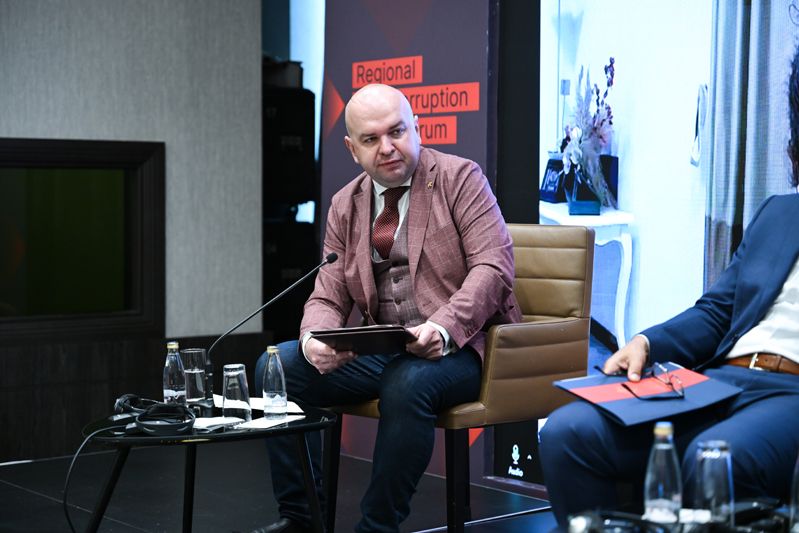
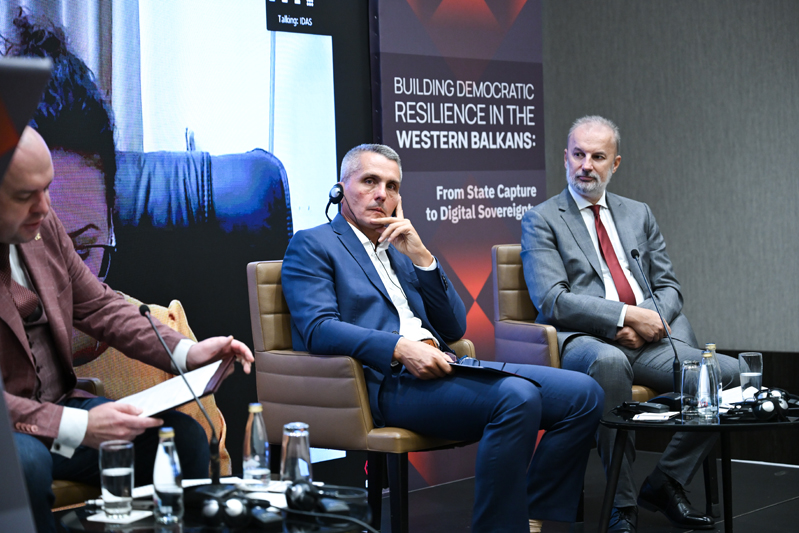
During the first panel, titled "Chapter 24: Justice, Freedom, and Security – Advancing Security Sector Reforms in the Western Balkans," the Head of the Anti-Corruption Department at the Ministry of Internal Affairs (MUP), Peđa Tanjević, stated that Montenegro is at a stage where it must demonstrate the results of reforms through concrete achievements in combating organized crime, corruption, and other forms of serious crime.
He recalled that Montenegro reached an important formal milestone in the negotiation process in June 2024, when it received the interim benchmark assessment report (IBAR) for the chapters concerning the rule of law.
"We have practically moved from the political and technical stage into this third and most difficult phase, where through our work and achieved results, we must prove that the adopted legislative changes are functional and that we are implementing reform substantially, not just formally," Tanjević said.
As he noted, this phase particularly demands proven results in the fight against organized crime, corruption, money laundering, and human trafficking. According to him, the focus is also on migration, asylum, visa policy, and international police cooperation.
Tanjević stated that in its 2025 report, the European Commission noted that the legal framework established by Montenegro to fight organized and serious crime is aligned with the EU acquis, and that the available capacities were assessed as satisfactory. At the same time, as he added, certain remaining weaknesses were highlighted.
Among them, he singled out corruption within law enforcement agencies, the organization of certain police structures, and the need for more stable leadership within the police force.
Speaking about the Ministry's activities, Tanjević said that following an analysis, "two fronts" were opened.
"The first is the fundamental fight against organized crime and corruption. The second front is strengthening the ethics and integrity of police officers and the Ministry of Internal Affairs itself," Tanjević said.
He emphasized that the police, as the first line of defense against crime and corruption, must further reinforce their own ranks to gain the trust of citizens, whom he described as the police's closest partner.
Tanjević stated that the MUP has initiated a process of modernization, digitalization, technical equipment upgrades, and personnel renewal.
"We have completed several public calls to hire new staff, as the police force was facing a personnel deficit," Tanjević said.
Regarding the European Commission's recommendations, Tanjević noted that the MUP had nine recommendations under its jurisdiction. According to him, four of these have been fully met two during 2024 and two in the latest reporting period for 2025.
Four recommendations, he said, have been partially met, while one remains unfulfilled.
That single recommendation concerns worries over inappropriate political influence in the selection of police management and senior leadership positions.
"Through our analysis, we determined that political influence was significant and that work was needed on depoliticization," Tanjević said.
He noted that in January of this year, a Police Directorate director was elected for a full term, and upon taking office, launched a public call to select his deputies.
According to him, the police director is also expected to launch an internal call for appointing heads of regional centers, in accordance with the Law on Internal Affairs.
Tanjević believes this approach could address concerns over inappropriate political influence, expressing confidence that the status of this recommendation will change in the next report.
When asked whether he expects all requirements to be fulfilled by the end of the year, Tanjević said that one should not be overly preoccupied with that.
"Youth has taken over leadership positions in Montenegro. That brings a positive energy that I like, regardless of whether someone is in the government or the opposition. They have taken a shared stance that European integration has no alternative and that our goal is joining the family of European nations," Tanjević said.
He concluded that deadlines should not be prioritized over the quality of reforms.
"We shouldn't obsess over deadlines, because meeting a deadline won't mean we're finished. What matters most to us is that the day after a negotiation chapter and negotiations overall are closed, our institutions are in a better state and functioning better, having undergone a genuine reform compared to the day before closing," Tanjević said.
The Director of the Directorate for EU and International Cooperation at the Ministry of Interior of Bulgaria, Rosen Kukushev, stated that the countries of the region share borders and transport corridors, but also face the same criminal networks, migration routes, illicit financial flows, as well as increasingly prominent cyber and hybrid threats.
"That is why Bulgaria strongly supports the European perspective of the Western Balkans. But we should not wait for our partners from the Western Balkans to accede to the EU to build a common European security area. Operationally, we must build it now," Kukushev said.
He recalled that Bulgaria went through the process of accession to the European Union, as well as the more recent process of full integration into Schengen, noting that one of his country's experiences is that European integration can provide legislation, standards, and institutional models, but that ultimately security and the rule of law are delivered by functional institutions.
He particularly highlighted the issue of institutional resilience against corruption, political pressure, and criminal influence.
Speaking about the connection between corruption, state capture, economic security, and geopolitical vulnerability, Kukushev stated that "corruption is a threat to internal security."
"When organized crime manages to influence public institutions, the distinction between organized crime and corruption becomes increasingly blurred," Kukushev noted.
He also pointed out that the new program of the Bulgarian government provides for a professional, depoliticized, and accountable internal security system, including periodic integrity and loyalty checks, as well as enhanced integrity testing for positions exposed to a high risk of corruption.
Kukushev emphasized the need for stronger regional cooperation because criminal organizations, as he stated, do not think in terms of member states and candidate countries, but rather in terms of routes, markets, vulnerabilities, and profit.
"Our institutional response must therefore increasingly follow the geography of threats. This entails stronger cooperation among law enforcement agencies, joint investigations and operations, information exchange, and mapping the entire criminal ecosystem from the point of origin, through transit, to the final destination," Kukushev said.
He stated that candidate countries should not have to complete all reforms before becoming European security partners.
"They are already our security partners. The question is how, as reforms progress and the necessary standards and safeguards are met, we can gradually bring them closer to European operational cooperation," Kukushev said.
According to him, this implies stronger information sharing, more joint investigations and operations, joint threat assessments, training and expert exchanges, as well as deeper cooperation with European institutions and EU member states.
Speaking about future challenges, Kukushev specifically highlighted artificial intelligence, encrypted communication, cryptocurrencies, cybercrime, drones, and increasingly sophisticated digital financial structures.
"The question for all of us is: are we building institutions capable of coping with the threats of 2030, or are we still reforming institutions designed for the threats of 2015?" Kukushev said.
He added that digitalization can increase the efficiency of law enforcement agencies while reducing opportunities for corruption by limiting discretionary decision-making, creating audit trails, and ensuring greater transparency in institutional processes.
Kukushev concluded that it is necessary to link organized crime investigations with financial investigations and corruption intelligence, strengthen regional cooperation, organize more joint operations against high-risk criminal networks, and develop joint capabilities in the areas of financial investigations, cybercrime, digital forensics, and border management.
"Perhaps even more importantly, we need to shift from the idea of cooperation with the Western Balkans to the concept of shared European security with the Western Balkans," Kukushev stated.
The Deputy Minister of Interior of Albania, Silva Caka, highlighted that Albania has achieved significant progress in key areas of Chapter 24 during the preceding period, including the fight against organized crime, drug-related cooperation, human trafficking, asset recovery, border management, migration, asylum, and visa policy.
As an important milestone, she singled out the Eighth Intergovernmental Conference between Albania and the EU, held on May 26, 2026, when the European Union confirmed the fulfillment of interim benchmarks for Chapter 24 and the opening of the process to fulfill the closing benchmarks. Caka assessed this as recognition of the progress achieved, but also as a clear message that the next phase demands a stronger focus on reform implementation and measurable results.
Caka also highlighted progress in the area of firearm control, stating that the law on the import, export, and transit of firearms, their essential components, and ammunition had been adopted, while in December 2025, the National Strategy on Small Arms and Light Weapons, Ammunition, and Explosives for 2025–2030 and its accompanying action plan for 2025–2028 were approved.
"Special focus has been placed on the recovery of assets derived from crime. The adoption of the Law on the Asset Recovery Office has further strengthened the institutional framework for identifying, tracking, seizing, and recovering proceeds of criminal activity. The Asset Recovery Office has been upgraded to the Asset Recovery Directorate operating within the General Directorate of the State Police and is now fully operational," Caka said.
Speaking about the fight against human trafficking, Caka stated that Albania has strengthened protection and referral mechanisms for victims, while the National Referral Mechanism is fully operational, allowing for improved cooperation among institutions involved in victim identification, referral, and assistance.
"In the fight against drugs, Albania," she stated, "has further aligned its criminal legislation with the EU acquis and enhanced institutional capacities for monitoring and reporting on drugs and new psychoactive substances. A National Early Warning System has been established within the State Police, while the National Drug Observatory within the Ministry of Health and Social Protection is set to help ensure that policies in this domain are increasingly grounded in reliable data and evidence."
The third major area of Chapter 24, according to her, relates to migration, asylum, visa policy, the Schengen acquis, and external borders.
"Albania has continued to build capacity to manage migration flows and align with European standards. As key documents, she highlighted the National Strategy on Migration 2024–2030, the Integrated Border Management Strategy, and the National Contingency Plan for Mixed Migration Flows," Caka said.
Caka emphasized that organized criminal networks, human trafficking routes, drug markets, arms smuggling, and irregular migration are transnational by nature and require a coordinated regional and international response.
"Regional cooperation should be an integral part of the EU accession process, through enhanced information sharing, operational cooperation among police and other authorities, and a joint response to cross-border crime," Caka noted.
She concluded that meeting the interim benchmarks for Chapter 24 is not the end of the process, but the start of a new and more demanding phase where the focus shifts to closing benchmarks and proving that the adopted reforms are fully implemented, sustainable, and delivering tangible results in practice.
The event was held with the financial support of the European Union and the Central European Initiative, with contributions from the Ministry of Foreign Affairs and International Cooperation of the Republic of Italy.