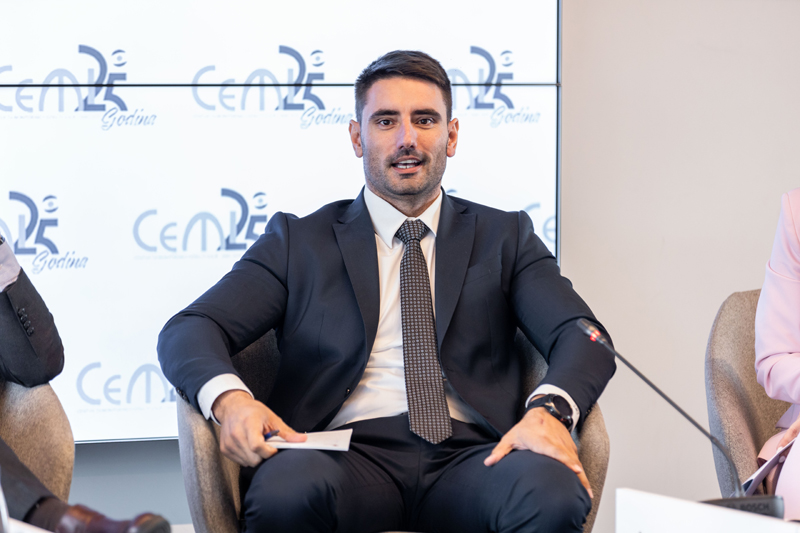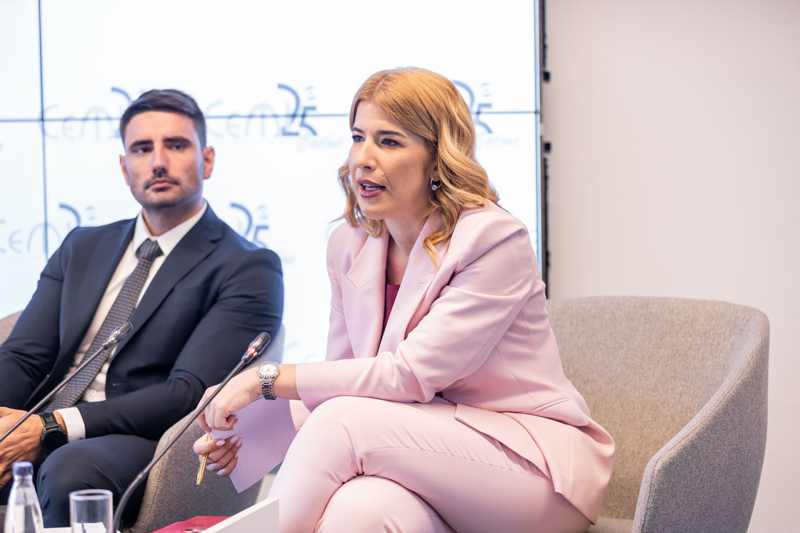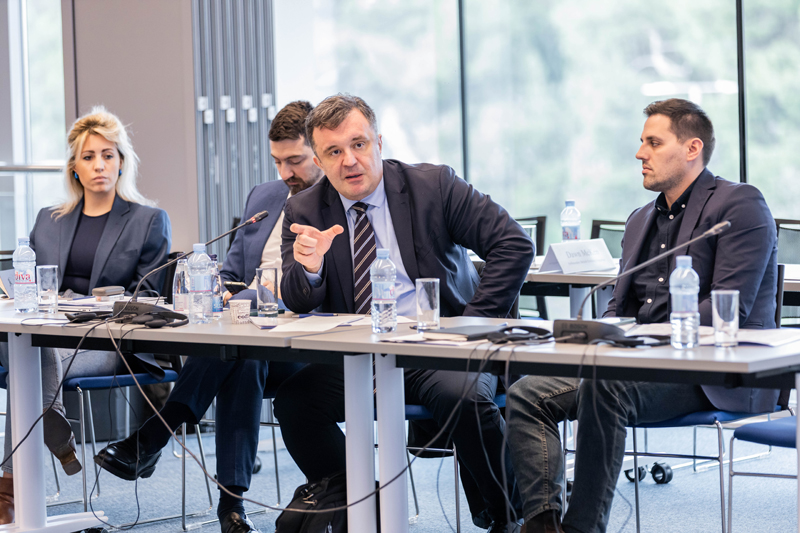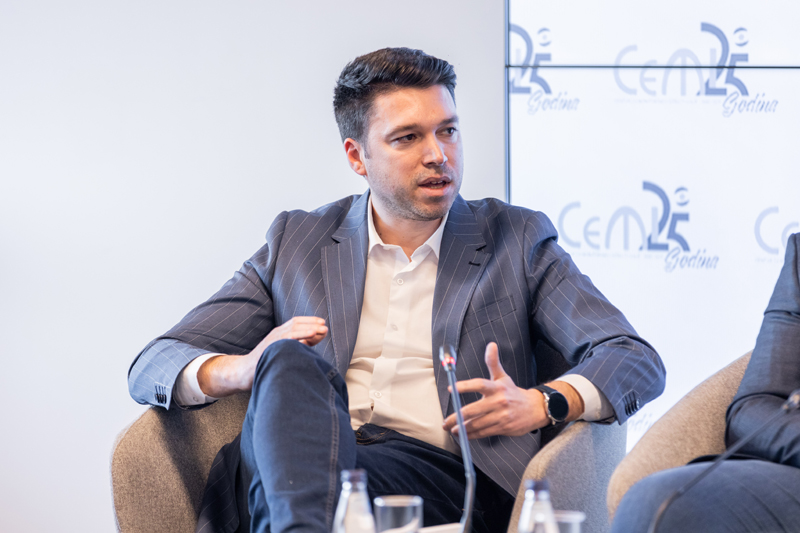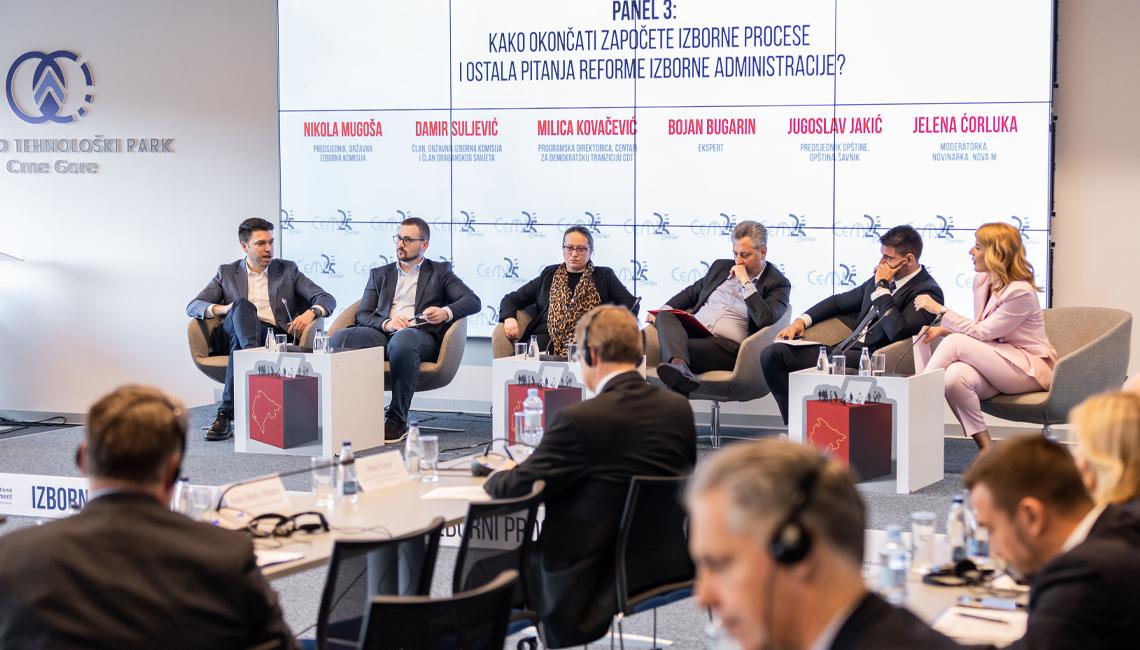
The reform of electoral legislation, improvement of the work of electoral commissions, and professionalization of local electoral bodies represent the foundation for holding legitimate elections in Montenegro.
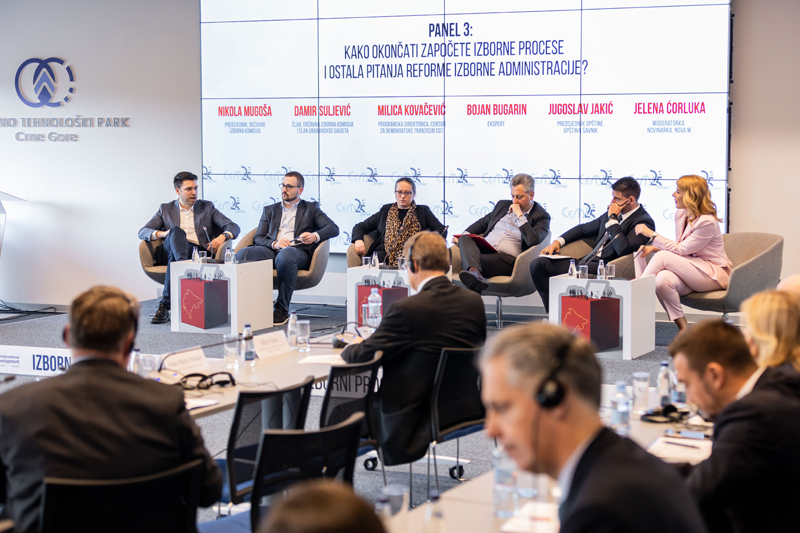
This was stated at the fourth panel “Key Priorities of Electoral Reform in Montenegro”, within the conference “Electoral Reform in Montenegro: How to Make the Electoral Process Functional?”, organized by CeMI with the support of the British Embassy Podgorica.
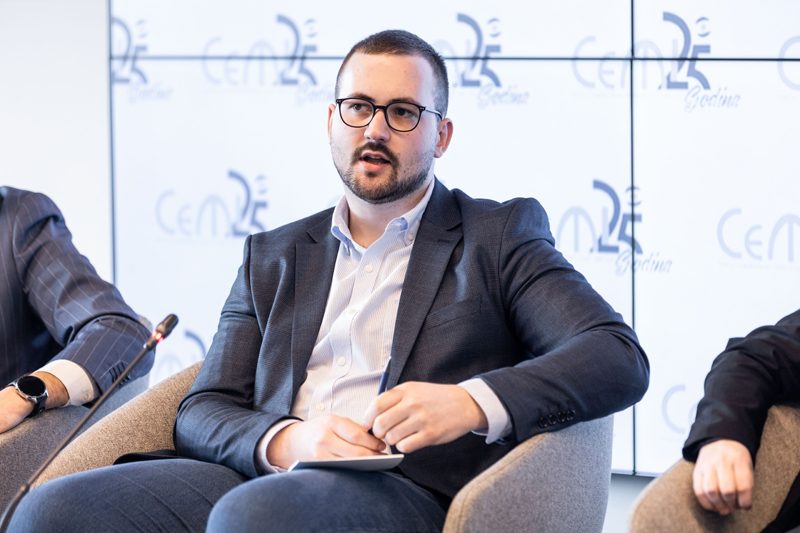
President of the State Election Commission Nikola Mugoša emphasized that the topic of electoral reform had been addressed multiple times during his mandate, and that numerous conferences on this topic had been held.
He said that, although several years have passed, the situation in the municipality of Šavnik, which was current even three years ago, still remains unresolved.
“Although the SEC holds regular sessions at which it instructs municipal election commissions to repeat elections at two polling stations, these sessions have no legal effect. The current law does not allow the SEC to take over the responsibilities of municipal election commissions, which means that the elections at these two polling stations have not been completed,” stated Mugoša.
He emphasized that the SEC, although composed mostly of representatives of political parties, is united in the position that it is necessary to complete the electoral processes in the municipality of Šavnik.
“However, due to the divisions within the municipal election commission, it is not possible to make a decision and act upon the instructions of the SEC,” Mugoša said.
He stated that the current electoral system, which is predominantly based on political parties, creates obstacles to decision-making, which is one of the reasons why electoral reform is needed, including a change in the composition of municipal election commissions.
“For the successful completion of the electoral process, it would be necessary to consider changes to the law that would allow for greater efficiency in the work of election commissions,” Mugoša pointed out.
He recommended changing the method of selecting members of municipal election commissions and distancing them from political parties, which would increase objectivity and reduce political division.
Speaking about the work of the Committee for Comprehensive Electoral Reform, Mugoša assessed that the work of that body must follow the stability of political institutions.
Commenting on the introduction of open electoral lists, Mugoša said that it is first important to conduct an analysis of which voting modalities would be best for Montenegro.
He added that open electoral lists, along with adequate education of citizens, could improve political accountability and contribute to greater representativeness of political parties.
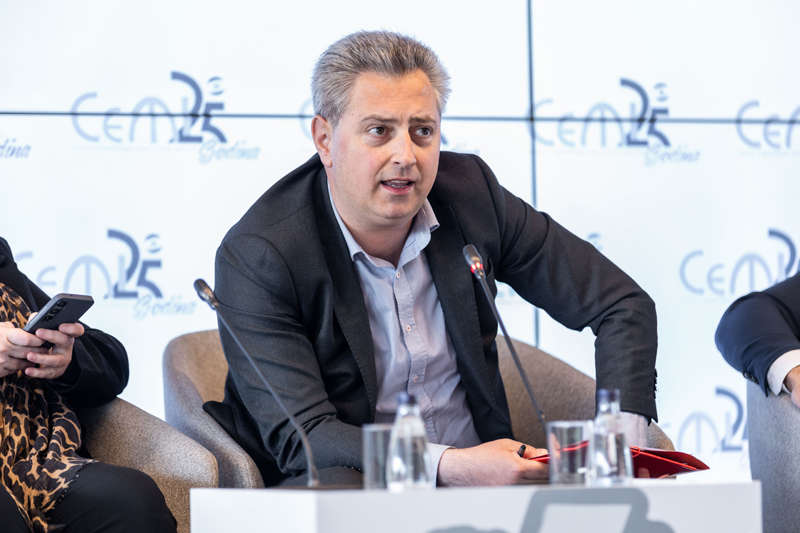
Member of the State Election Commission and member of the Civic Council, Damir Suljević, said that mayors have broad powers that enable them to represent executive authority in municipalities.
Although, as he stated, the situation in Kotor and Šavnik—where former mayors were re-elected to continue their mandate until a new government is elected—was the only possible solution under the current circumstances, Suljević pointed out that it is not ideal.
He believes that in a more stable society, where laws are consistently respected, the elections in Kotor and Šavnik would have already been completed.
Suljević pointed out the problem of a non-functional Constitutional Court, which slows down the formation of government in several municipalities, including the Capital City.
“The situation with Kotor shows shortcomings in the system, as there is no majority needed to make decisions related to constitutional complaints. A solution to this situation could be the withdrawal of complaints, as Mr. Jokić did,” said Suljević.
Speaking about the introduction of forced administration, Suljević emphasized that it would be illegal, as the local assembly would have greater legitimacy to elect the president of the municipality than the government, since the local assembly is elected by the citizens.
Suljević believes it would be good for both party representatives and professionals to be part of the election commissions, in order to improve the work of these bodies.
“The quality of work of the State Election Commission, as well as municipal commissions, is significantly better when professionals and authorized representatives of political parties are present,” Suljević stated.
The Committee for Comprehensive Electoral Reform, in his words, does not grasp the seriousness of the reforms, which slows down the adoption of key legal solutions.
Speaking about the possibility of introducing open electoral lists in Montenegro, Suljević said that before introducing that type of voting, it is necessary to thoroughly analyze and find the best model that would allow more efficient performance of MPs and increase the accountability of politicians to citizens.
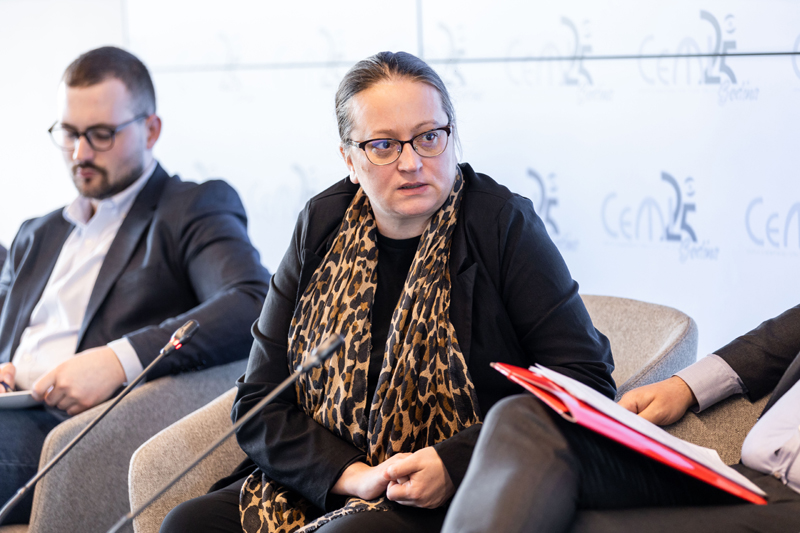
Program Director of the Center for Democratic Transition (CDT), Milica Kovačević, pointed out the key weaknesses of the current electoral system, emphasizing that “on different bodies, depending on the political situation, opinions and positions change without proper explanations.”
This, in her words, creates a situation in which “everything can be reduced to: this suits my party,” which significantly undermines trust in the legality and legitimacy of political decisions.
She particularly emphasized the problem of illegitimate decisions made in municipalities, stressing that “a municipal assembly whose mandate has expired cannot legitimately elect mayors.”
According to her, this creates a serious problem with the legitimacy of such decisions and functions in municipalities, while citizens—who are most affected in this process—are left without their Constitutionally guaranteed right to vote and be elected.
Kovačević warned of numerous manipulations in the electoral process, which are often carried out in small polling stations.
“The repeated holding of elections due to procedural errors has become commonplace,” said Kovačević, adding that this puts pressure on voters and alters election results.
Speaking about the needed electoral reform, Kovačević emphasized that an electoral process that is fully transparent and legitimate must be ensured.
“For that, an electoral reform is needed that includes improving the professionalism and independence of institutions. It is crucial that the Constitutional Court be elected according to professional and expert criteria, and not based on political affiliation,” Kovačević stated.
Speaking about the situation in Šavnik, Kovačević pointed out that this local government cannot obtain legitimate power until new elections are held.
“The current political environment in that municipality does not allow for the holding of regular elections, because the voter register is frozen, which has created major inequalities among voters. Many have moved in or out, some have passed away, and the political scene has changed dramatically,” said Kovačević.
She expressed deep doubt about the possibility of implementing a comprehensive electoral reform by the end of 2025, pointing out that there is no political will to resolve key issues.
“Although the Committee for Comprehensive Electoral Reform was formed, it was clear at the very first session that political will is lacking. The Committee did not address key issues such as open electoral lists or professional electoral administration, which is key to a successful reform,” Kovačević said.
She assessed that if the fundamental issues of electoral reform are not resolved, future elections will not be stable or fair.
“The situation could be much better if political parties agreed on key reforms, because at the moment it is impossible to implement serious changes without broader political support,” Kovačević said.
Expert Bojan Bugarin assessed that the current situation is not the result of institutional mistakes, but of deep politicization, characterized by “partitocracy”—a system in which political parties control key aspects of social life, thereby undermining the efficiency and independence of institutions.
He believes that political parties have become the basic “cells” of society, so all decisions and changes depend on political agreements, not on legislative or institutional frameworks.
“This state has become an existential model of political action, which leaves no room for healthy political competition and development,” said Bugarin.
He believes that resolving current problems requires political will and greater engagement from the European Union.
“I agree with Professor Blažić's statement that the current problems, such as those in Šavnik, are not legal but political in nature, and without stronger pressure from Brussels, change will be difficult,” said Bugarin.
He believes that political actors who were in opposition and are now in power do not want to improve the electoral system because it would reduce their political power.
Bugarin said that, although there are solutions that can be quickly implemented—such as open lists—it is first necessary to thoroughly analyze the political risks that could undermine these reforms.
“In essence, Montenegro must find mechanisms to prevent manipulation and abuse of the idea of open lists, in order to truly achieve policies that serve the interests of citizens, not political parties,” Bugarin said.
President of the Municipality of Šavnik, Jugoslav Jakić, believes that problems in the electoral process are not specific only to Šavnik, but that there are broader problems in Montenegro’s electoral legislation.
Nevertheless, he points out that despite having the same legal framework, parliamentary, presidential, and local elections were held in other municipalities, while in Šavnik there was a blockade.
“The cause of this lies in the political will of certain parties, specifically those that currently make up the parliamentary majority,” Jakić believes.
Speaking about his legitimacy, Jakić said that it derives from the decision of the local government, and that his continuation in office was necessary for the functioning of the municipal administration.
“Without the president of the municipality, local administration cannot function, as all key decisions are made within his authority,” Jakić reminded.
He expressed concern over the attitude of the Government and competent institutions regarding this issue.
“The police and the prosecution should have responded appropriately to the violence during the elections and enforced the decisions of the State Election Commission,” Jakić said.
Commenting on a similar situation in Kotor, Jakić said that principled behavior in politics is essential.
Jakić believes that irresponsible interpretation of the law can lead to systemic instability.
Speaking about electoral reforms, Jakić said he supports the concept of open lists but expressed concern over possible political manipulations in that process.