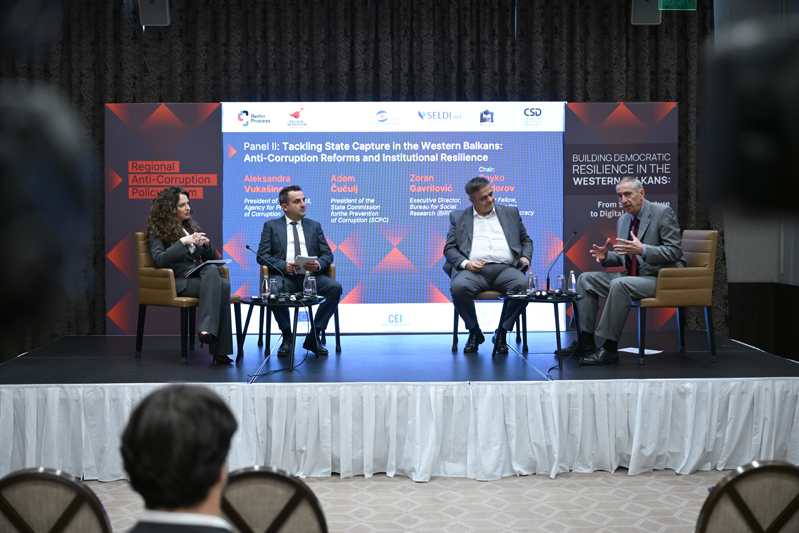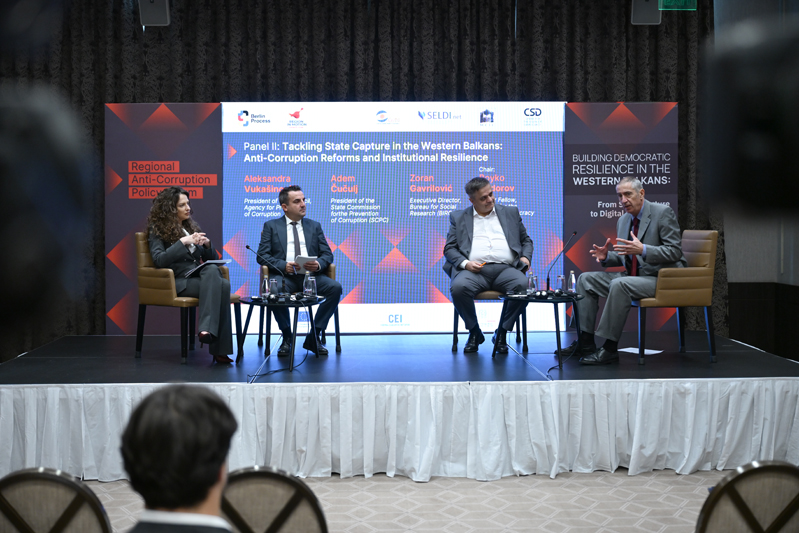
Regional governments are largely occupied with the problem of state capture, and in the fight against corruption as a chronic disease of the social system, the most important elements are free media, whistleblowers, as well as officials and civil servants with integrity.
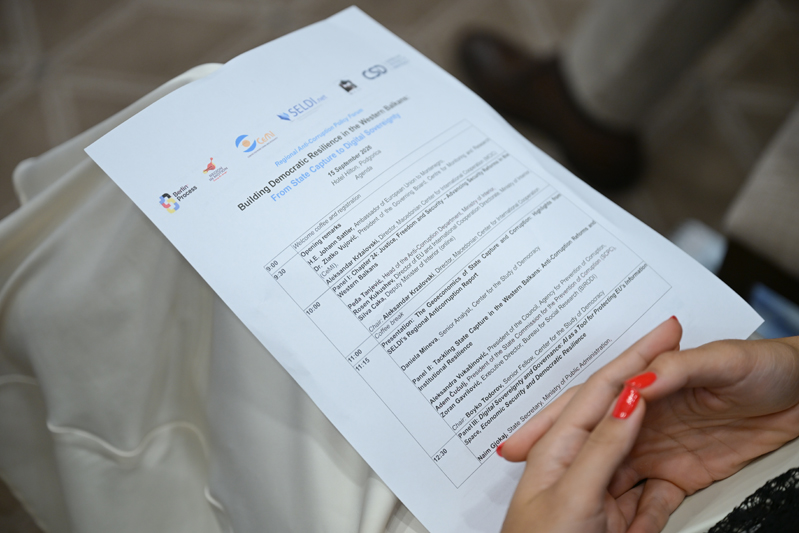
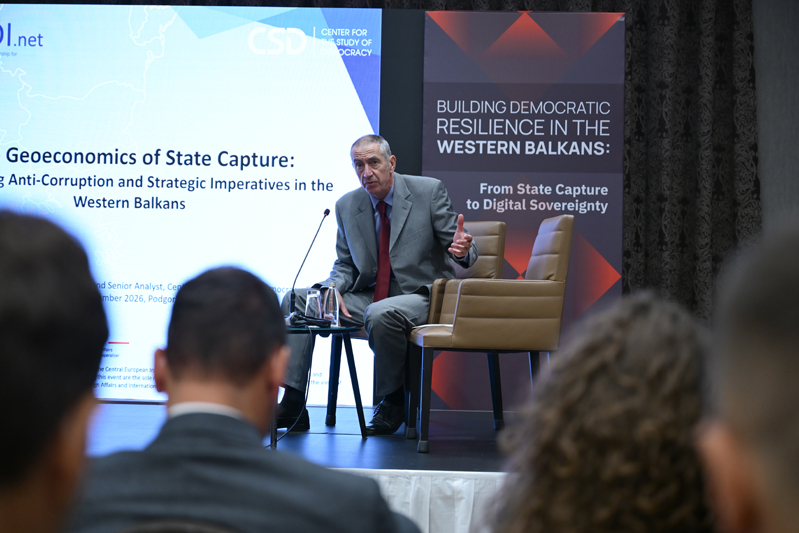
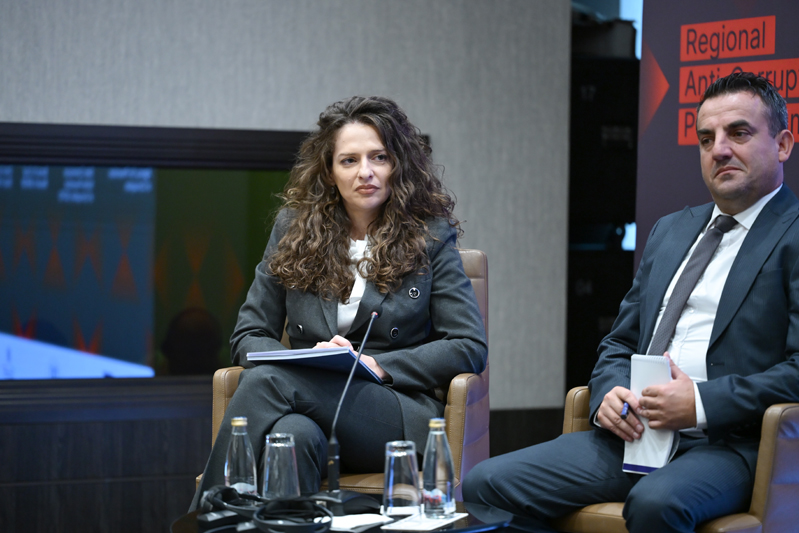
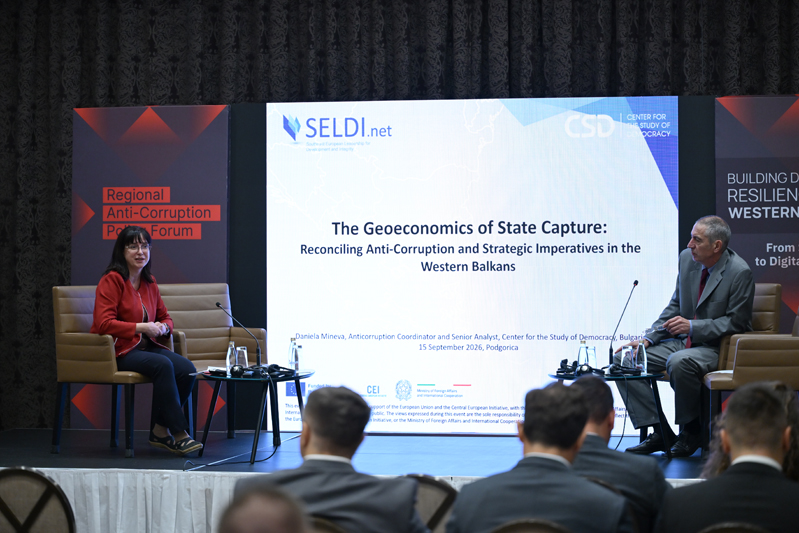
This was the assessment from the second panel, "Fighting State Capture in the Western Balkans: Anti-Corruption Reforms and Institutional Resilience," held within the regional policy forum "Building Democratic Resilience in the Western Balkans: From State Capture to Digital Sovereignty," organized by the Centre for Monitoring and Research (CeMI).
Daniela Mineva, Senior Analyst at the Center for the Study of Democracy, assessed that governments are still occupied with the problem of state capture, for which a formula that would resolve it does not yet exist.
“The diagnostic model for state capture encompasses several dimensions. The first dimension consists of enabling environmental factors, followed by other institutions that suffer from a lack of integrity or bias, and finally, very importantly, we have capture in the business sector,” Mineva stressed.
She stated that Bosnia and Herzegovina and Serbia are in the red zone, with deep-seated, systemic state capture present in those countries.
“North Macedonia, Montenegro, Albania, and Kosovo have a lower intensity of capture, which is reflected through connections between government and business,” Mineva said.
According to her, the greatest concern exists regarding the capture of the media and the judiciary.
“As for the judiciary, we noticed that it is exposed to pressure not only from private interests seeking to influence judicial decisions, but also from ruling parties. We have seen manipulation of laws that disrupts implementation, allowing criminals to go free if trials drag on for too long. Experts have confirmed illegal political and private influence on judicial systems, which is most pronounced in the cases of Serbia, North Macedonia, and Bosnia and Herzegovina,” Mineva explained.
When it comes to media capture, she stated that worrying trends exist.
“Some state telecom companies are taking over smaller independent media, thereby reducing media pluralism while making media dependent on the government for budgets, including advertising budgets. We also have Kremlin influence on media narratives, leading to self-censorship in editorial policies. There are business blockades and other forms of state interference in media operations. We also see that the media regulator is exposed to pressure,” Mineva noted.
She pointed out that administrative corruption shows a downward trend, but it is not stable.
“We also have data from last year showing that petty corruption is on the rise in most countries. Furthermore, we see wealthy entrepreneurs obtaining executive branch positions while continuing to run their businesses as passive owners. This circumvents regulations regarding conflicts of interest, indicating that laws need to be amended in this area as well. At the same time, governments do business with these enterprises to ensure their survival,” Mineva pointed out.
Public procurement, as she asserted, has become the main instrument of state capture.
“This is not new, but we see that single-bidder procurements remain the standard in many countries, service quality is not respected, and bodies are needed to monitor the quality of services after they are delivered,” Mineva said.
She believes local delegations must organize meetings with ministers and agency directors more frequently to ensure support in the fight against corruption, while European Union experts should support partners in the Western Balkans.
“Ministries of Internal Affairs need to be capable of detecting movements of funds, cryptocurrencies, and new methods of fund transfer, while media outlets must disclose who their actual ultimate beneficial owner is,” Mineva urged.
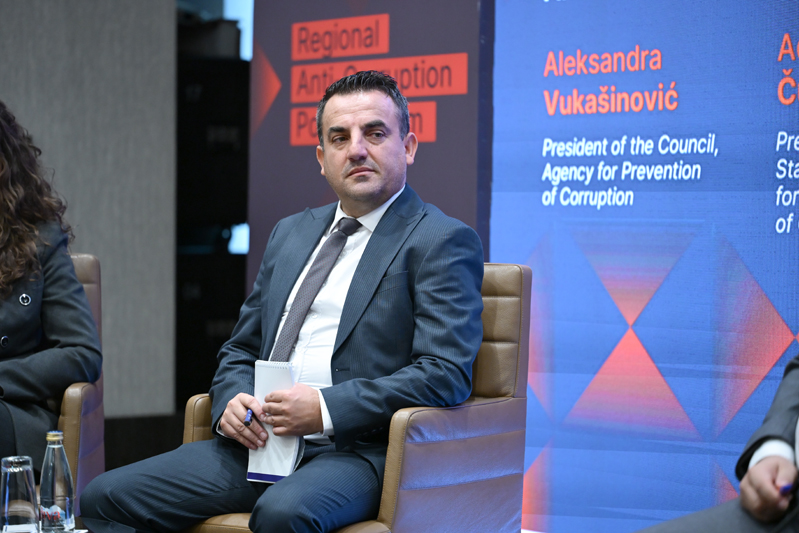
The President of the Council of the Agency for Prevention of Corruption in Montenegro, Aleksandra Vukašinović, emphasized that in the public's perception, corruption remains a chronic problem and a disease of the social system.
"Research on corruption perception represents a key element of an effective anti-corruption strategy. Any criticism based on facts does not weaken institutions; on the contrary, an institution can only be weakened by an unwillingness to hear that criticism and, when justified, to respond to it by changing practice," Vukašinović is certain.
She recalled that Montenegro has a new normative framework when it comes to corruption prevention, which was amended two years ago.
"Increased legislative activity is the result of Montenegro's accession process to the European Union. The normative framework in Montenegro is comprehensive, but the challenge remains its effective implementation," Vukašinović said.
Successful prevention of corruption, in her view, rests on four fundamental conditions.
"The first is the rule of law. Institutions are resilient only when their actions do not depend on who is subject to oversight. The second is resources financial, technological, and human. The third is political will to build a system that will not depend on that very political will. The fourth is a developed civic awareness. We can change a bad law in parliament, but changing a social norm is much harder," Vukašinović said.
Therefore, as she highlighted, the preventive fight against corruption should begin in the classroom.
“Our task is to enable young generations not to inherit our mistakes as a social norm,” was Vukašinović's message.
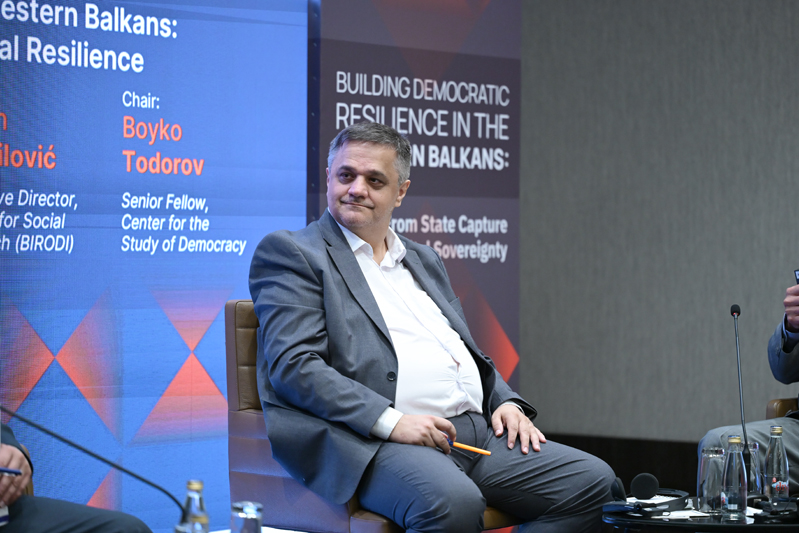
The Executive Director of the Bureau for Social Research (BIRODI) from Serbia, Zoran Gavrilović, believes that the biggest problem with the Agency for Prevention of Corruption in that country is its “escape from the public.”
“They lack a partnership with citizens. We cannot fight corruption without the public. We must involve citizens and the public, because without the public, we get the corruption of the fight against corruption. In Serbia, those fighting corruption face retaliation from the authorities or neglect by anti-corruption bodies, while those engaging in corruption are rewarded. We actually have a corrupt fight against corruption, and that is a double problem,” Gavrilović pointed out.
He is certain that free media are the most critical factor in this entire situation.
“In Serbia, we have captured media. The only salvation lies in whistleblowers, officials and civil servants with integrity, and free media,” Gavrilović was clear.
The President of the State Commission for Prevention of Corruption (SCPC) in North Macedonia, Adem Čučulj, emphasized that the biggest obstacles in the commission's work are the lack of financial and human resources, along with constant pressure from the public, media, political parties, and non-governmental organizations.
“Everyone expects every corruption scandal to be resolved first by the commission, yet the commission lacks investigative mechanisms. The most important thing is to properly utilize available human resources, set work priorities, and maintain regular cooperation with other institutions,” Čučulj said.
He explained that the commission he heads is a preventive body, and that prevention is very important.
“Implementation is always an issue both with the integrity system and with the anti-corruption vetting of legislation conducted by the commission. Our institutions execute preventive measures, but someone needs to implement them. However, there is insufficient political will and, most importantly, a lack of political accountability,” Čučulj expressed.
The event was organized with the financial support of the European Union and the Central European Initiative, with contributions from the Ministry of Foreign Affairs and International Cooperation of the Republic of Italy.