There can be no real progress in the field of gender equality without clear political will, systemic changes, and strong women’s solidarity. In a society of deeply rooted patriarchy and formal policies without real implementation, women remain excluded from centers of political power.
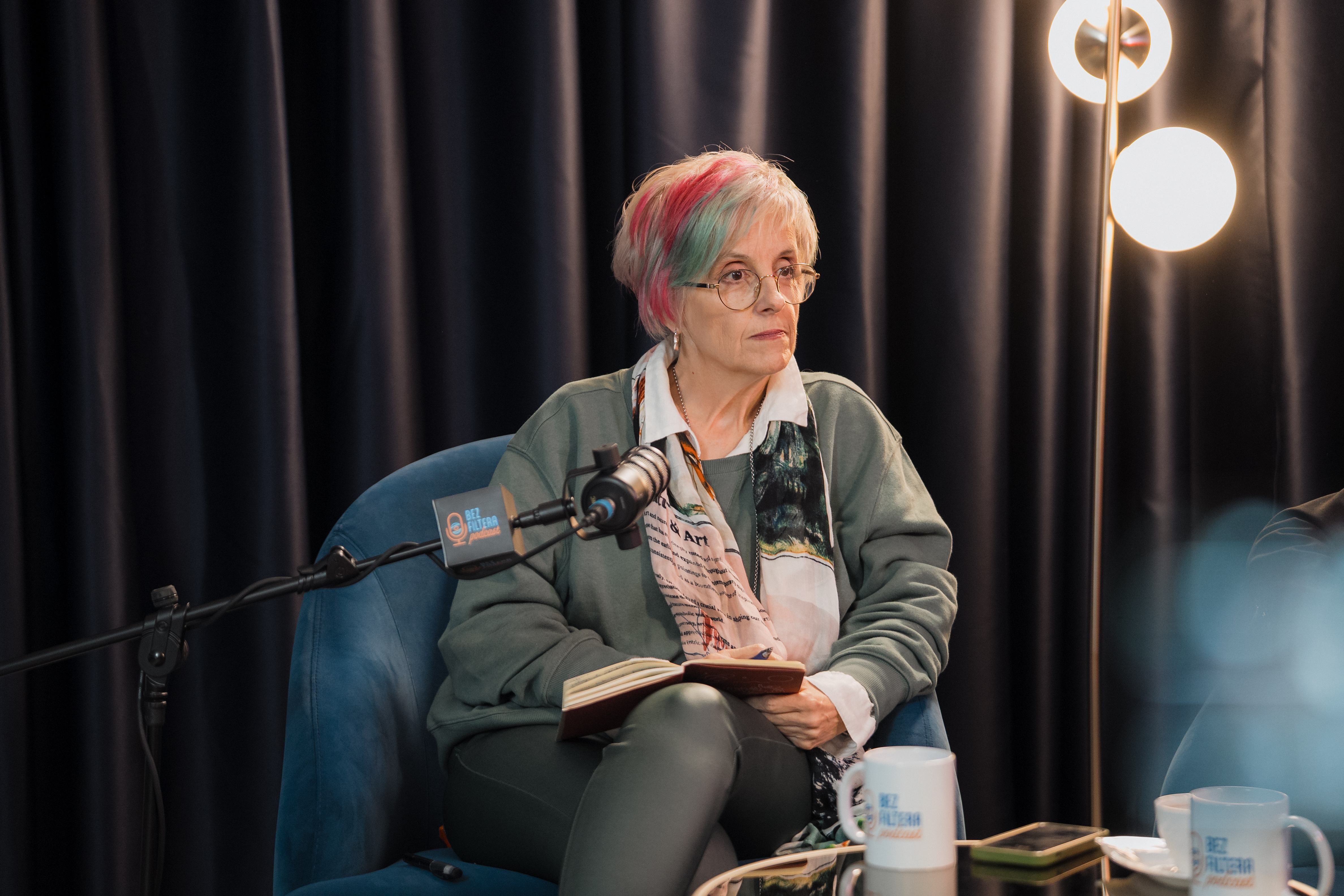
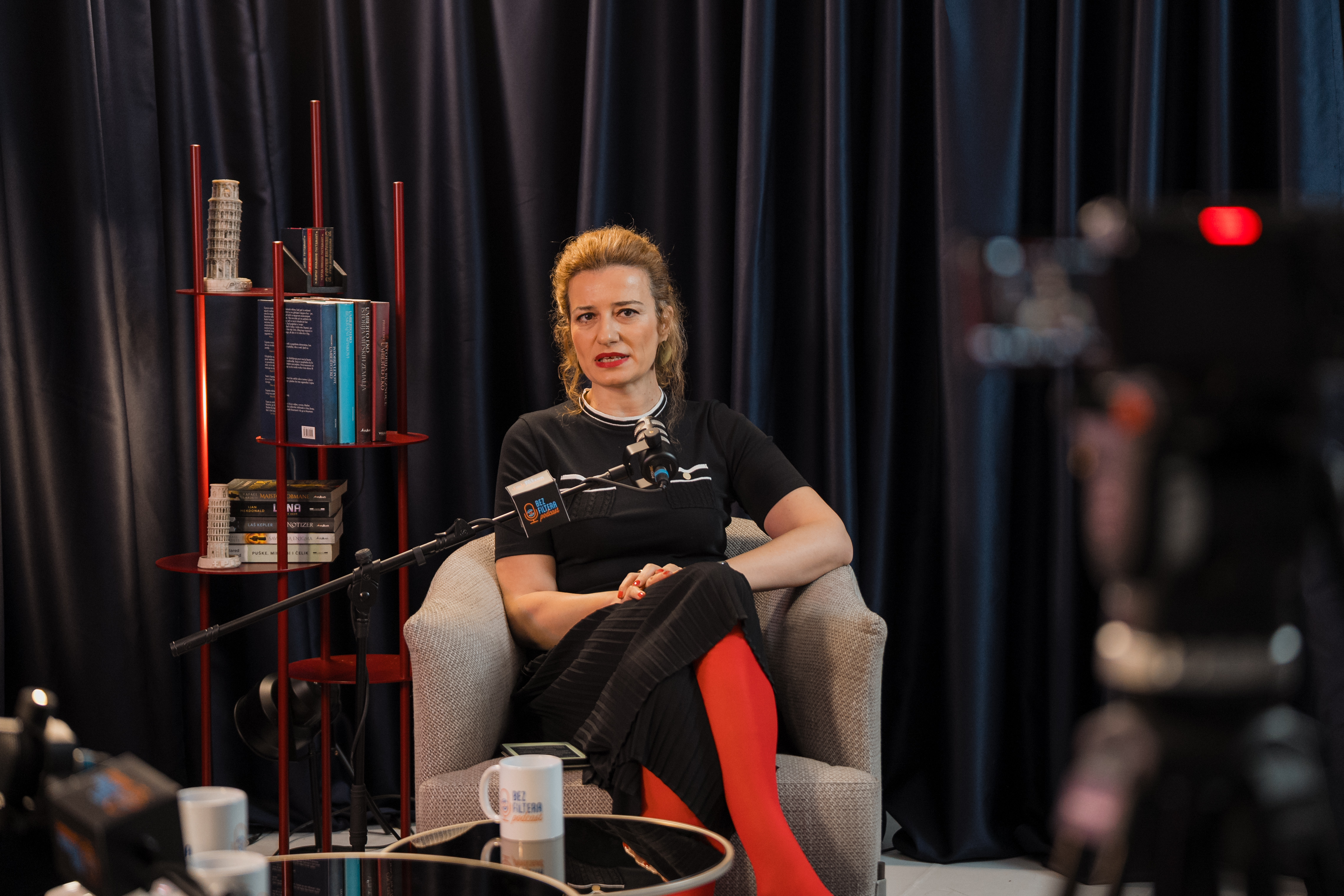
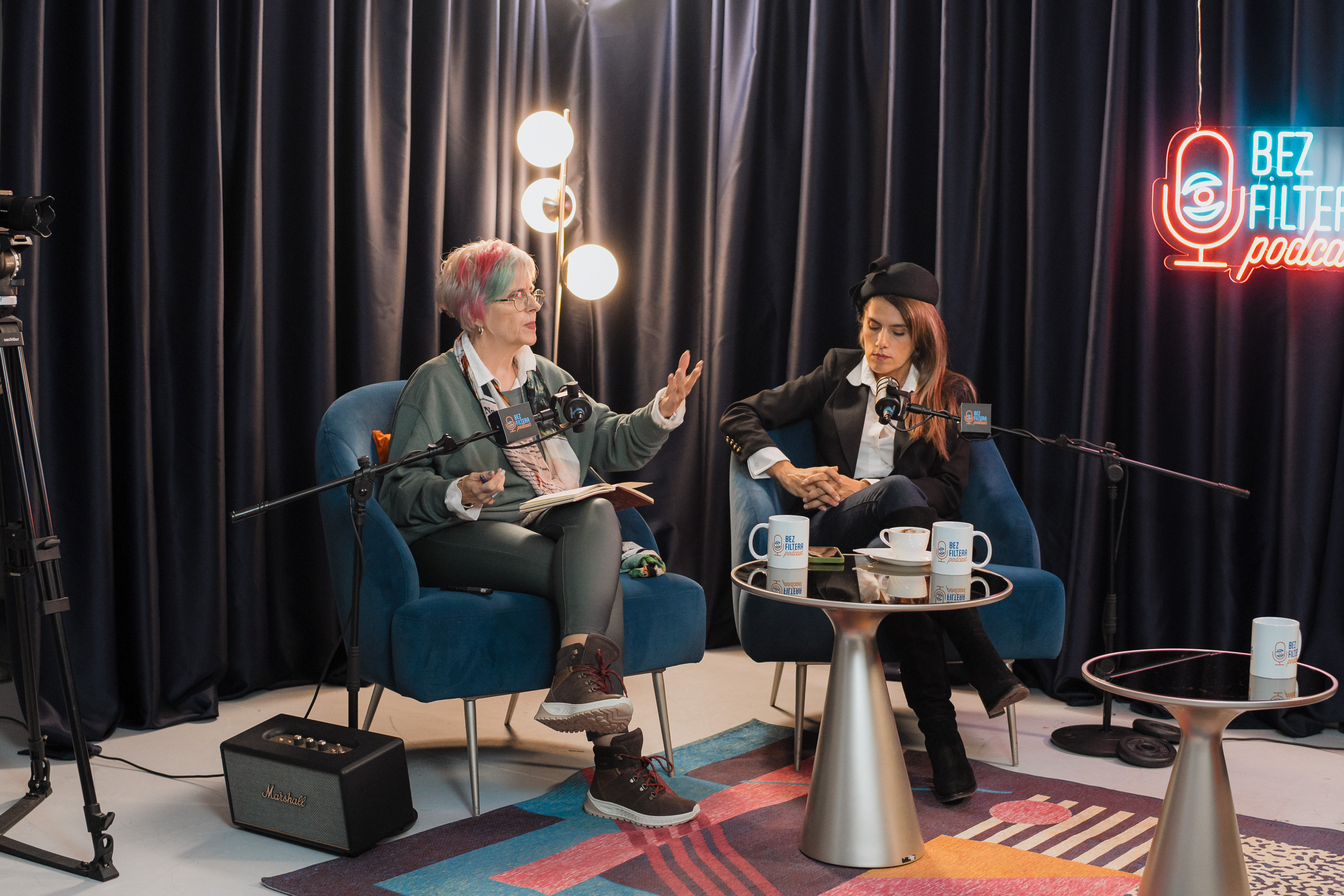
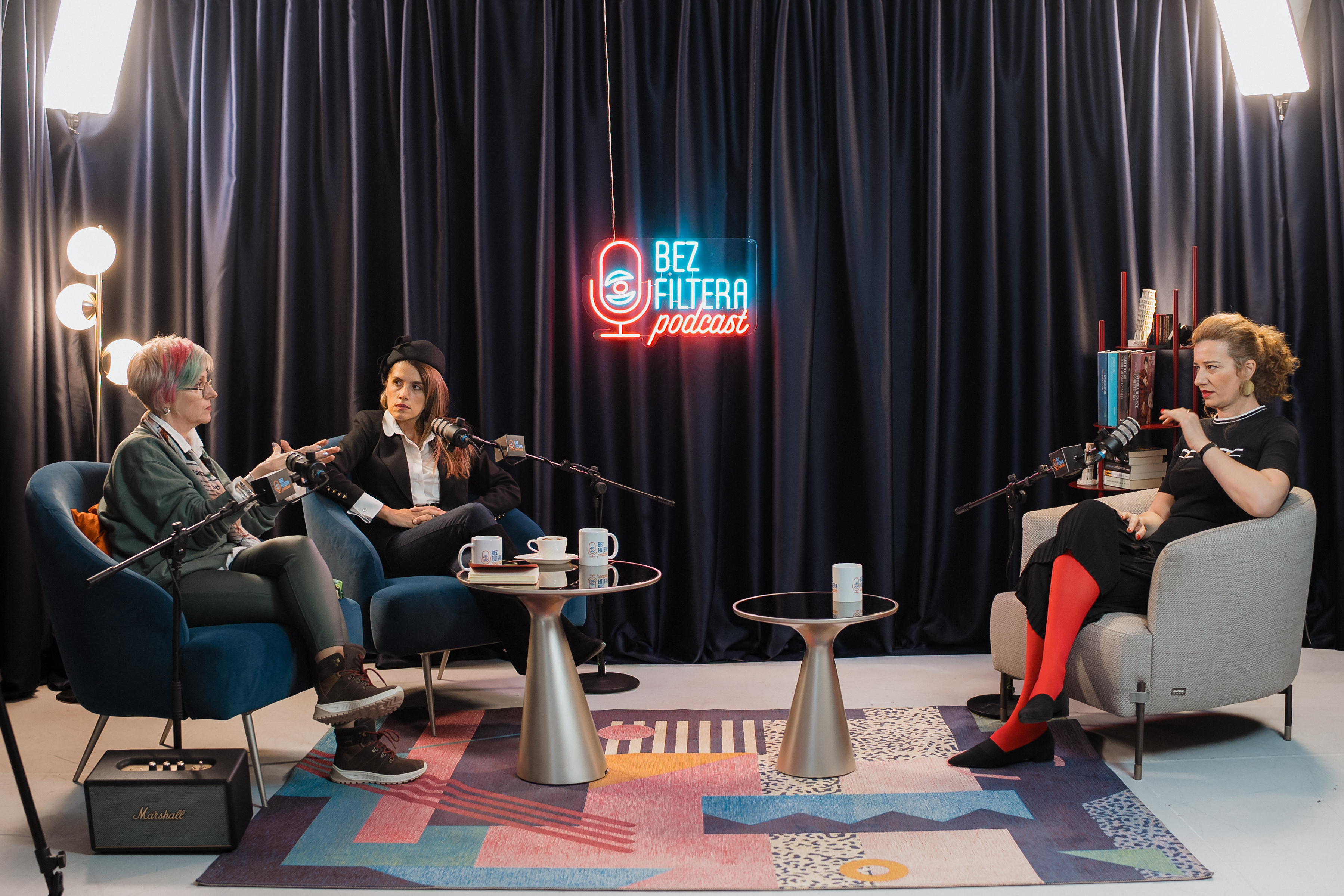
This was the key message of the third episode of our podcast “Without Filters”, titled “Why Does Power in Montenegro Not Have a Female Face?”.
Aleksandra Vuković Kuč, Vice President of the Democratic Party of Socialists (DPS) and Member of the Parliament of Montenegro, assessed that Montenegro today does not function as a meritocratic society, but rather as what she described as a “kakistocracy – the rule of the worst,” where knowledge, education, and competence are not the key criteria for advancement.
“Politics, as one of the most powerful manifestations of the human spirit, has become an arena for mediocrity, and these average individuals have created a system so restrictive that it does not allow exceptional people to break through, whether they are men or women,” Vuković Kuč said.
She particularly pointed to the problem of questionable and purchased diplomas, noting that competent institutions themselves have stated that there are between 22,000 and 25,000 such diplomas in Montenegro.
As she emphasized, a society that does not problematize such practices cannot expect a genuine breakthrough of educated and competent women in politics.
“The moment we recognize that buying or falsifying a diploma is a crime just like smuggling cigarettes or drugs, we can start talking about real change,” Vuković Kuč stated.
Speaking about gender equality, she noted that patriarchy continues to strongly shape the political and social environment, which is also reflected in resistance to gender-sensitive language. She pointed out the paradox that some women reject the use of feminine forms of professional titles, believing that this diminishes their authority, even though, as she emphasized, “language is the house of being from which everything originates.”
Psychologist and PhD in Gender Studies, and a member of ANIMA – Center for Women’s and Peace Education, Ervina Dabidžinović, assessed that the decades-long and centuries-old invisibility of women can be viewed as a form of collective trauma, created through the institutionalization and normalization of their disenfranchisement.
“This is structural and institutional violence produced by patriarchy. Women are present in the public sphere, but they are not allowed real power,” Dabidžinović said.
She emphasized that political parties represent centers of the strongest patriarchal power, where key positions are almost exclusively reserved for men, while women are often assigned areas without real political or financial influence.
“The moment a woman tries to cross the boundary and take a share of power, the system responds with exclusion, attacks, and delegitimization,” Dabidžinović warned.
The speakers agreed that gender equality policies in Montenegro are largely formal and normative, lacking substantive implementation.
Dabidžinović reminded that laws are often adopted without secured funding and accountability mechanisms, which is why they remain a dead letter on paper.
Vuković Kuč emphasized that she now strongly supports the introduction of binding gender quotas and that the only fair solution is a quota of 50 percent women in political bodies.
“Without binding quotas, women will remain on the margins of political decision-making. The only fair solution is 50 percent,” Vuković Kuč stressed.
The discussion also addressed violence against women, hate speech, and femicide, as well as the responsibility of institutions that often fail to respond adequately. The speakers concluded that without clear political will, systemic changes, and strong women’s solidarity, there can be no real progress in gender equality and the position of women in Montenegrin politics.
The third episode of the podcast “Without Filters” was produced within the project “Challenging Gender Bias and Enhancing Women’s Political Participation in Montenegro through Public Awareness, Capacity-Building Trainings, and Gender Representation Advocacy”, implemented by CeMI with financial support from the Canadian Embassy through the Canada Fund for Local Initiatives (CFLI). The views expressed in the podcast do not necessarily reflect the views of the Canadian Embassy.