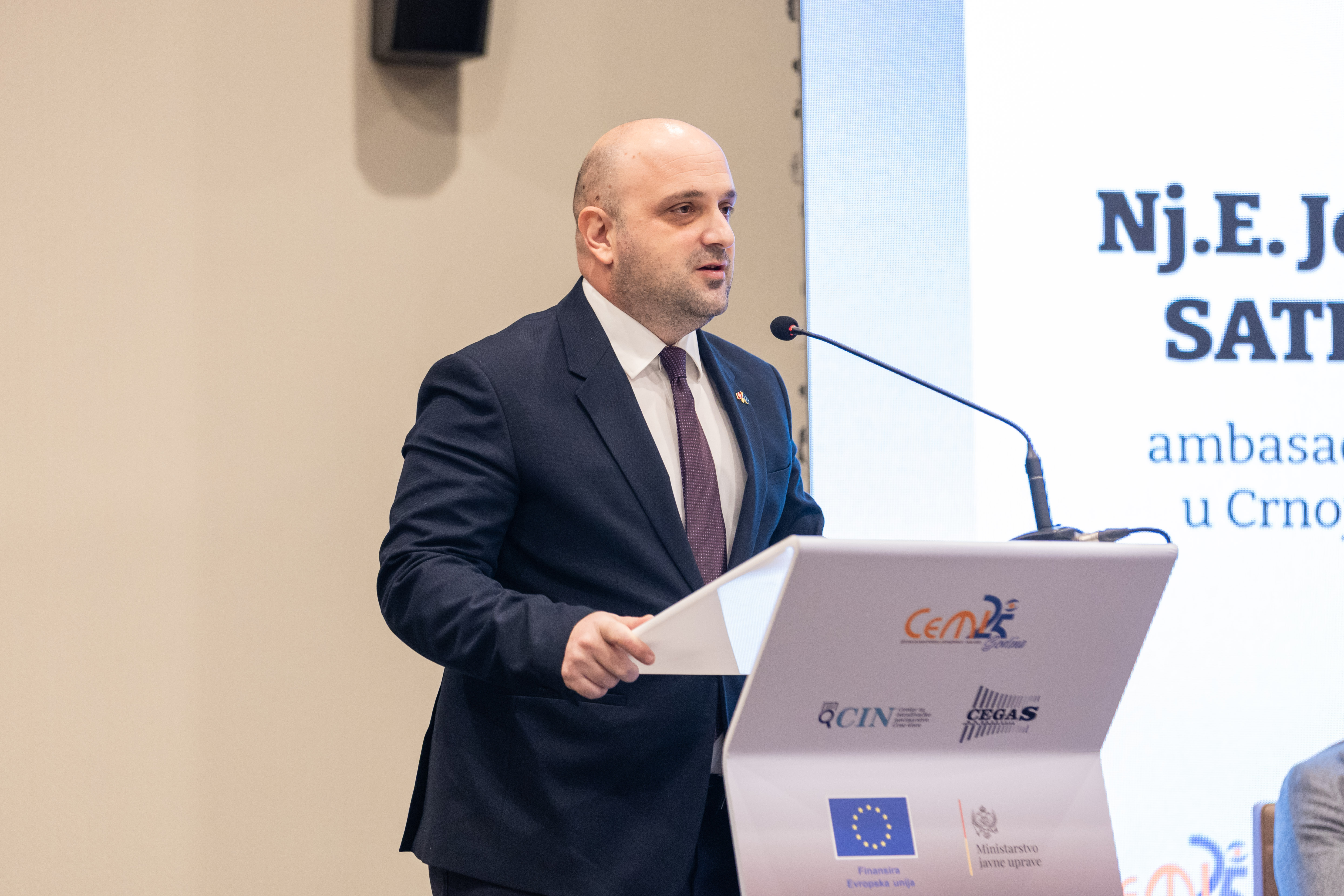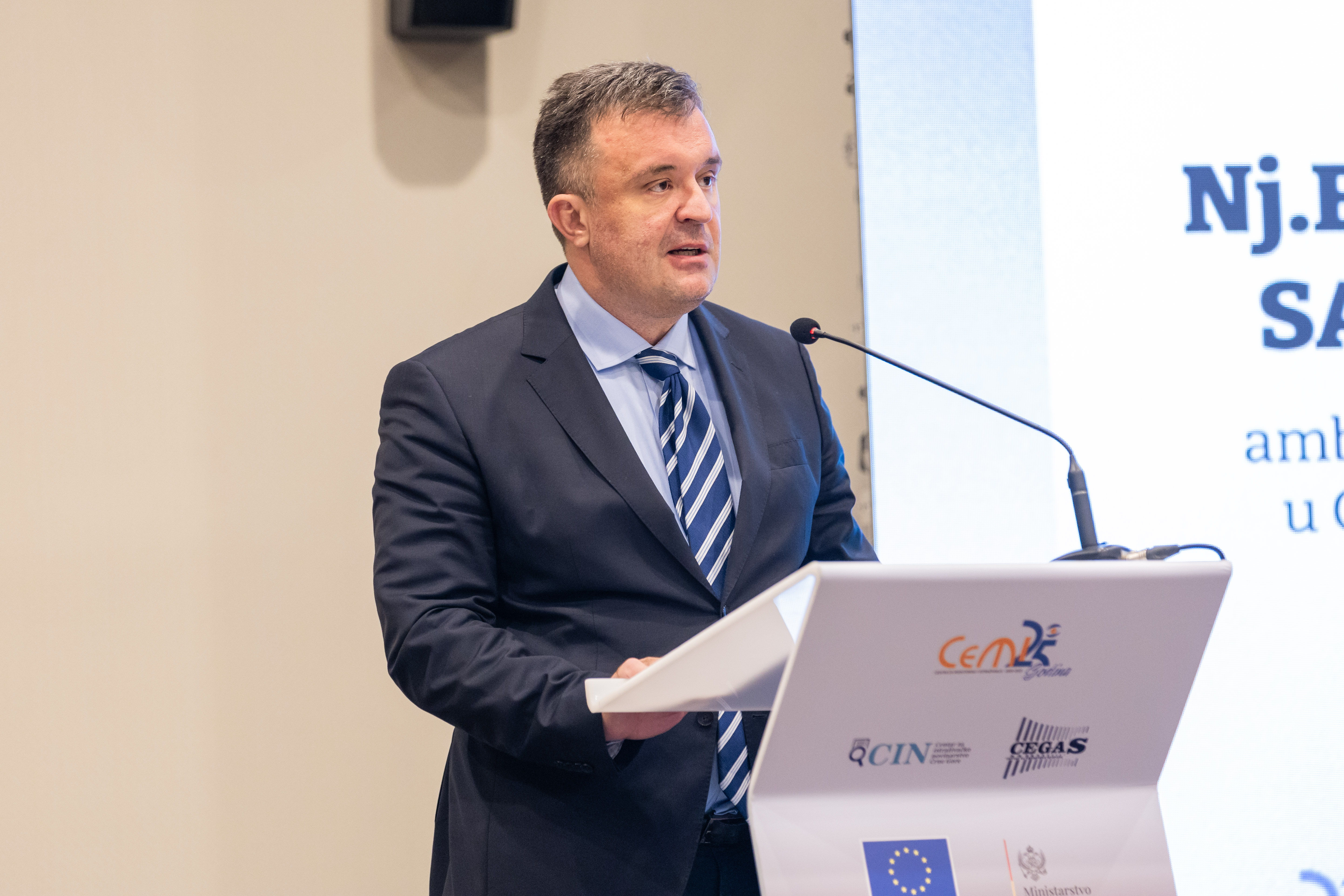
Montenegro is facing a key challenge to show concrete results in judicial reform in a short period, maintain the existing reform momentum, and thereby confirm its readiness for European Union (EU) membership, whereby progress on the European path depends solely on the achievements in this area.
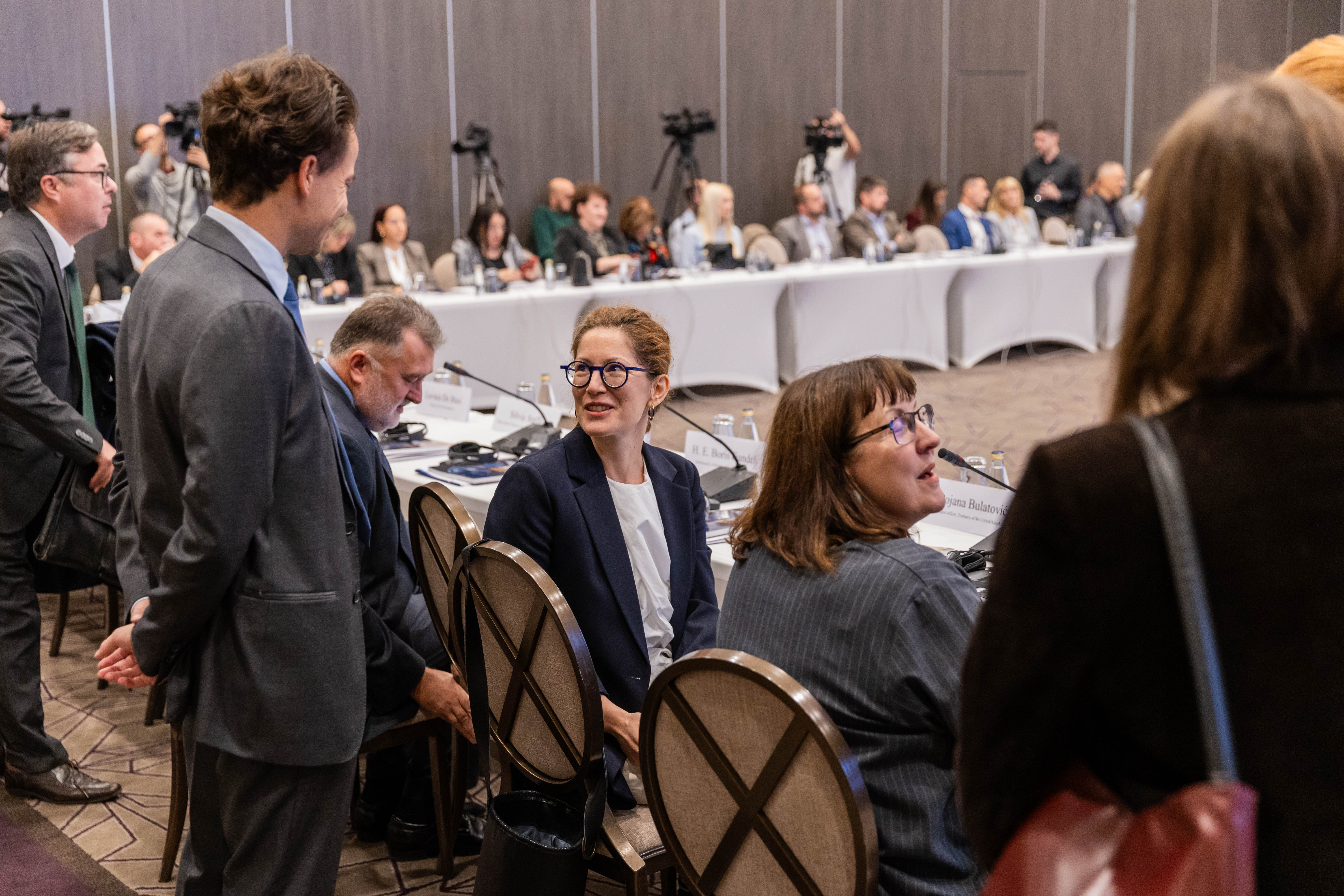
This was stated during the opening speeches at the annual conference “Independent and Professional Judiciary – Key Precondition for EU Integration”, organized on 9 October at the Hilton Hotel.
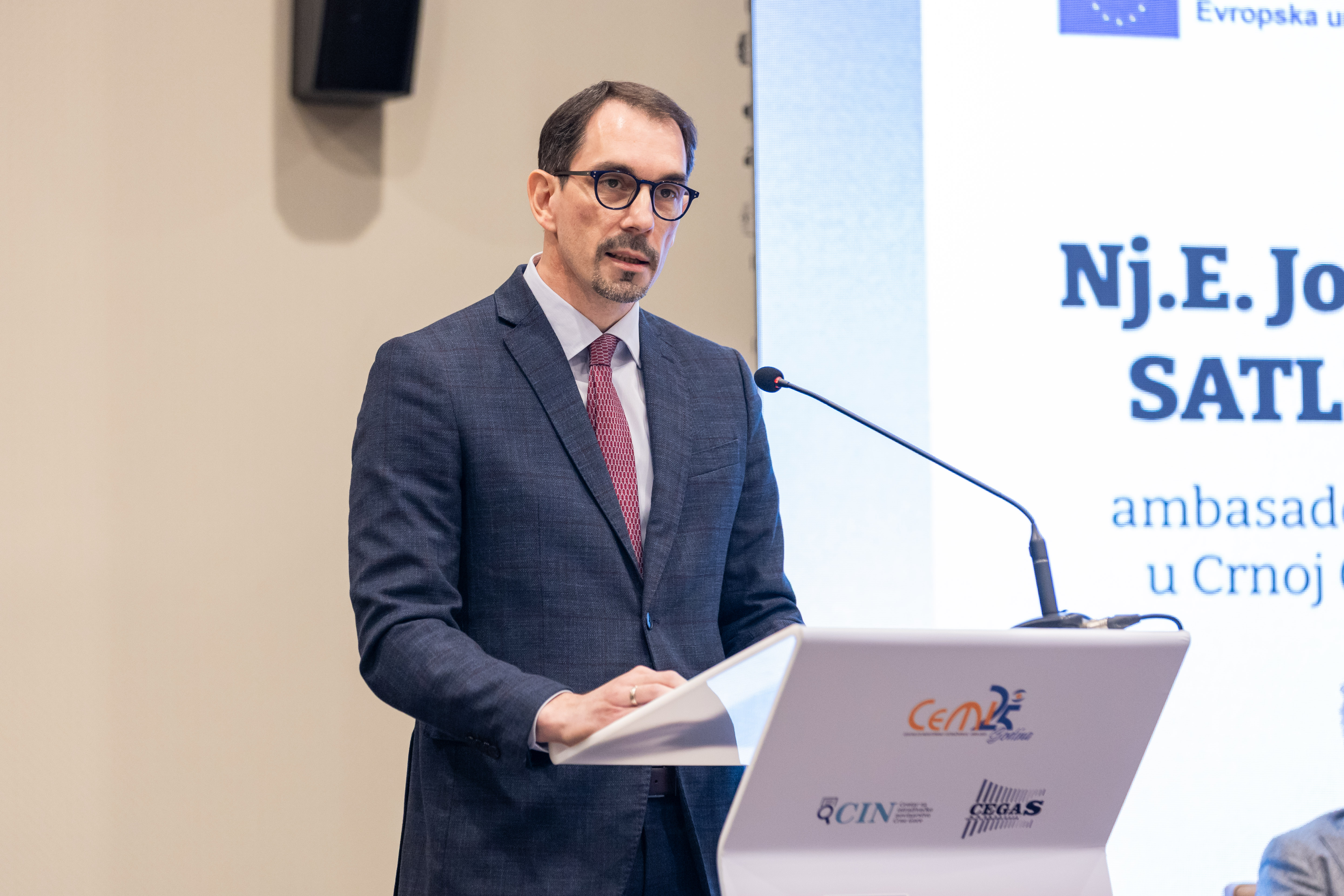
The President of the Governing Board of CeMI, Zlatko Vujović, reminded that the organization has been monitoring the judicial system and reform processes in Montenegro for almost two decades, noting that through analytical reports and recommendations, they seek to assist judicial institutions and the Ministry of Justice in improving the efficiency, effectiveness, and integrity of the system.
“However, I must point out that the period following the receipt of the positive IBAR report was not utilised in the best way. Instead of continuing the reforms at the same pace, political tensions and institutional crises, such as the case regarding the mandate of the Constitutional Court judge at the end of last year, slowed down reforms and shifted the focus from the professional to the political sphere,” said Vujović.
He called on all key decision-makers to implement all activities foreseen by the Judicial Reform Strategy by the end of 2026 and fulfil the final benchmarks for Montenegro’s EU membership in Chapters 23 and 24.
“There is no time to hesitate — Montenegro has been given a chance it must not miss,” Vujović emphasised.
According to him, the public almost daily talks about the need for vetting in the judiciary, “but without concrete steps.”
“As an organization that has been monitoring judicial reforms for 20 years, we believe that comprehensive vetting at this stage would have unforeseeable negative consequences for the European integration process,” Vujović noted.
He believes that the concept of vetting is increasingly being misused and employed in certain sectors of the state administration as a pretext for imposing solutions desired by political parties, while, on the other hand, it is used to justify procedural violations and unlawful actions.
“Vetting must not become an arbitrary instrument used to achieve the interests of any political party or the current government. It must be a clearly legally defined process based on the principles of independence, objectivity, and merit,” Vujović stressed.
He pointed out that, instead of improvised solutions, the existing Judicial and Prosecutorial Councils have sufficient legal mechanisms to conduct integrity checks of holders of judicial functions “immediately, without delay.”
“Our analyses show that there is still no progress in the rationalisation of the judicial network, even though today we hear new information from the Minister of Justice. The EU has been insisting for years on the implementation of the Ministry of Justice’s recommendations. We still have courts that formally exist but practically do not function – such as the Basic Court in Žabljak, which has not had a single judge for almost two years,” Vujović stated.
He believes that the state of infrastructure in courts and prosecutor’s offices is still below a satisfactory level, noting that courtrooms are often too small, archival rooms overcrowded, and spatial capacities require a systemic solution, “not partial adaptations.”
Vujović highlighted particularly concerning findings in the area of pre-trial detention.
“Pre-trial detention in Montenegro has become the rule rather than the exception — although, according to international standards, it should be an extreme, restrictively applied measure, because it infringes on one of the most valuable rights – the right to liberty,” Vujović said.
He stated that the average duration of pre-trial detention in our courts is around 150 days, and in more than half of the cases, detention lasts until the verdict is delivered.
“This creates the impression that pre-trial detention becomes a punishment before conviction, which undermines citizens’ trust in the fairness of the system,” Vujović warned.
According to him, an even more troubling fact is that unfounded deprivation of liberty is costly to both citizens and the state.
“According to data from the Ministry of Finance, from 2018 to 2024 Montenegro paid €2.56 million in compensation for unlawful detention. However, it must be understood that no financial compensation, no matter how large, can restore the lost freedom, the time spent in prison, or moments lost with family and loved ones,” Vujović said.
He appealed that pre-trial detention in the future be applied in an extremely restrictive manner and in accordance with international standards, only when necessary, and that the dignity of the person be respected in every case of deprivation of liberty.
“Not every individual who is being detained can be treated equally regarding preventive measures during arrest and detention actions – there is no justification for a person who does not pose a security threat to be handcuffed and paraded in front of pre-arranged media,” Vujović emphasised.
Such practices, he explained, create the impression that the goal is to discredit certain individuals in advance, causing harm not only to them but also to their families, regardless of how substantiated the suspicions or solid the evidence against them is.
“It is equally important to respect the privacy of communications.
What does not constitute evidentiary material, what does not serve to prove the commission of a criminal act, must not be misused by being made public. Therefore, all judicial function holders must demonstrate maximum responsibility in exercising their powers to prevent abuse and protect citizens’ trust in the impartiality of the judicial system,” Vujović stated.
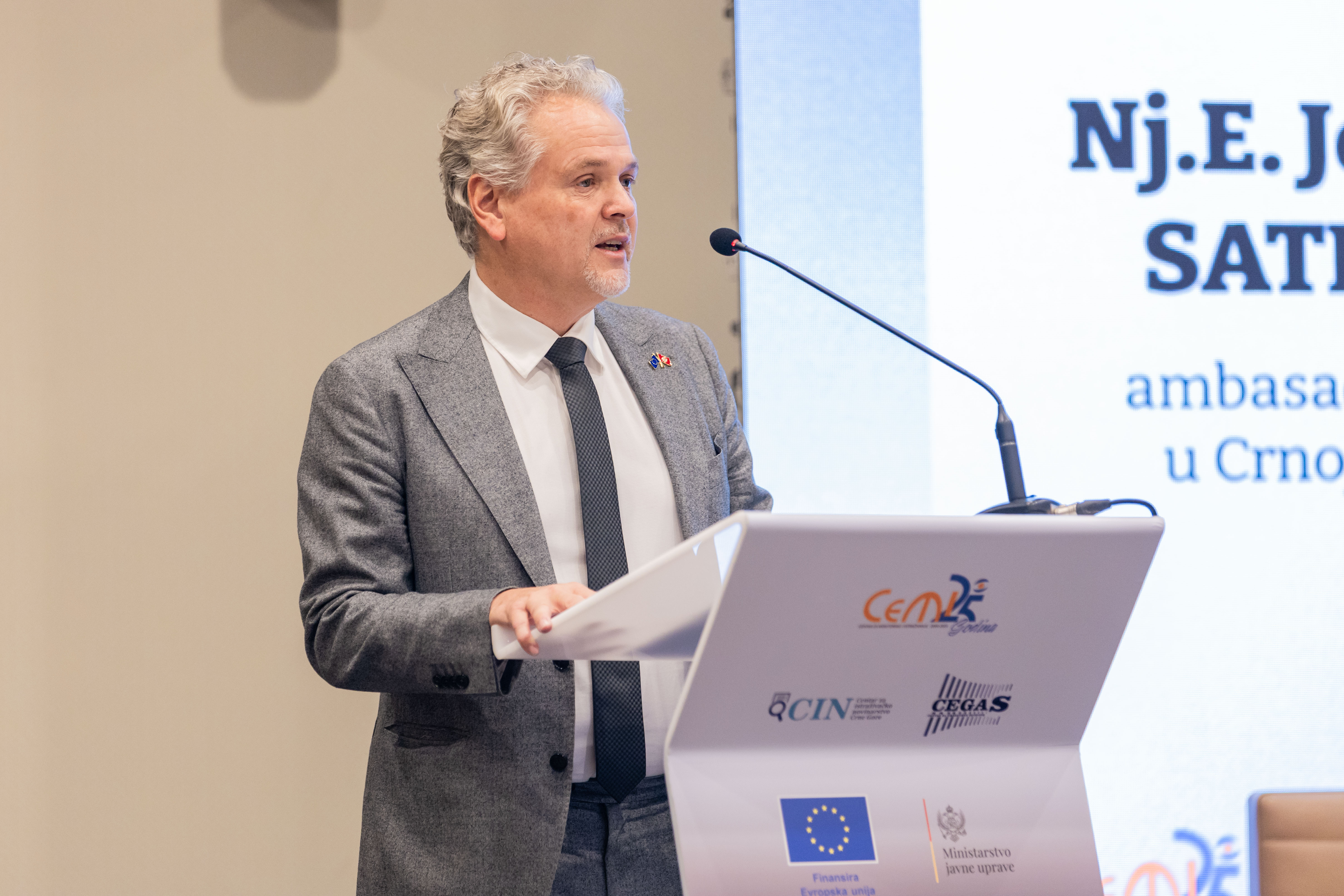
The EU Ambassador to Montenegro, Johann Sattler, stated that Montenegro must maintain the current pace of reforms and continue achieving concrete results in the rule of law if it wants to progress in the EU accession process.
“This year has been marked by significant success and agreement on the reform of electoral legislation. I would like to thank you for your efforts and joint work on this important part of the process,” Sattler said, adding that it is now crucial “not to put the glass down” and immediately move on to reforms in the field of the rule of law.
Sattler emphasised that Montenegro’s progress on the European path depends solely on results in this area.
“Progress on the European path depends on the rule of law, that is, reforms in this field. This remains our main focus and key message until the work is completed,” he stressed.
He reminded that the ambitious goal of closing Chapters 23 and 24 by next year requires full commitment from all institutions and a stable focus on key areas.
“The Parliament must act urgently in appointing the missing members of the Prosecutorial and Judicial Councils. These two councils carry the greatest responsibility for judicial reform and must operate at full capacity,” Sattler said, adding that he had received assurances that these appointments would be made in the coming weeks.
He stressed that constitutional and legislative frameworks must be fully aligned with European standards and the recommendations of the Venice Commission.
“The functionality and organization of the judicial system must be further improved, and judicial efficiency enhanced, particularly when it comes to cases of organized crime and high-level corruption,” Sattler said.
He reminded that Chapters 23 and 24 will only be closed at the very end of the accession negotiations, when Montenegro demonstrates measurable results.
Sattler stated that there must be no political influence on the judicial sector and that the separation of powers must be clearly respected.
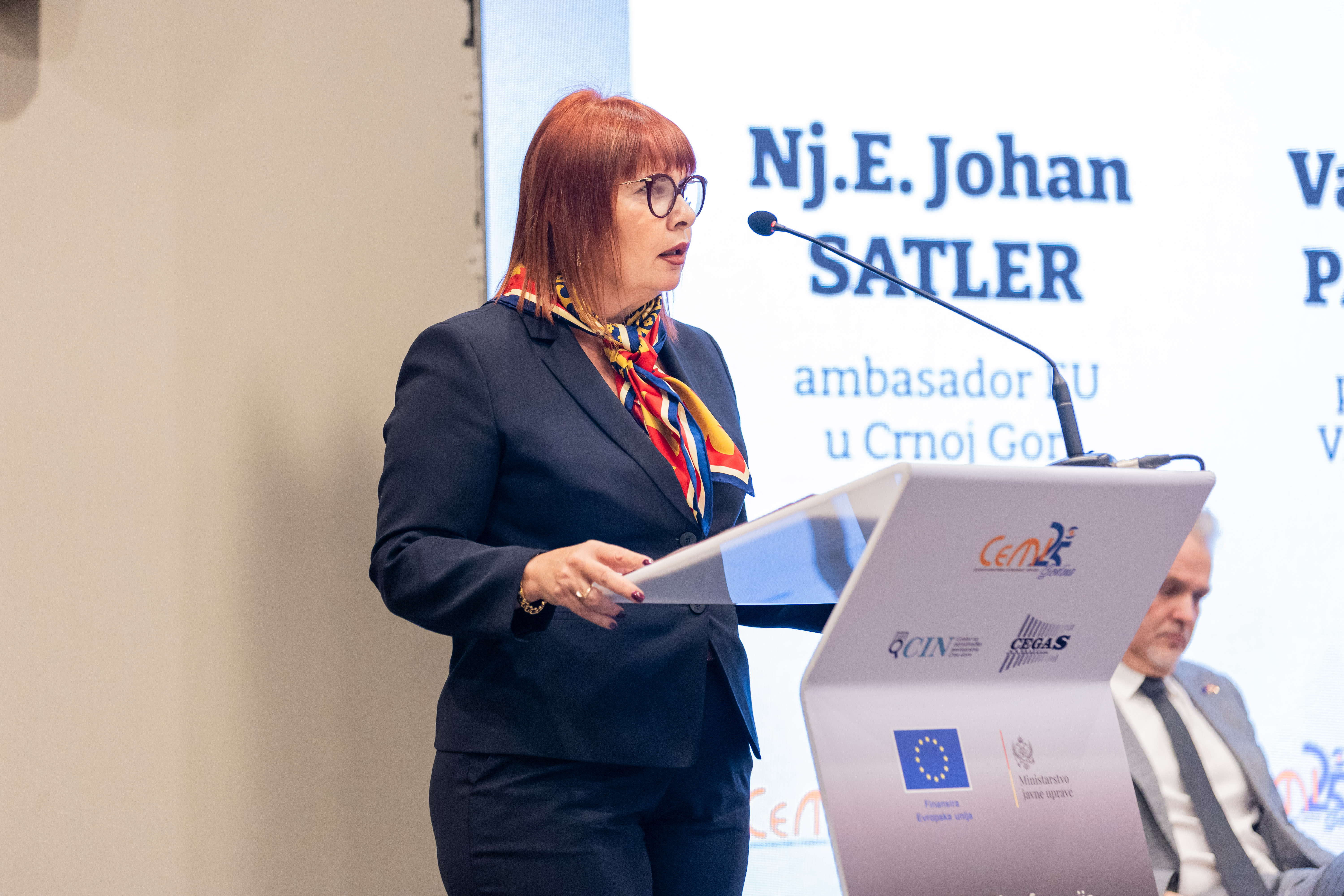
The President of the Supreme Court of Montenegro, Valentina Pavličić, emphasized that judicial independence is not a privilege, but a guarantee for every citizen that they will be judged impartially, according to law and facts.
“The court must not be an instrument of power, but the foundation of the rule of law. It is our duty not only to administer justice but to live it in every procedure, decision, and interaction with the citizen,” Pavličić stressed.
She highlighted that expertise, integrity, and dignity transform judicial independence into public trust.
“A judge’s professionalism is not just knowledge of the law but also the way we conduct proceedings, communicate with parties and the public, and approach every case,” Pavličić said, adding that responsibility and transparency are natural allies of judicial independence.
Referring to the report of the Center for Monitoring and Research (CeMI) on trial monitoring, Pavličić noted that such documents contribute to bringing the judiciary closer to citizens and serve as an important tool for identifying weaknesses and progress in the system.
“These reports provide a realistic insight into the state of the judiciary, highlight weaknesses, but also confirm positive steps taken over the past year. However, they remind us that systemic challenges still exist which require decisive institutional action,” Pavličić said.
She specifically addressed findings indicating that more than a third of scheduled hearings are not held, mostly due to the absence of defendants and witnesses because of improperly served summonses.
“This is a problem attributable to a lack of diligence in the courts’ work and untimely verification of procedural preconditions,” Pavličić noted, adding that this recommendation was repeated from the previous year.
She emphasised that independence and professionalism are not protections for judges but for every citizen, so that “truth and law always find their home, and that home is the judicial system.”
Pavličić agreed with the report’s findings on the need to further encourage young lawyers to build careers in the judiciary.
“To achieve this, the state must provide competitive salaries, clear career advancement paths, quality mentoring programmes, and professional training,” Pavličić said.
She highlighted the importance of analysing pre-trial detention practices, noting that this is “one of the most sensitive issues in criminal justice.”
“It most directly demonstrates the judiciary’s approach to human rights and the principle of proportionality,” she said, adding that the analysis indicates several important trends and the need for even more careful and consistent decision-making in this area.
She stated that transparency is not a threat but the best protection of independence because “only those who have nothing to hide can truly be free in their work.”
The Minister of Justice, Bojan Božović, stated that Montenegro faces the most important period in the next year regarding the EU integration process, particularly concerning Chapters 23 and 24 of the negotiation process.
“By September or October 2026, we are obliged to deliver results regarding Chapters 23 and 24, as well as all other negotiating chapters, so that, hopefully, by the end of next year we can successfully complete the technical level of negotiations with the European Union,” Božović said.
Speaking about problems in the judicial system, the Minister confirmed that overcrowding in pre-trial detention remains a significant issue.
Božović noted that the Government of Montenegro, in the latest budget revision, allocated over €300,000 for the completion of a project implemented with EU support, which will enable the construction of four new facilities within the Detention and Correctional Institution (UIK), thereby improving conditions for inmates.
The Minister also announced plans to construct a separate pre-trial detention facility in Spuž, considering it would be irrational to build a new prison complex in Mojkovac.
“When we complete these four facilities in Spuž, we will have a much more efficient, faster, and practical model for constructing new facilities within the existing institution, which has space for expansion and is located near key rule-of-law institutions,” Božović stated.
He also referred to a recommendation from the report concerning the rationalization of the judicial network.
“The new Law on Courts already foresees a reduction in the number of courts, and in June the Government submitted a proposal for amendments to the Criminal Procedure Code, which should contribute to faster and more efficient criminal proceedings,” Božović said.
The Supreme State Prosecutor, Milorad Marković, emphasised that the CeMI report demonstrates a professional and scientific approach in evaluating the state, phenomena, and practices across a large sample.
According to him, the functioning of the judiciary cannot be assessed solely through the work of institutions with special jurisdiction.
“This report provides a broader perspective, allowing a comprehensive view of the judiciary’s functioning through lower and higher court instances, which actually represent the largest segment of the system,” Marković said.
He assessed that the report testifies to the openness and transparency of judicial institutions and stressed that this aspect will continue to be improved.
“Independence and professionalism of the judiciary, through standards of quality, expertise, and dedication, represent the obligation and responsibility of the judicial function holders and institutions themselves,” he stated.
He warned that perceptions of judicial autonomy and independence are shaped not only by the actions of judicial function holders but also by behaviour of other branches of governance and public life actors.
“Just as justice is not justice if it is not visible, judicial autonomy and independence mean nothing if they are not visible – because this directly affects legal certainty and citizens’ perceptions,” Marković emphasised.
Regarding the report itself, Marković highlighted that it mainly focuses on court proceedings but also covers certain aspects of prosecutorial work.
He particularly noted the section concerning the efficiency of criminal proceedings, stating that state prosecutors “contribute minimally to postponing main hearings and, consequently, to delays in proceedings.”
However, he added that the report indicates the need to improve the quality of reasoning in proposals for pre-trial detention, in accordance with the practice of the European Court of Human Rights.
“This conclusion is of particular importance for the prosecution, so that the issue can be approached strategically and prosecutorial practice unified at all levels,” Marković emphasised.
He reminded that in the month of May in the previous year he issued binding instructions on urgent action in detention cases, as well as a supplement to those instructions in the middle of the previous month, highlighting the exceptional nature of detention as a coercive measure and the need to accelerate procedures in cases involving foreign nationals.
Marković indicated that the average duration of detention in cases handled by basic and higher prosecutors’ offices is 40 days, which, he said, “demonstrates efficient proceedings and confirms that the prosecution does not contribute to prolonged detention.”
“When detention is a coercive measure applied during the preliminary investigation, inquiry, or summary procedure, it is especially important for the prosecution to act efficiently, as the duration of detention largely depends on it,” Marković concluded.
The event was organized as part of the project “Supporting EU integration of Montenegro – for independent and professional Judiciary as a key precondition!”, implemented by the Centre for Monitoring and Research (CeMI), in cooperation with the Centre for Investigative Journalism of Montenegro (CIN-CG) and the Centre for Civil Liberties (CEGAS), and financed by the European Union and co-financed by the Ministry of Public Administration of Montenegro.