Political parties often use LGBTI rights as a tool for political profiling, but without genuine political will, concrete representation, and visibility of LGBTI individuals in political life, real progress and inclusion remain out of reach.
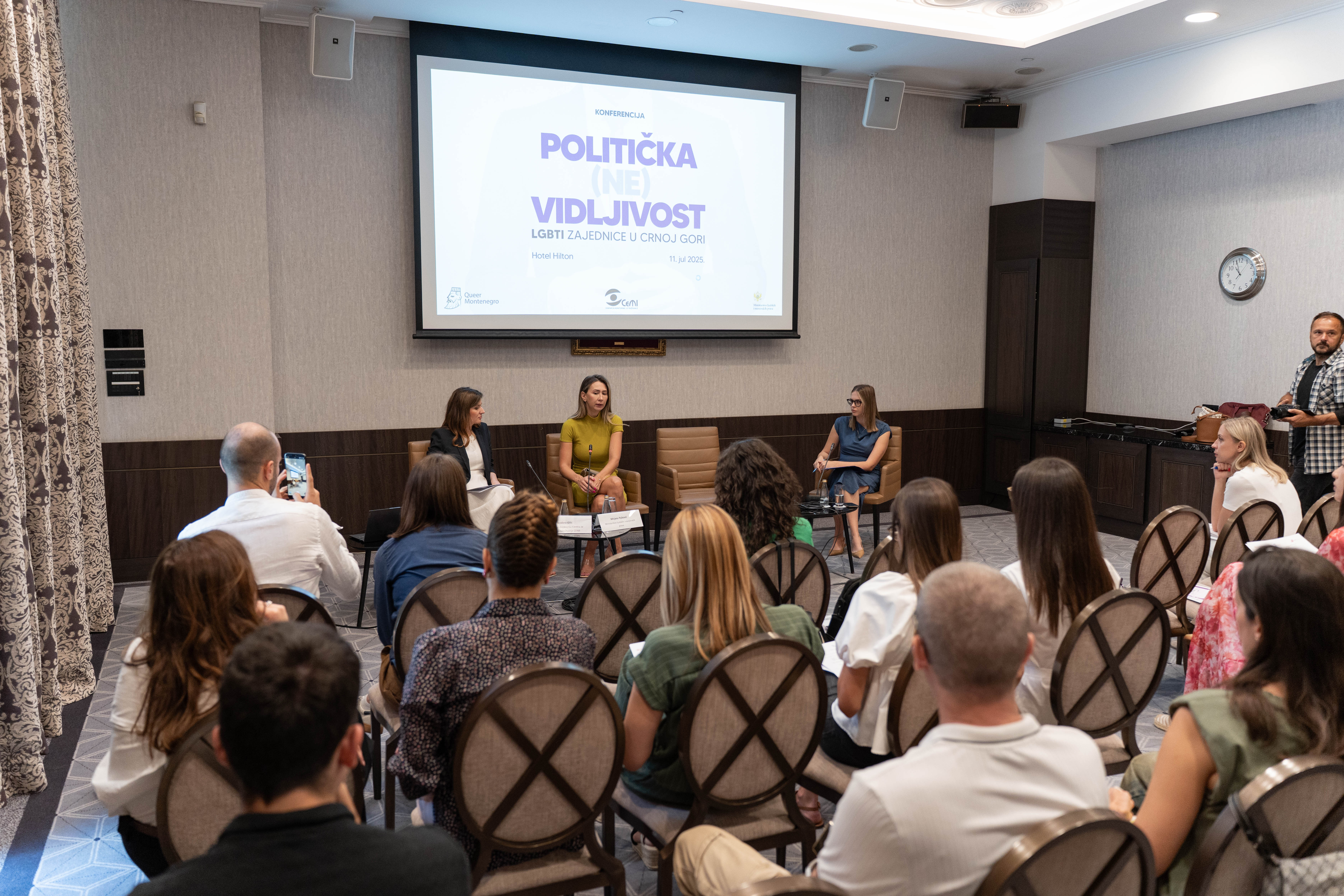
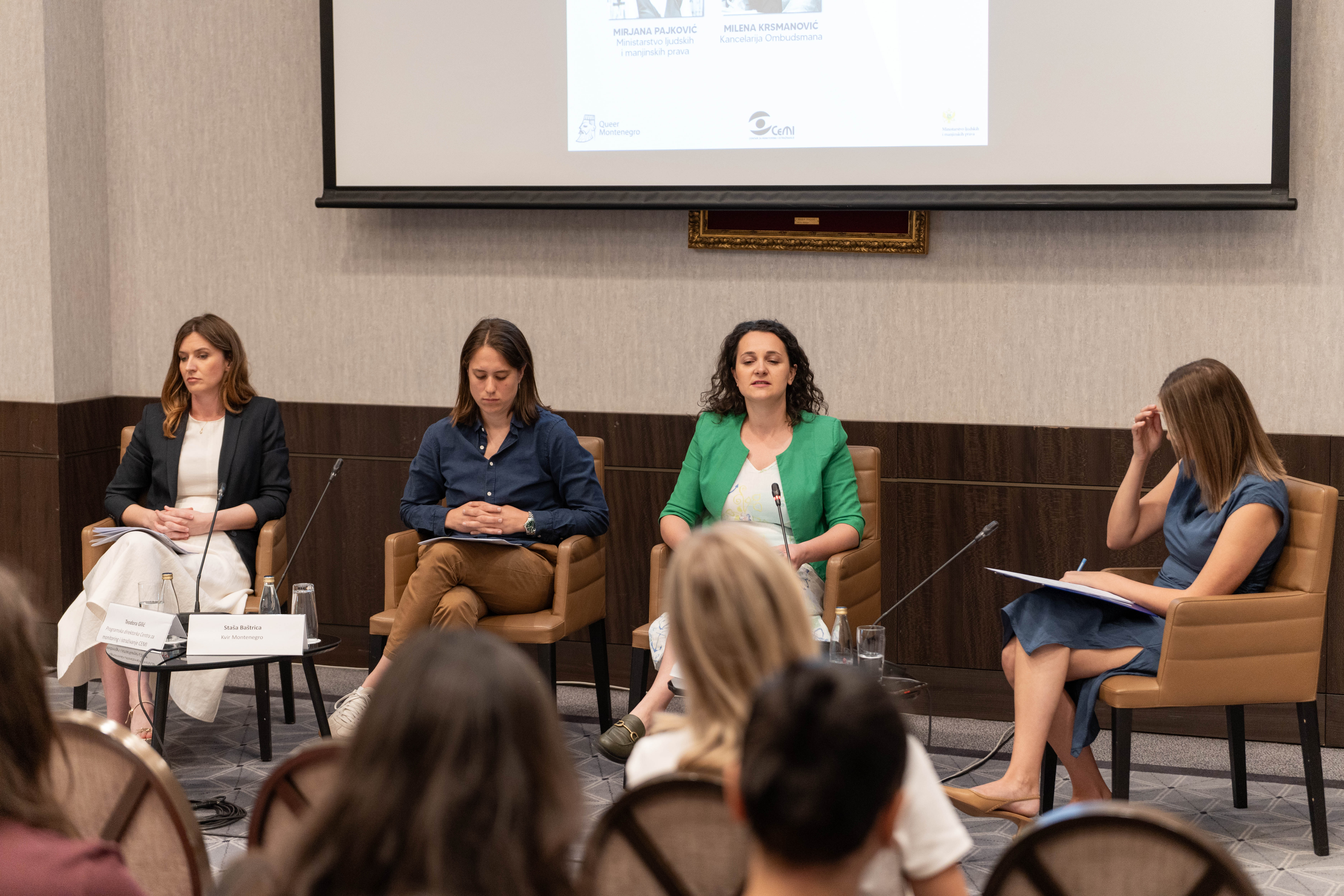
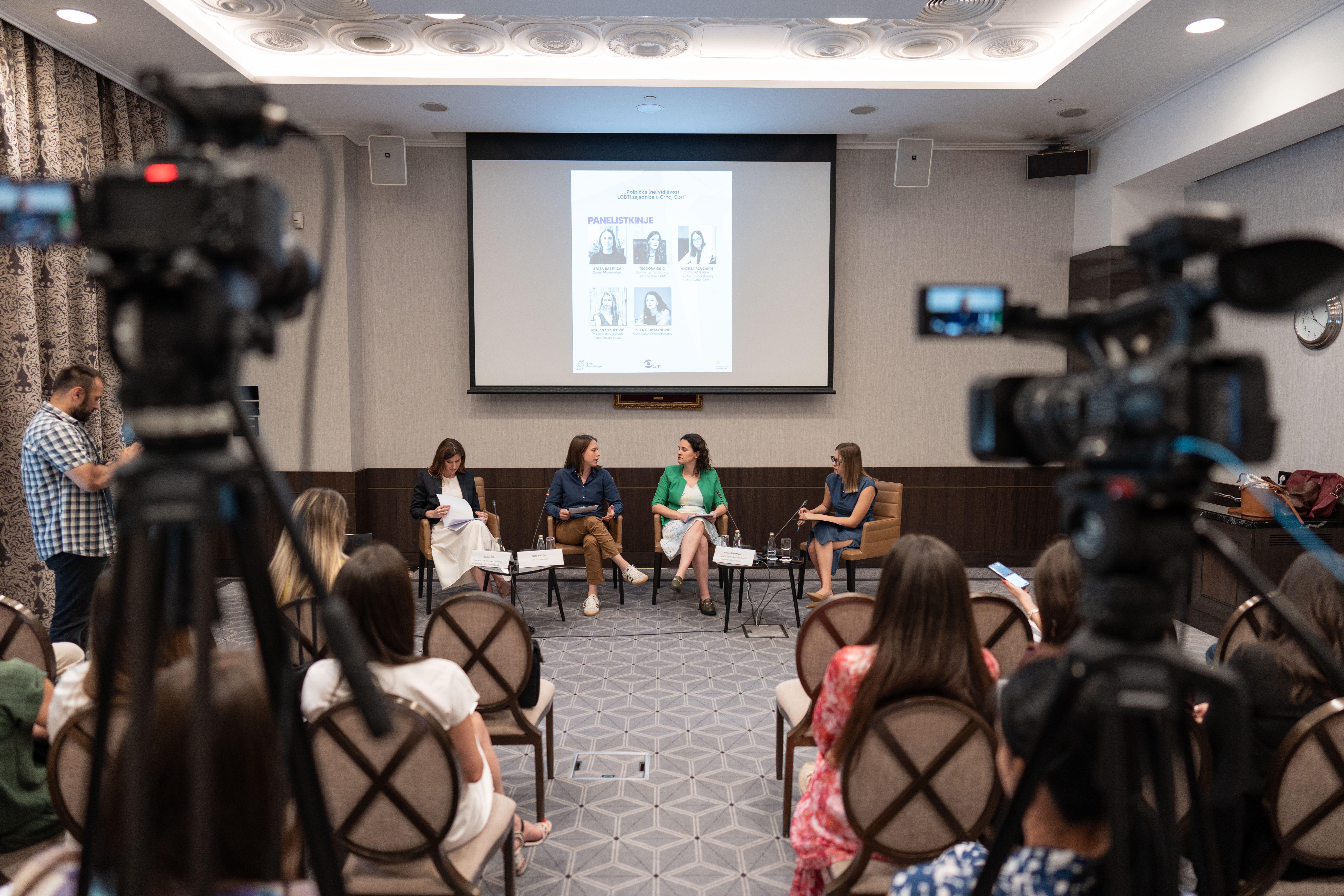
This was stated at the conference “Political (In)visibility of the LGBTI Community in Montenegro,” organized by the Montenegrin LGBTIQ Association Queer Montenegro, in cooperation with the Center for Monitoring and Research (CeMI) and with financial support from the Ministry of Human and Minority Rights.
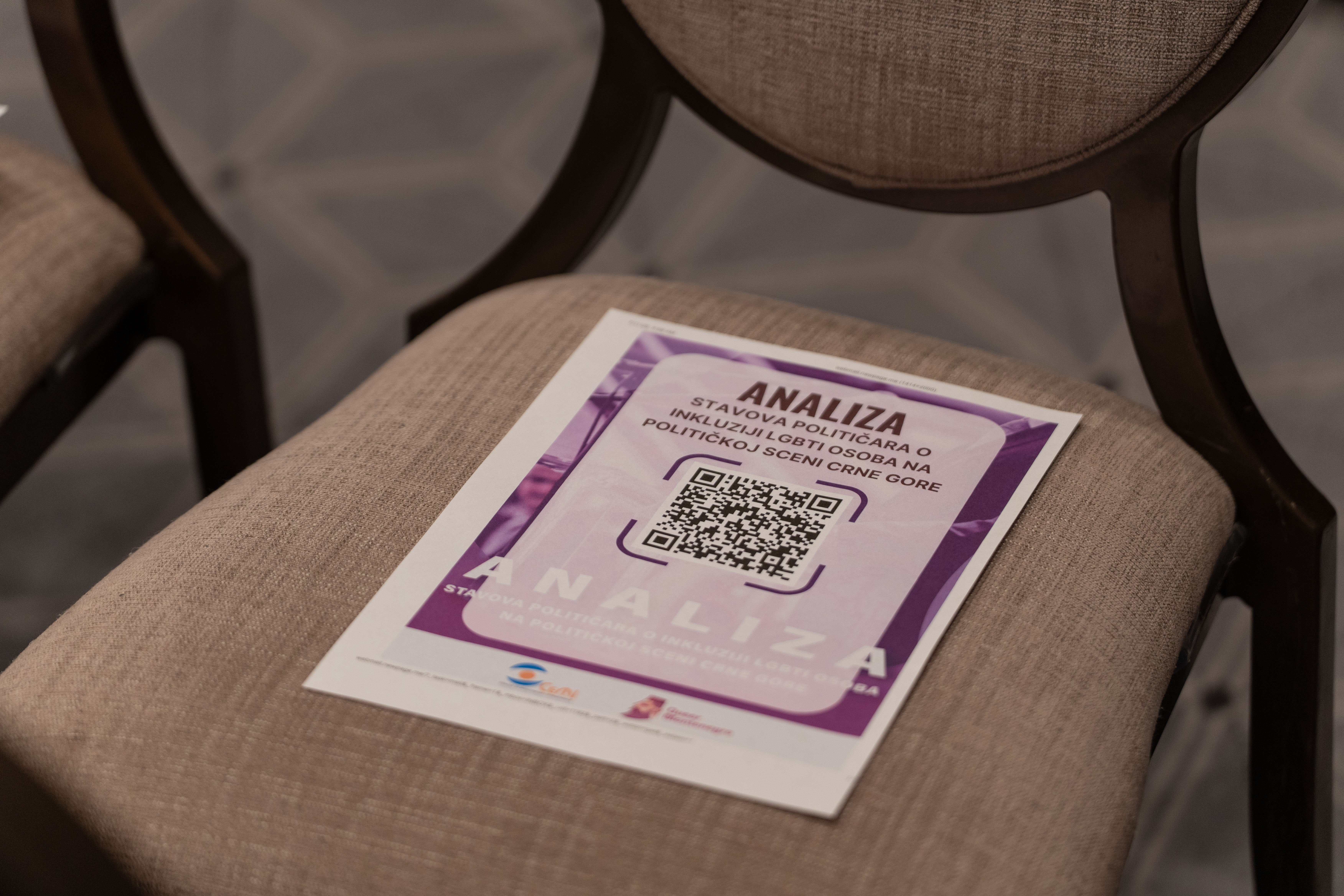
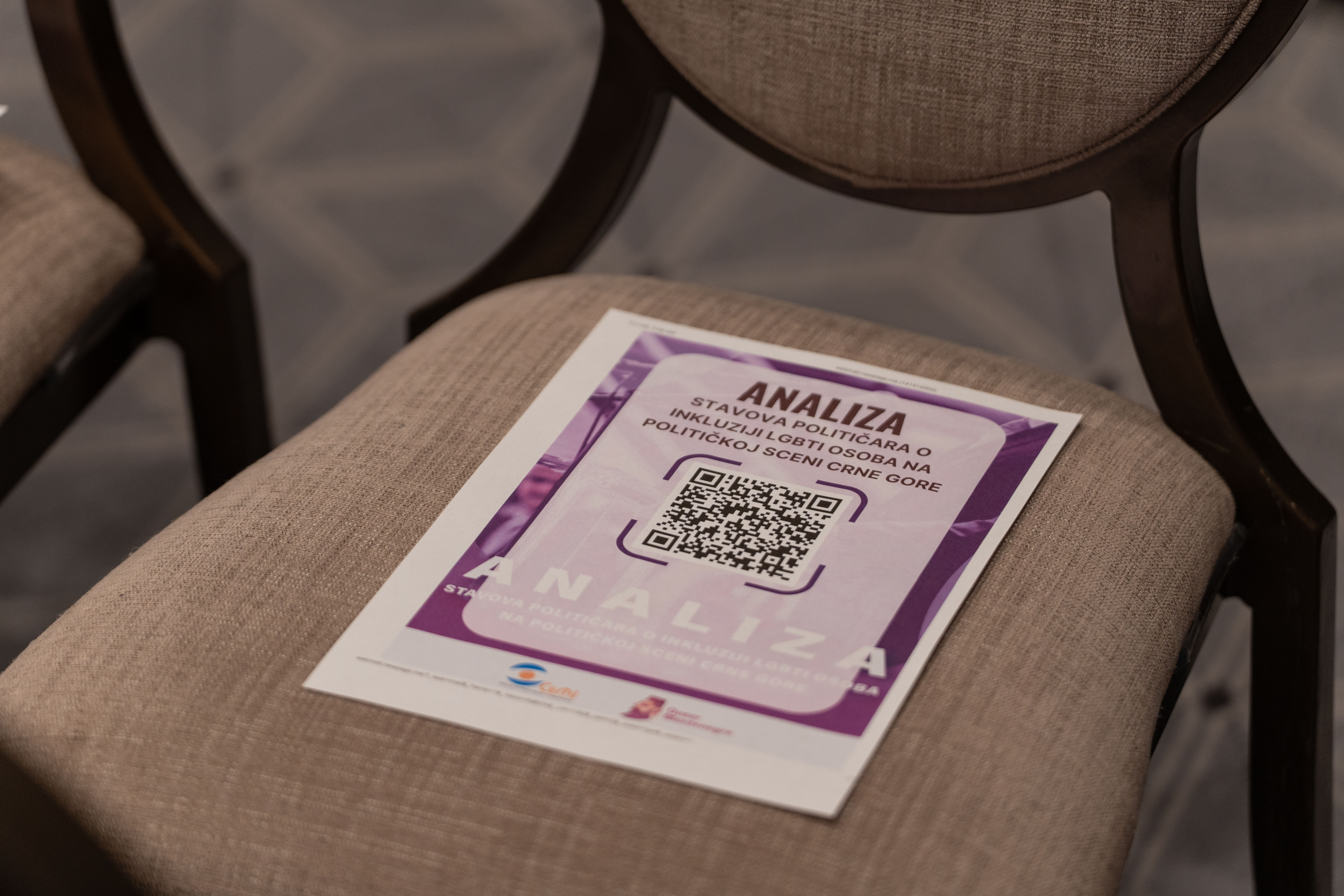
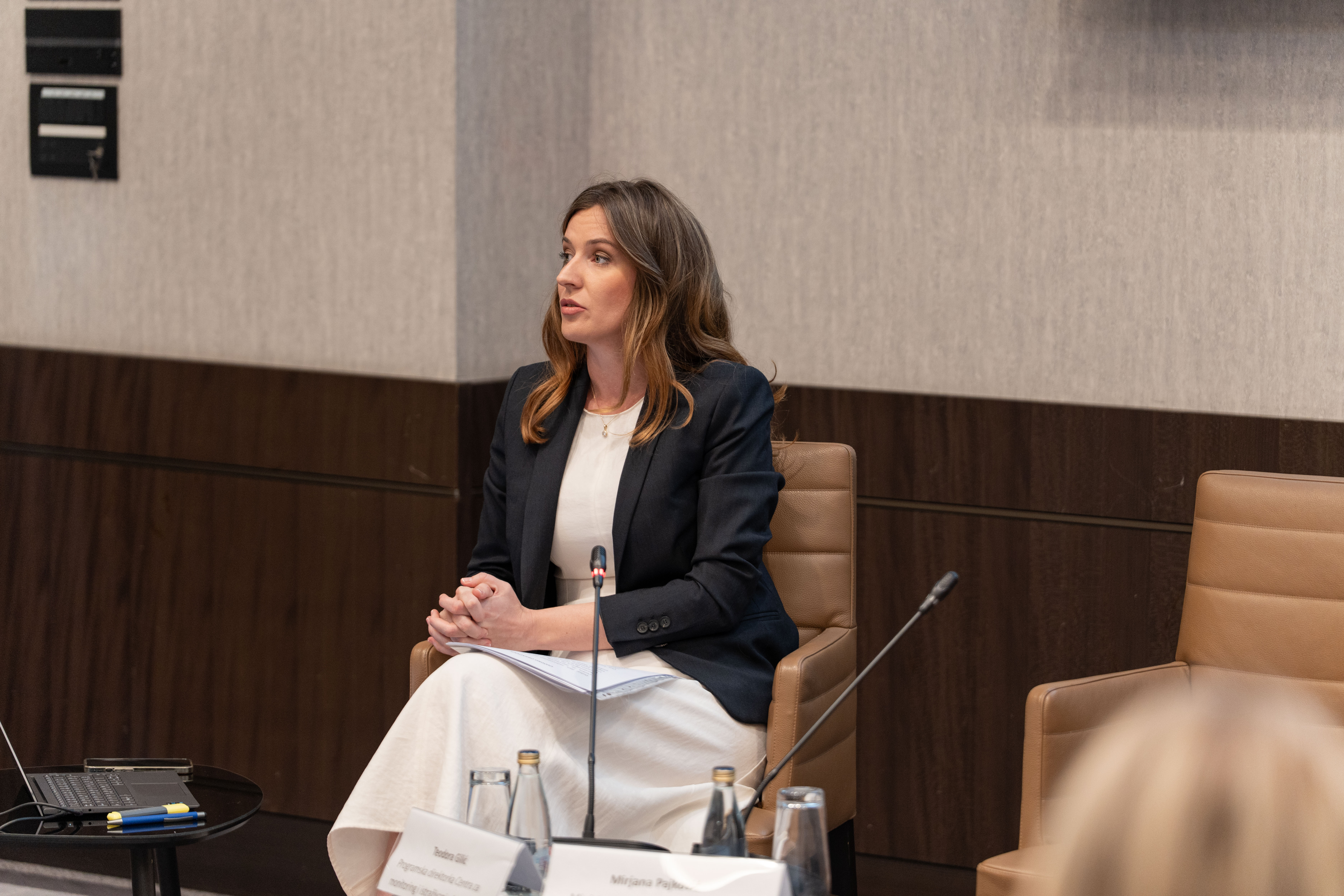
Teodora Gilić, Program Director at CeMI, presented the results of a quantitative survey on the attitudes of parliamentary candidates in the 2023 elections regarding LGBTI rights.
Gilić emphasized that the findings should be interpreted with a degree of caution, given the methodological limitations stemming from how the sample was constructed.
“For the purpose of the research, a quota sample of 100 candidates was created out of a total of 1,113 across all electoral lists in the 2023 parliamentary elections, in order to proportionally represent all electoral lists based on election results. However, it is important to note that representatives of several political parties, particularly those publicly recognized as conservative and holding views contrary to the rights and position of LGBTI individuals, refused to participate. As a result, 80 interviews were conducted instead of the planned 100. The systematic absence of certain party representatives introduces potential bias, as it leaves underrepresented precisely those actors who would likely express more negative attitudes toward the LGBTI population. Consequently, while the results offer valuable insight into dominant trends and potential changes in political attitudes, they are more indicative than representative of the full political spectrum. These limitations are especially evident in the analysis of attitude distribution, as it may not necessarily reflect the real political landscape,” Gilić explained.
According to her, the data show some progress compared to the previous study conducted in 2016.
“In 2023, 62.8% of respondents supported full implementation of the Law on Same-Sex Life Partnerships, which marks an increase from 2016, when 42.5% of candidates supported marriage rights for LGBTI individuals,” said Gilić.
However, she warned that the law’s implementation remains inadequate due to the absence of key bylaws, which affects the everyday lives of LGBTI people, especially in healthcare institutions and other public services.
On the topic of adoption rights, Gilić noted that while same-sex partnerships have gained a fair amount of political support, the issue of adoption remains highly sensitive.
“In 2016, only 16% of candidates believed LGBTI people should be allowed to adopt children, while over 53% were opposed. Today, the picture has somewhat changed. Around 36% of candidates support legalizing adoption by same-sex couples, and opposition has decreased to about 29.5%. Still, roughly 30% of respondents refuse to answer this question, which demonstrates how politically sensitive it remains,” Gilić added.
She pointed to a similar trend when it comes to participation in Pride events: “Today, 48.7% of candidates said they would participate, compared to just 17.9% in 2016. Still, nearly 40% continue to say they would not participate.”
The study also showed that an increasing number of candidates support LGBTI rights regardless of Montenegro’s European integration process—67.5% in 2023 compared to 51.9% in 2016.
“However, 9% still believe that LGBTI individuals should not be granted any rights, while 15.4% condition their support on Montenegro’s EU path. Also concerning is the continued lack of openly LGBTI politicians, which 55.1% of respondents view as a major obstacle to real progress and full realization of rights for the LGBTI community,” said Gilić.
She concluded that authentic political will—not just declarative support—is essential, and emphasized that political visibility of LGBTI individuals is critical for driving change.
Gilić also highlighted the media’s role in shaping public opinion, noting that some outlets continue to ignore events such as Pride or frame them negatively, while enabling hate speech in comment sections without proper moderation.
She urged political parties to take on more responsibility—not just through statements, but through concrete action in combating discrimination, strengthening institutional protection, and building an inclusive society.
Mirjana Pajković, Director General of the Directorate for the Promotion and Protection of Human Rights and Freedoms at the Ministry of Human and Minority Rights, stated that the fight for human rights in the country still begins “below zero,” not from a neutral point—especially when it comes to the protection and affirmation of LGBTI rights.
“Our job is, first and foremost, to explain to citizens, politicians, and decision-makers why these processes matter. We first have to convince them that they won’t have negative consequences, and only then can we get to the core of the matter,” said Pajković.
Though it may appear that things are standing still, she acknowledged that some progress has been made.
“The steps are small, but real. It’s encouraging that change is happening, especially when we have direct working meetings without too much formality. That’s when we clearly see the real situation on the ground and hear about actual barriers,” Pajković noted.
She pointed to how certain institutions ignore LGBTI issues, stressing that human rights are not only violated through actions, but also through neglect.
“When something is consistently delayed and excused by a lack of priorities, it directly reflects bad policy. That’s not respect for human rights—that’s their neglect,” she said.
Among current institutional priorities, Pajković listed the harmonization of the Law on Same-Sex Partnerships with other laws, and the adoption of the Law on Legal Gender Recognition based on self-determination.
“We’ve had constructive meetings with institutions who informed us that alignment is underway and that some laws are already under review by the European Commission. But what’s key is to seize every moment when laws are being opened up—without excuses and without delays,” she stressed.
She expressed concern that while expert institutions have given the green light to the draft law on self-determination, it remains uncertain whether it will receive political backing in government.
“If ministries have given expert approval to the draft law, it’s illogical and disheartening for it not to receive political support. That reflects a disconnect between politics and expertise and undermines the very purpose of politics,” said Pajković.
Milena Krsmanović, advisor to the Protector of Human Rights and Freedoms (Ombudsman), noted that Montenegro already has key legal frameworks in place, such as the Anti-Discrimination Law and the Law on Same-Sex Life Partnerships, while the Law on Legal Gender Recognition is currently in process.
“At the Ministry level, expert work on the Law on Gender Recognition based on self-determination has been completed. I participated in drafting the bill as an observer on behalf of the Ombudsman’s office. This is a law not just for the LGBTI community—it affects all citizens, enabling them to express their gender identity freely and without limitations,” said Krsmanović.
She stressed that human rights are not special or privileged—they are universal and inalienable—and that laws must guarantee them equally to everyone.
“We are not talking about additional rights, but equal rights. All human beings, including LGBTI individuals, have the right to enjoy all rights without discrimination. Restrictions may exist, but they must be equal for all—legal, legitimate, and proportionate. In that sense, protection from discrimination must always take priority,” Krsmanović added.
She pointed out that while the Law on Same-Sex Partnerships is a strong and European-aligned piece of legislation, its implementation is still incomplete.
“Bylaws are missing, and many other laws have not been harmonized with it. For example, laws in the fields of family, health, and social rights don’t recognize same-sex partners, which in practice leads to institutional discrimination,” she said.
Speaking about the Law on Legal Gender Recognition based on self-determination, Krsmanović stated that the European Court of Human Rights has made it clear that requiring sterilization or surgery as a condition for legal gender recognition constitutes unjustified interference with private life.
“These are outdated views. A law that allows self-determination without medical procedures affirms the identity of each person and allows them to freely develop their personality,” she explained.
She confirmed that the draft law is ready, emphasizing that what remains is for political will and awareness to mature.
“In Parliament, voting should not follow directives but personal convictions. I hope MPs will recognize the importance of this law not just for LGBTI people, but for all of us. The right to identity is a fundamental human right,” said Krsmanović.
Staša Baštrica, Executive Director of Queer Montenegro, assessed that Montenegro has made some progress over the past decade when it comes to legal protection of LGBTIQ rights, but noted that such progress, while significant on paper, does not translate into real change in the daily lives of LGBTIQ individuals.
“We have the Law on Same-Sex Partnerships, which is certainly an important step because the state is, for the first time, recognizing same-sex unions. The Criminal Code recognizes hate crimes as an aggravating circumstance, and there is also a binding instruction for handling hate speech cases, issued by the Special State Prosecutor’s Office. Additionally, a draft Law on Equality and Non-Discrimination is being prepared, which aligns with European standards,” said Baštrica.
She warned against the illusion that Montenegro is a safe and equal place for LGBTIQ individuals.
“The Law on Same-Sex Partnerships still hasn’t been fully implemented, even though it was passed more than five years ago. Hate crimes are acknowledged in the Criminal Code, but court verdicts often reduce them to violations of public order, which is a serious issue. The new anti-discrimination law has been waiting for adoption for over three years,” Baštrica cautioned.
According to her, institutional mechanisms often function as “decorations for showing off in front of international partners,” while the Law on Legal Gender Recognition, which would allow trans individuals to align their legal identity with their gender, remains blocked.
“The law was removed from the agenda by decision of the Prime Minister late last year, which clearly shows that the issue is still treated as a political risk,” Baštrica said, calling this a form of institutional violence against trans people, who are pushed to society’s margins every day.
She also pointed to a lack of sensitivity and education among public officials, which directly contributes to discrimination.
“Institutions fail to recognize the importance of implementing the law and often act inertly. As a result, LGBTIQ individuals still live in a deeply institutionally homophobic society,” said Baštrica.
On political participation, she noted that while declarative support exists, genuine willingness is lacking.
“Political parties usually use the topic of LGBTIQ rights for political gain, but real representation and inclusion are missing. We’ve even seen cases where real or perceived sexual orientation was used for political smear campaigns,” she warned.
Despite institutional inertia, she believes that civil society organizations have played a key role in advancing LGBTIQ rights.
“Thanks to that struggle, we now have more young activists and greater social acceptance. But the fight is far from over. We still live in a society where homophobia and transphobia are deeply rooted.”
She concluded: “The LGBTIQ community is not asking for privileges—only for respect. We’re not asking everyone to love us or be thrilled by our orientation or gender identity. We simply want to be respected—and nothing more.”
The conference was held within the project “Voice for Diversity and Equality – Political Integration of the LGBTI Community in Montenegro,” implemented by CeMI in partnership with Queer Montenegro.