Criminal proceedings show positive trends in terms of efficiency, but persistent structural weaknesses continue to slow down certain stages of the process. Pre-trial detention is applied far more frequently than alternative measures, and the lack of electronic monitoring devices hinders efforts to reduce its use.
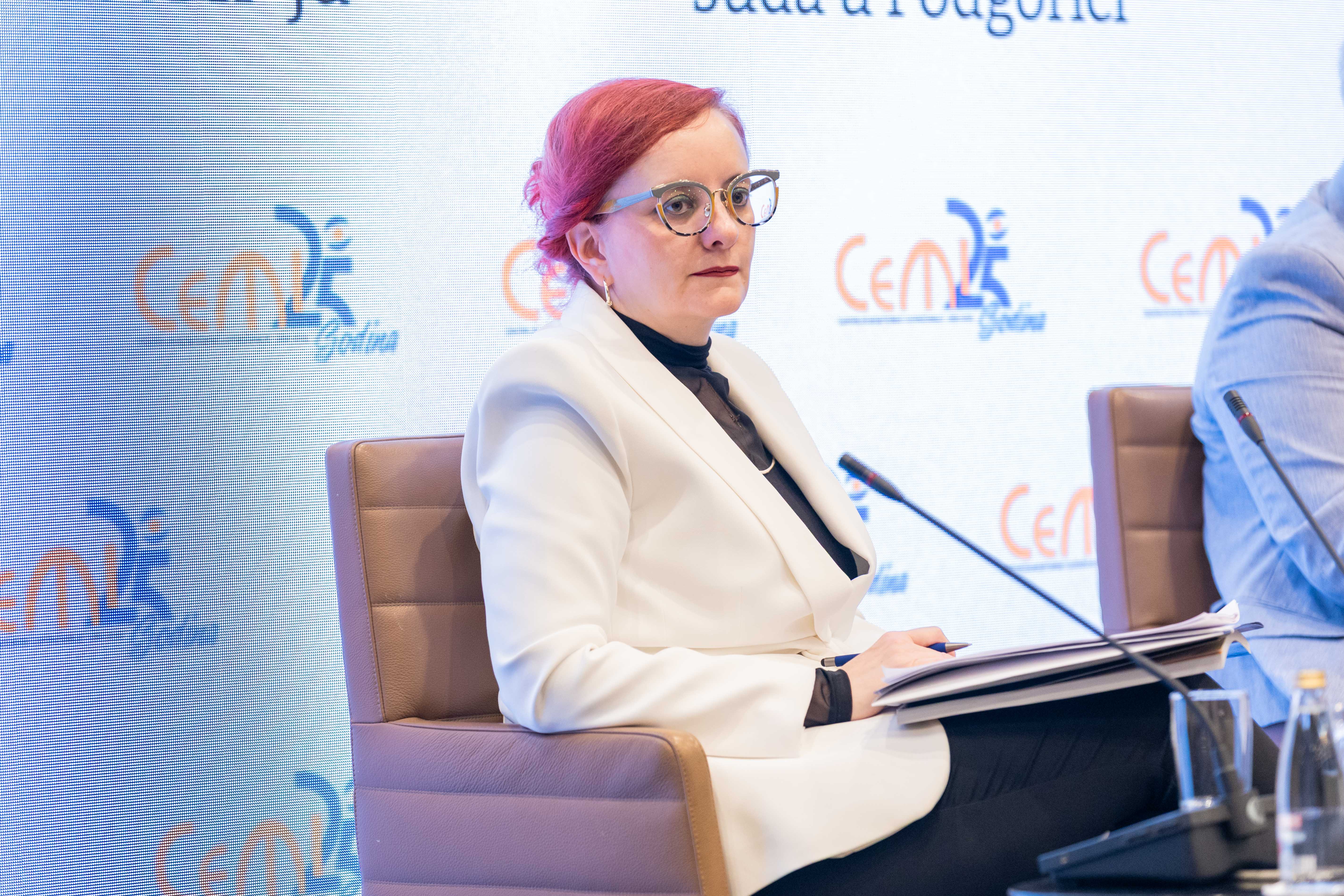
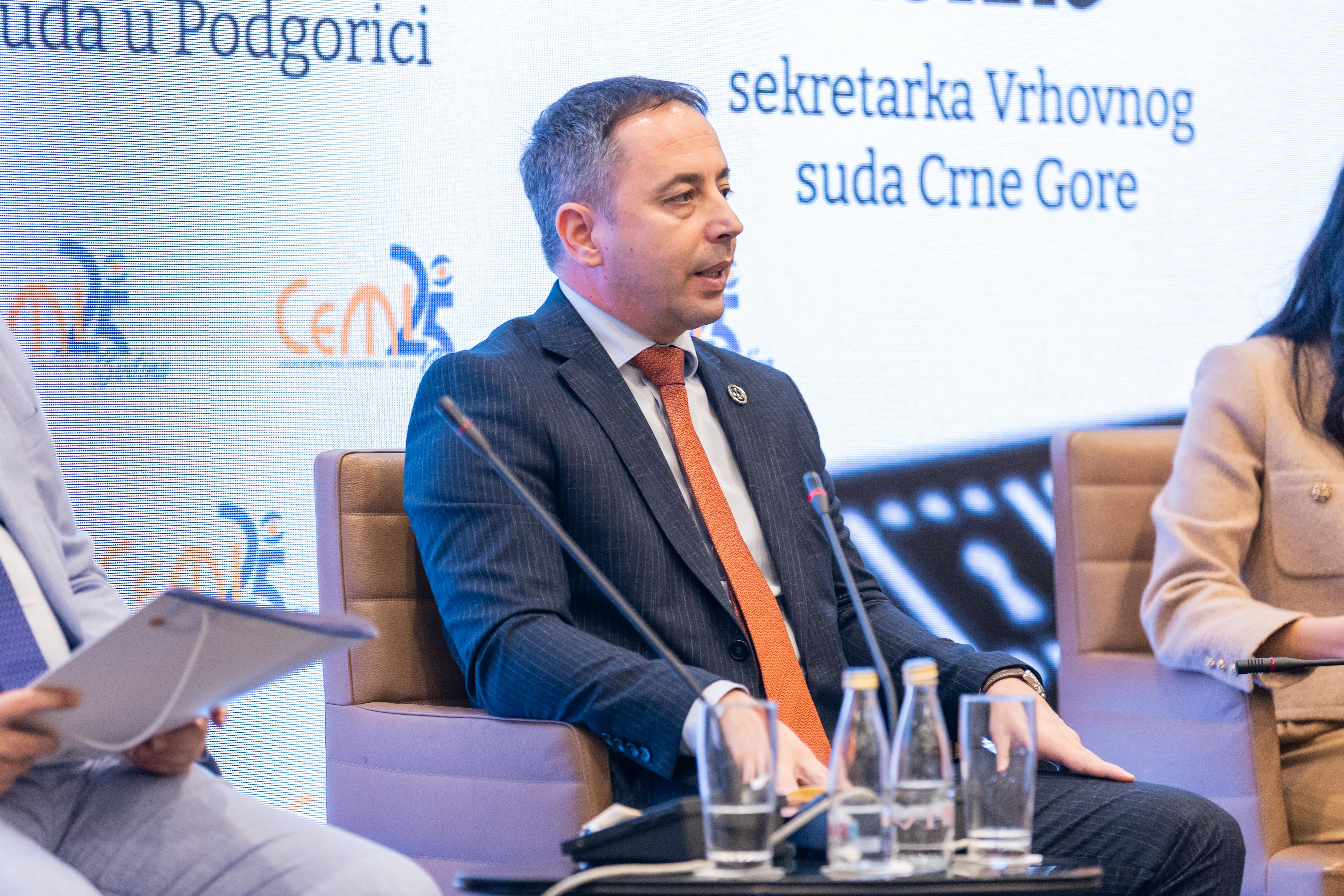
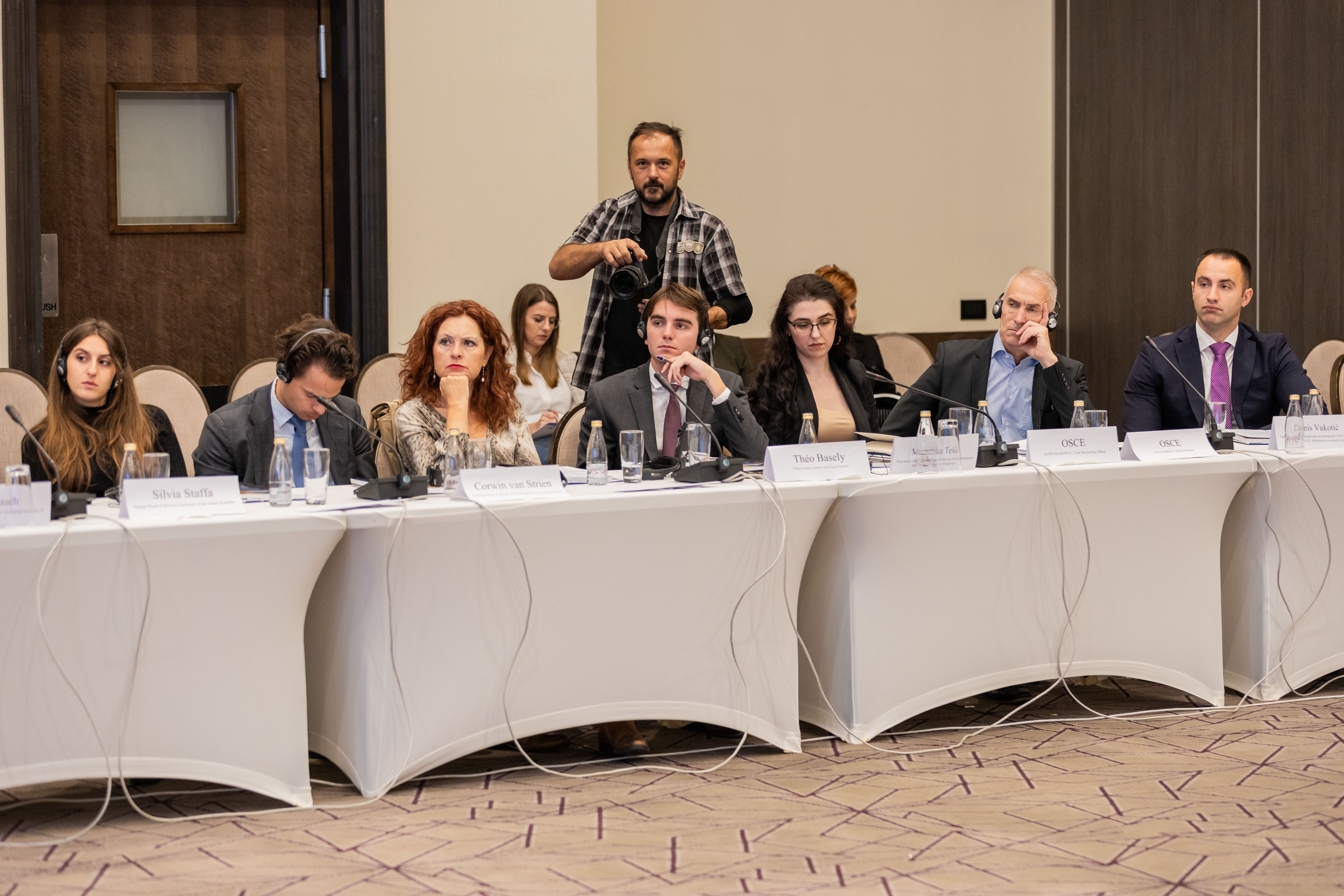
This was stated at the first panel, “Presentation of the Report and Key Findings from Trial Monitoring” held as part of the annual conference “Independent and Professional Judiciary – Key Precondition for EU Integration,” organized on 9 October at the Hilton Hotel.
Trial Monitor at CeMI, Gordana Mitrović, explained that for the purposes of the report, the CeMI monitoring team reviewed a total of 466 finalised cases, while monitors attended 157 hearings. Out of the total analysed cases, detention was ordered in 188 cases - before 13 basic courts and both higher courts in Montenegro.
She highlighted that, during the indictment review phase, courts maintained, and in some cases slightly improved, the pace of work compared to the period 2021–2023.
“The rate of postponed hearings fell from 54% to just under 39%, which can partially be explained by the absence of extraordinary circumstances that marked the previous reporting period,” Mitrović noted.
Pre-trial detention in Montenegro continues to be applied far more frequently than supervisory measures and bail, with an average duration of around 150 days, and in higher courts even more than twice as long as in basic courts, Mitrović stated.
She emphasized that any assessment of the need to reduce the use of detention must take into account the lack of electronic monitoring devices. The report calls on relevant authorities to urgently secure budgetary funds and carry out public procurement so that these devices can be put into operation as soon as possible.
According to her, monitors recorded a significant number of cases where courts provided detailed reasoning for why detention was considered the only effective measure, but also numerous decisions that were not fully aligned with international standards.
“In some cases, decisions on ordering and extending detention did not clearly explain why the court did not resort to milder measures provided by the Criminal Procedure Code,” Mitrović said.
She noted that the first, relatively simple step towards improving practice would be to consistently provide reasoning in every decision on ordering or extending detention, to clearly demonstrate that alternative measures were considered and found insufficient for achieving procedural objectives.
Mitrović also pointed out that more than a third of scheduled hearings still do not take place, with the most common reasons being the absence of defendants and witnesses, often due to improperly served summonses.
“Procedural discipline remains a weak point in the system: one in four orders for compulsory appearance is not executed, and in half of such cases the police do not inform the court of the reasons. Penalties for procedural abuses are extremely rare and do not produce a deterrent effect,” Mitrović added.
Speaking about the prosecution, Mitrović noted that the analysis showed that reasoning in proposals for detention is often brief and formulaic, lacking sufficiently detailed arguments to support the legal grounds for detention.
“CeMI believes that the development of guidelines for prosecutors and courts, based on European Court of Human Rights practice, could contribute to harmonizing practice and improving the quality of reasoning in decisions,” Mitrović stated.
She expressed particular concern over the fact that, in the past two years, more than a third of constitutional appeals concerning the violation of the right to liberty were upheld, which clearly indicates the need for more consistent application of detention standards.
Mitrović emphasized that the effects of insufficient judicial staff and court overloading are still felt.
“Amendments to the Law on the Judicial Council and Judges from 2024 have still not yielded the expected results. It is necessary to work on motivating law graduates to build careers in the judiciary,” Mitrović stated.
Regarding the rationalization of the judicial network, she noted that concrete results are still insufficiently visible, even though network optimization is one of the key operational objectives of the Judicial Reform Strategy 2024–2027 and should be treated as a priority reform issue.
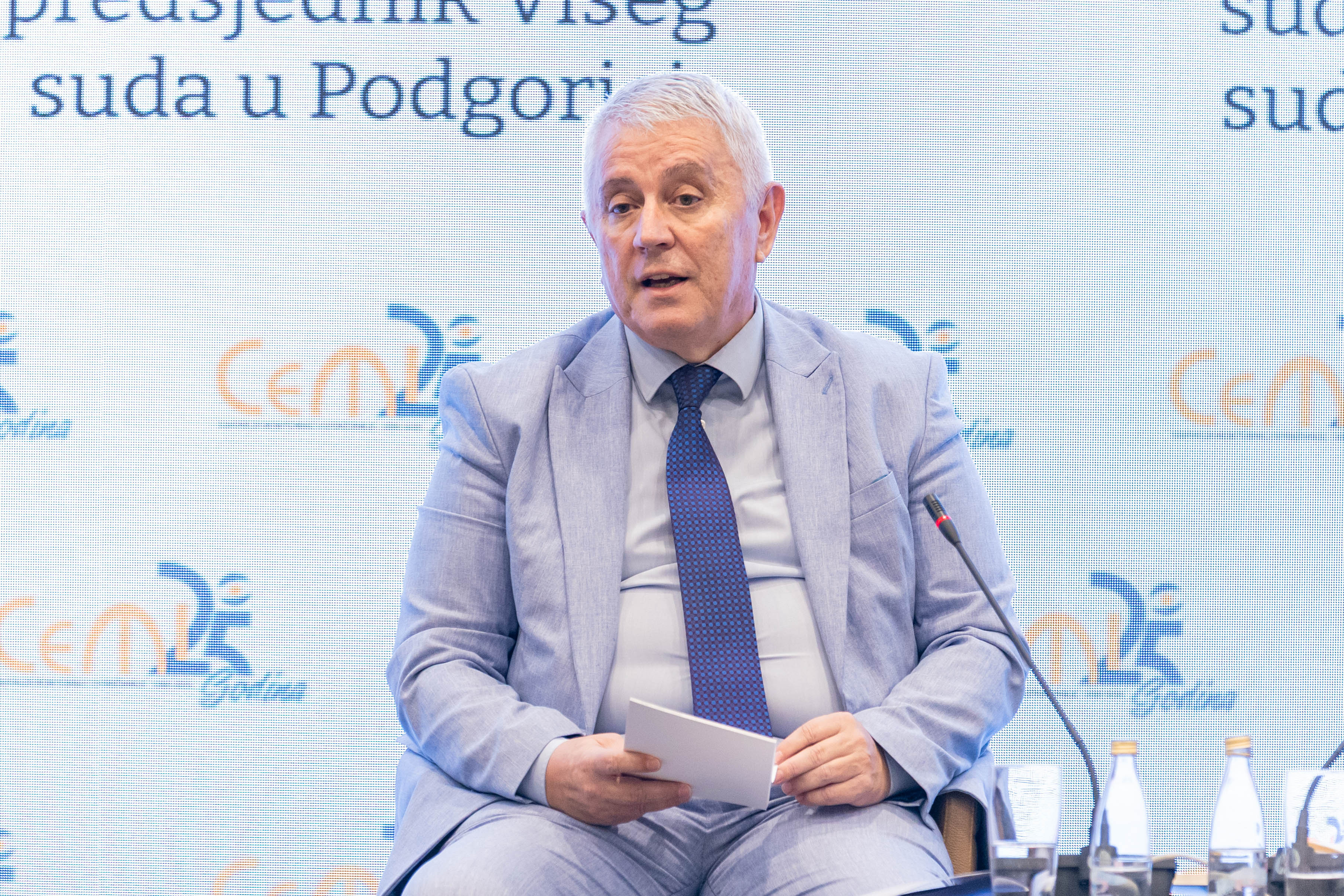
The President of the High Court in Podgorica, Zoran Radović, announced that the Special Department of that court achieved exceptional results in 2025, resolving 111% of cases as of 10 May, including those related to organized crime and corruption.
Radović highlighted that increasing the number of judges in the Special Department from six to 14, as well as using the courtrooms of the Appellate Court and Supreme Court, enabled hearings to be scheduled more quickly and noticeably reduced the number of unresolved cases.
“For the first time, we are seeing tangible progress in this department, which is a reason for optimism,” Radović said.
However, he added, significant progress cannot be achieved without substantive amendments to the Criminal Procedure Code.
“The proposed amendments are moving in the right direction but will not be sufficient. The CPC is the most important law after the Constitution and must be enacted carefully and professionally. Provisions regarding service, conditions for holding main hearings, and the content of verdicts need to be more precisely regulated,” Radović stressed, adding that current verdicts are often too long and greater conciseness and clarity in writing court decisions is required.
Reflecting on the CeMI report, Radović expressed regret that Special Department cases were not included in the analysis, noting that they are extremely complex and require a separate report.
“In organized crime cases, it is not possible to schedule hearings within 15 days. These are proceedings with dozens of defendants and an enormous amount of evidence requiring additional time for preparation and processing,” Radović explained.
Addressing issues affecting court efficiency, Radović specifically highlighted the lack of electronic monitoring devices.
“Resolving this problem would significantly reduce the number of detained persons, especially in basic courts. We have been appealing for years, but the authorities have yet to take the necessary steps. These measures were foreseen back in 2011, I do not know what else needs to happen for them to be implemented,” Radović stated.
He also pointed out that the High Court in Podgorica continues to face serious infrastructure and technical problems, a lack of space, and insufficient support for process digitalisation.
“Politicians often directly interfere in court proceedings, pressure is exerted on judges, and a false perception is created that the lifting of detention equates to an acquittal,” Radović said.
He concluded that, although the system is burdened, positive developments are visible.
“With serious, fundamental reforms, we can increase efficiency, accountability, and citizens’ trust in the judiciary,” Radović concluded.
Judge of the Basic Court in Podgorica, Rade Ćetković, stated that true dedication to the judiciary is not achieved by focusing solely on administration and procedures.
“The essence lies in understanding the system’s weaknesses and potential and in creating policies that will lead to real improvements,” Ćetković said.
According to him, without a joint approach and understanding of this issue, it is impossible to ensure genuine judicial independence and professionalism.
Ćetković also emphasized the importance of addressing old cases, noting that the planned program for the accelerated closure of backlogged cases can significantly contribute to higher efficiency and public trust.
“The number of unresolved cases is gradually decreasing, but procedural and technical obstacles still slow down processes. We are working to eliminate these and introduce tools that will enhance transparency and access to information,” Ćetković explained.
Speaking on necessary improvements, Ćetković highlighted the importance of strengthening institutional capacities through training, resource rationalization, and investment in infrastructure.
“Certain steps have already been taken through legislative amendments and programs aimed at improving court operations, but it is necessary to continue reforms and provide concrete technical and institutional support,” Ćetković said.
He noted that the Judicial Council is particularly focusing on rationalizing and optimizing the court network, which involves better distribution of judges and staff, modernizing work, and introducing digital solutions.
Ćetković concluded that responsibility for judicial progress is shared.
“Not everything lies in the hands of judges or members of the Judicial Council – the legislative and executive branches must recognise the importance of a stable and independent judiciary for the overall democratic development of Montenegro. Only through a joint approach can we build a system that is resilient, fair, and aligned with European standards,” Ćetković concluded.
The event was organized as part of the project “Supporting EU integration of Montenegro – for independent and professional Judiciary as a key precondition!”, implemented by the Centre for Monitoring and Research (CeMI), in cooperation with the Centre for Investigative Journalism of Montenegro (CIN-CG) and the Centre for Civil Liberties (CEGAS), financed by the European Union, and co-financed by the Ministry of Public Administration of Montenegro.