The draft of the new Law on Prevention of Corruption represents an important test of Montenegro’s political maturity and institutional responsibility, while certain amendments to the act, concerning the reduction of the number of votes required to elect the Director of the Agency and the introduction of a second instance within the Council, could affect the independence of this institution.
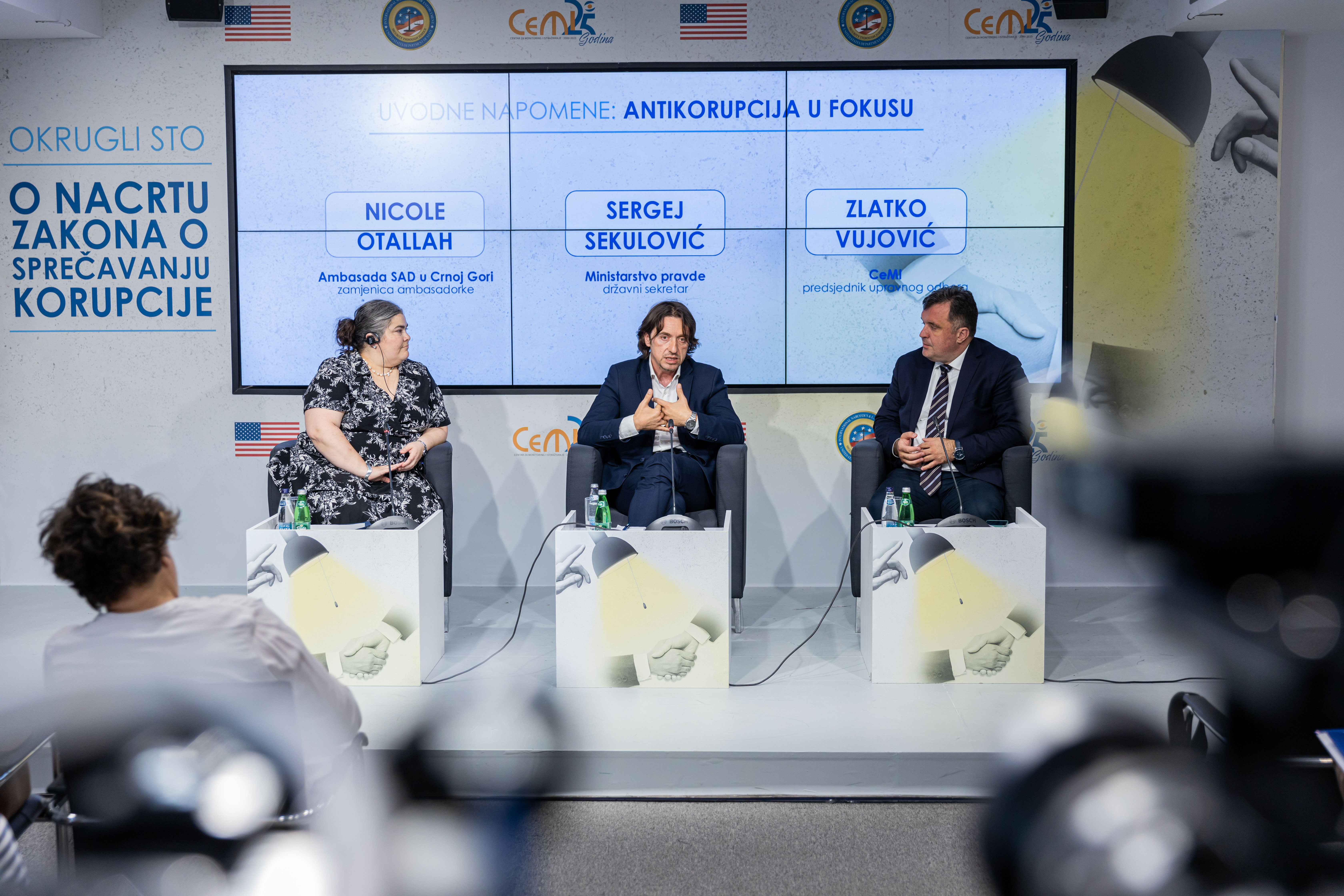
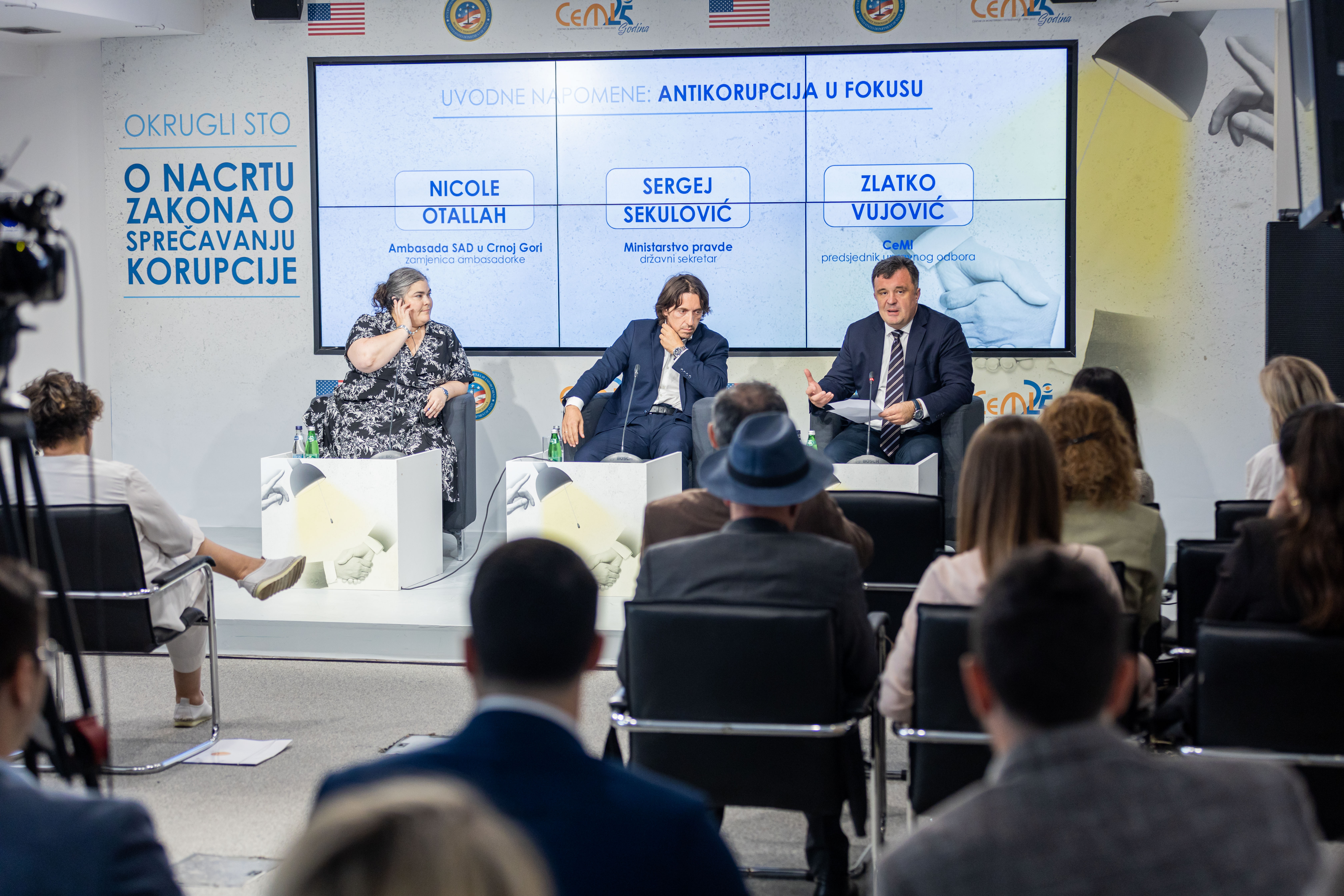
This was stated at the roundtable “Discussion on the Draft Law on Prevention of Corruption,” organized by the Center for Monitoring and Research (CeMI) within the project “Raise Your Voice: For a Montenegro Without Corruption,” implemented with the support of the Bureau for International Narcotics and Law Enforcement Affairs (INL) of the U.S. Embassy in Montenegro.
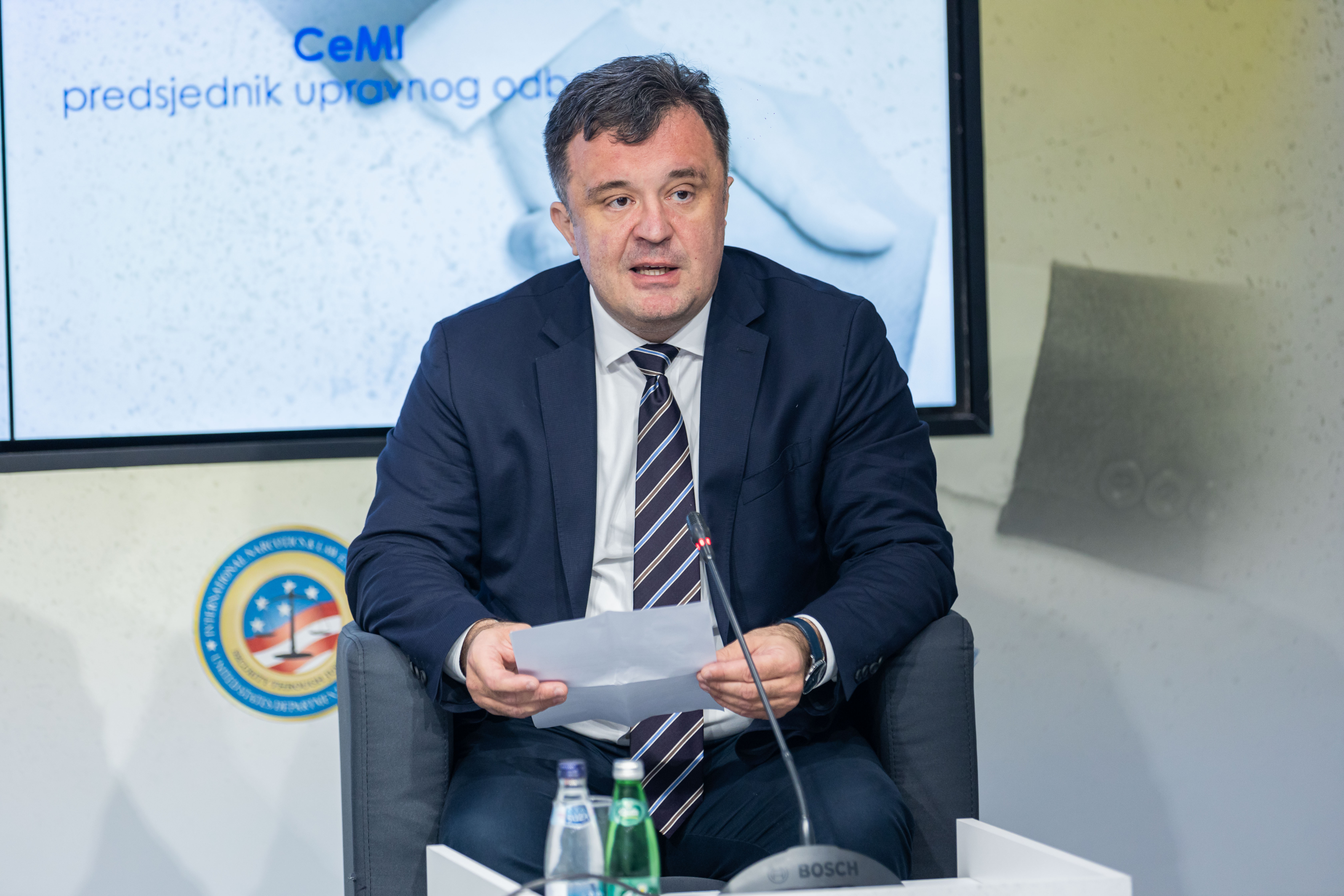
Zlatko Vujović, President of CeMI’s Management Board, emphasized that this is one of the key laws for improving anti-corruption policies in the country, representing a significant step toward strengthening the integrity of institutions and citizens’ trust in public administration.
Speaking about experiences from the previous legal framework, Vujović recalled the complex procedure for electing members of the Council and the Director of the Agency, whose aim was to minimize political influence through complex mechanisms.
“Foreign experts involved in creating that model insisted on high decision-making thresholds, such as requiring four out of five Council members to support a candidate for Director, to ensure broader consensus and reduce political pressure,” Vujović stressed.
He pointed out that the draft of the new law considers amendments that, in his words, could lead to further politicization of the process.
“Specifically, it is proposed that the threshold for electing the Director be lowered to a simple majority — three out of five votes — which, along with the introduction of second-instance decision-making by the Council on appeals against the Director’s decisions, could further undermine the independence of this institution,” Vujović said.
He warned that if such a model is adopted, there is a serious risk that the work of the Council and the Director will become even more politicized.
Vujović noted that experience shows it is difficult to secure a two-thirds majority for the re-election of a truly independent Director, “because such a position often runs counter to intersecting political interests.”
He believes that the key guarantee for the Agency’s success in the coming period is the quality and impartiality of the Director’s election.
“Everything hinges on one person. If the Council does not select the Director based on expertise and integrity, there is no basis to expect results,” Vujović said.
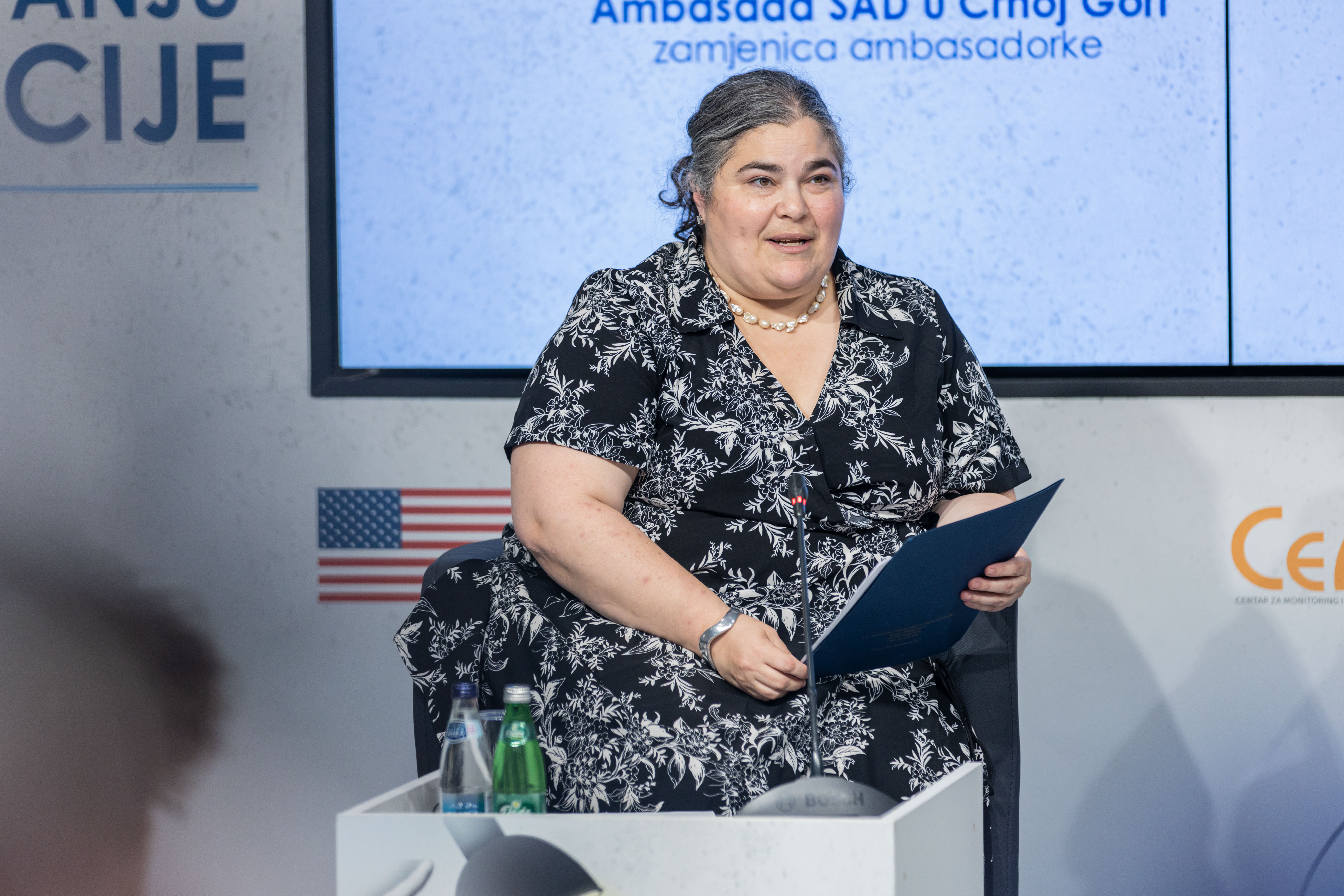
Nicole Otallah, Deputy U.S. Ambassador to Montenegro, highlighted the importance of continuous improvement of the legal framework in the fight against corruption.
“The adoption of the Law on Prevention of Corruption last year was an important step forward in Montenegro’s efforts to combat corruption and promote good governance principles. Like any legislative act, the law must be continuously analyzed and improved to effectively respond to the challenges it aims to address,” Otallah stated.
She emphasized the importance of today’s event, which brought together representatives of the judiciary, prosecution, state and local administration, diplomatic corps, as well as civil society representatives.
“Your collective knowledge and experience are invaluable in strengthening the legal framework and improving anti-corruption mechanisms in Montenegro. The participation of public officials, who are legally obliged to submit asset reports, is especially significant, as their experiences provide valuable insight into the practical challenges of law implementation,” Otallah said.
She also added that civil society’s role is crucial for ensuring transparency and including the voices of those who monitor and advocate anti-corruption measures daily.
“The United States welcomes the open dialogue and cooperation Montenegro is demonstrating in strengthening its legal system with the goal of building a more transparent and accountable society, providing support to Montenegro’s efforts in fighting corruption and strengthening the rule of law,” Otallah concluded.
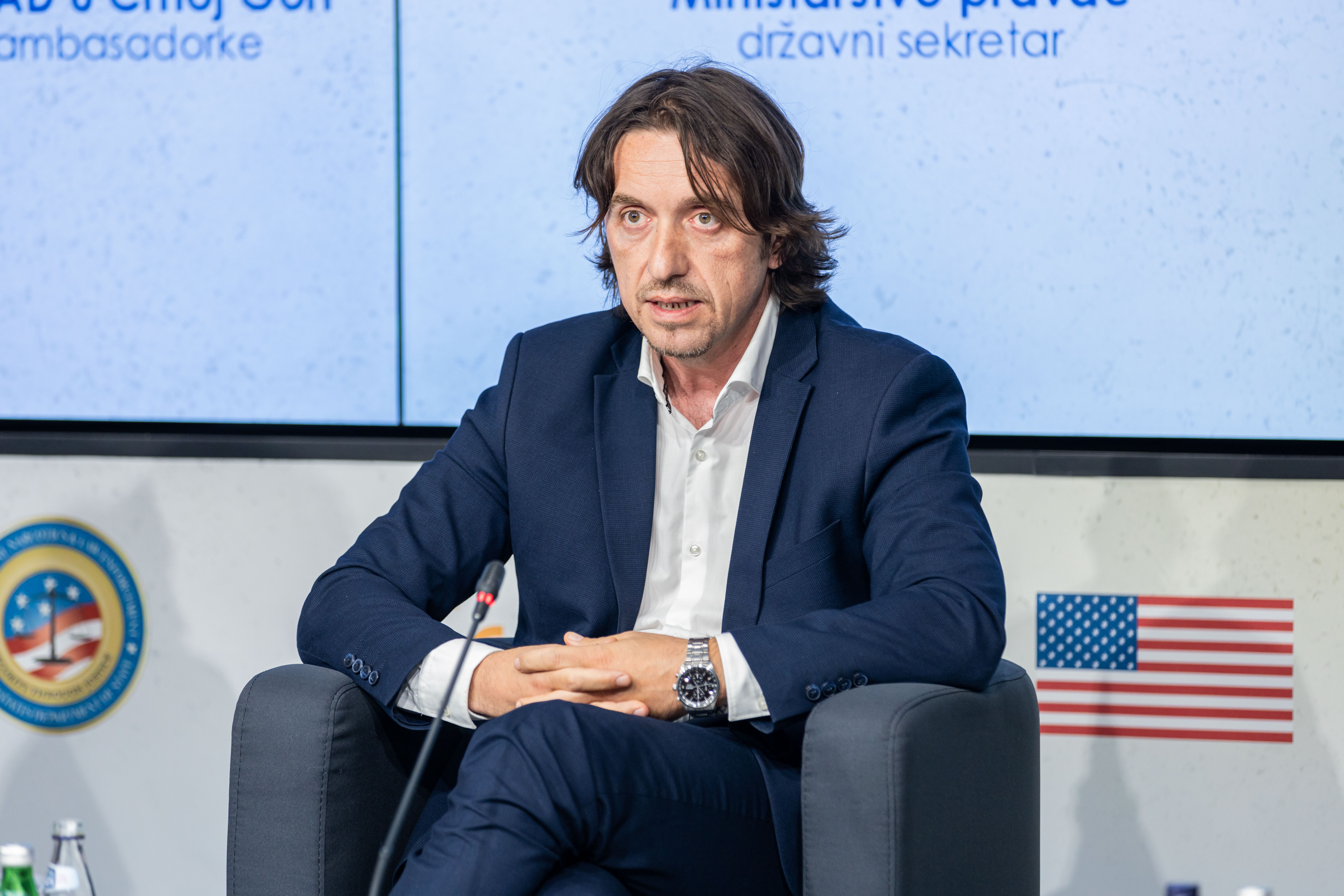
Sergej Sekulović, State Secretary of the Ministry of Justice, emphasized the great importance of this legal solution.
“There is no ideal normative solution if it is not supported by an adequate social environment and human factor. The law itself is not enough if there is no will to implement it,” Sekulović said.
He pointed out that the proposed amendments are the result of broad inclusivity and consideration of comments and suggestions from the civil sector, expressing confidence that the new legal framework will be significantly improved.
“One of the key novelties is the expansion of the Agency for Prevention of Corruption’s powers, which will henceforth have the right to access the bank accounts of all public officials without their consent. Until now, this was only possible if the official voluntarily agreed. Now this possibility becomes an obligation, representing a strong control mechanism,” Sekulović said.
He considers particularly important the novelty regarding assets transferred to related persons.
“The Agency will have the right to investigate cases where assets have been transferred to family members, even if they no longer live in the same household. It will no longer be possible to register assets under children or relatives to avoid declaration obligations. This was a major loophole in the system, and it will now be closed,” Sekulović stated.
He also highlighted the importance of cooperation between the Agency, the Special Prosecutor’s Office, and judicial authorities, assessing that the interoperability of institutions—both technical and human—must be a priority in the coming period.
“The Agency is conceived as sui generis, a specific control body that is not repressive but preventive and supervisory. However, to be effective, it must have sufficient powers as well as strong leadership at its head — a person whose integrity carries the burden of the function,” Sekulović said.
He added that the Ministry of Justice believes in the direction being taken, noting that no legal solution can guarantee success without political will and institutional commitment.
“We believe we will have a significantly improved legal framework that will enable a more effective fight against corruption. There will be challenges and uncertainties, but we believe we are moving in the right direction,” Sekulović concluded.
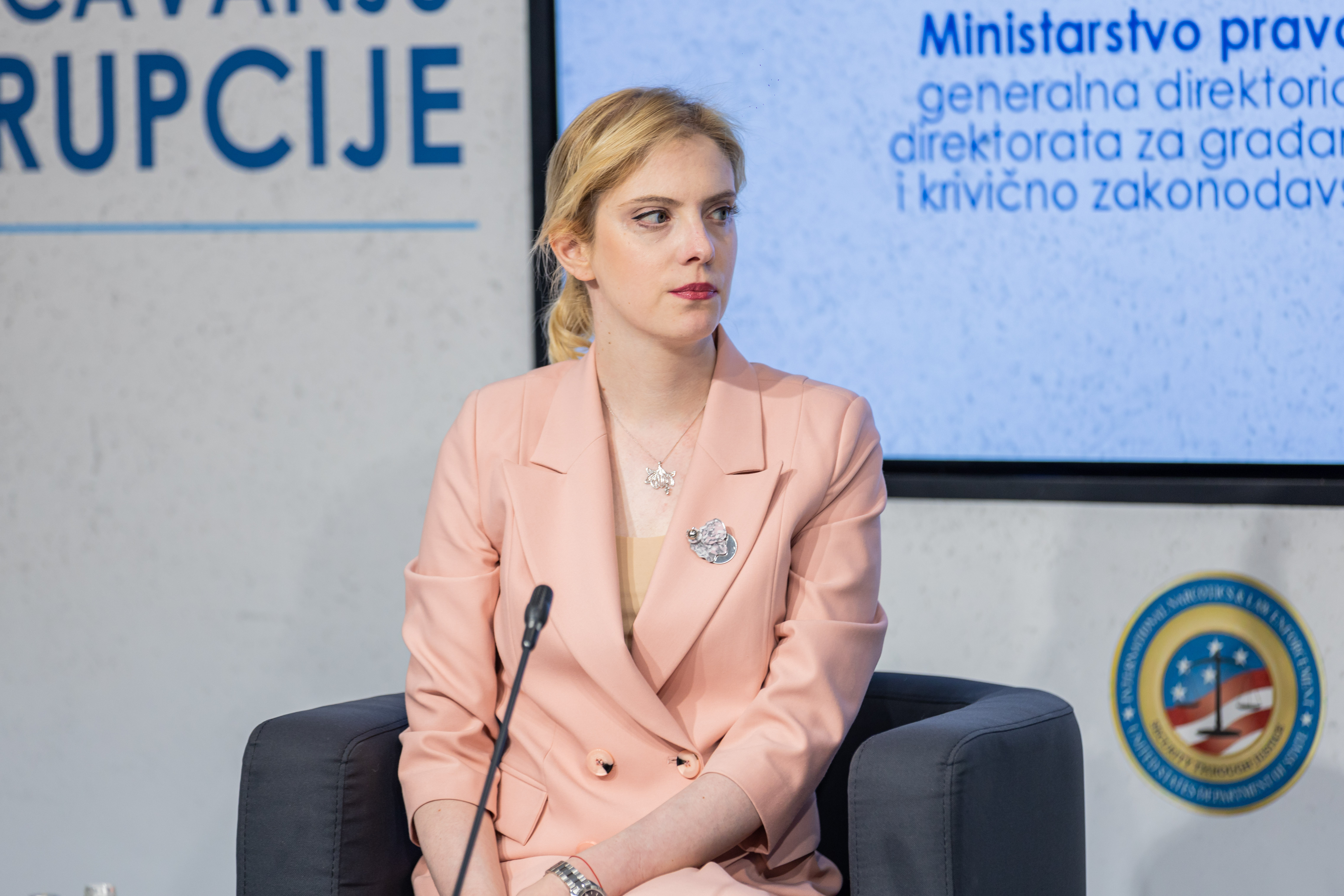
Jelena Grdinić, General Director of the Directorate for Civil and Criminal Legislation at the Ministry of Justice, spoke about key innovations in the draft Law on Prevention of Corruption, emphasizing that the draft is the result of inclusive and months-long work, taking into account opinions of the Venice Commission, the European Commission, NGOs, and domestic experts.
She reminded that the first draft was created during the so-called IBAR process in 2024, but due to short deadlines, it was not possible to cover all planned reforms.
“The new draft currently in its final phase emerged through additional public consultations, three roundtables, and continuous work of the working group, and fully meets international and European standards,” Grdinić emphasized.
She explained that one of the most significant changes concerns the removal of the statute of limitations in administrative proceedings, which was initially proposed in the previous version of the law.
“After criticism from NGOs, the Ministry of Justice decided to delete that provision from Article 44, thereby enabling efficient and impartial prosecution of corruption cases without legal time restrictions,” Grdinić noted.
She indicated that another important novelty is the introduction of automated access to data on public officials’ bank accounts, including income information.
“We believe this is the only way to effectively verify the accuracy of data officials submit in asset and income reports,” Grdinić said, adding that only authorized officers of the Agency for Prevention of Corruption will have access to these data, under strict technical and legal control and data protection mechanisms.
Speaking about institutional mechanisms, Grdinić pointed out that the decision-making structure within the Agency’s Council was also changed.
“Instead of the four out of five votes required to elect the Director or Council member, a simple majority (three out of five votes) is now prescribed. The goal is to avoid institutional deadlock and ensure the Agency’s smooth functioning,” Grdinić explained.
Special attention was also given to financial aspects, including salaries of Council members and the Agency’s President.
“Salary increases are aligned with the Public Sector Salary Act and reflect the expanded competencies of Council members, including potential second-instance decision-making,” Grdinić emphasized.
Asked about progress regarding amendments to the Whistleblower Law, Grdinić said the Ministry of Justice has prepared a draft of that act, which is fully aligned with the EU directive.
“It is expected that this draft will soon be sent to public debate, after which it will be submitted to the European Commission,” she said.
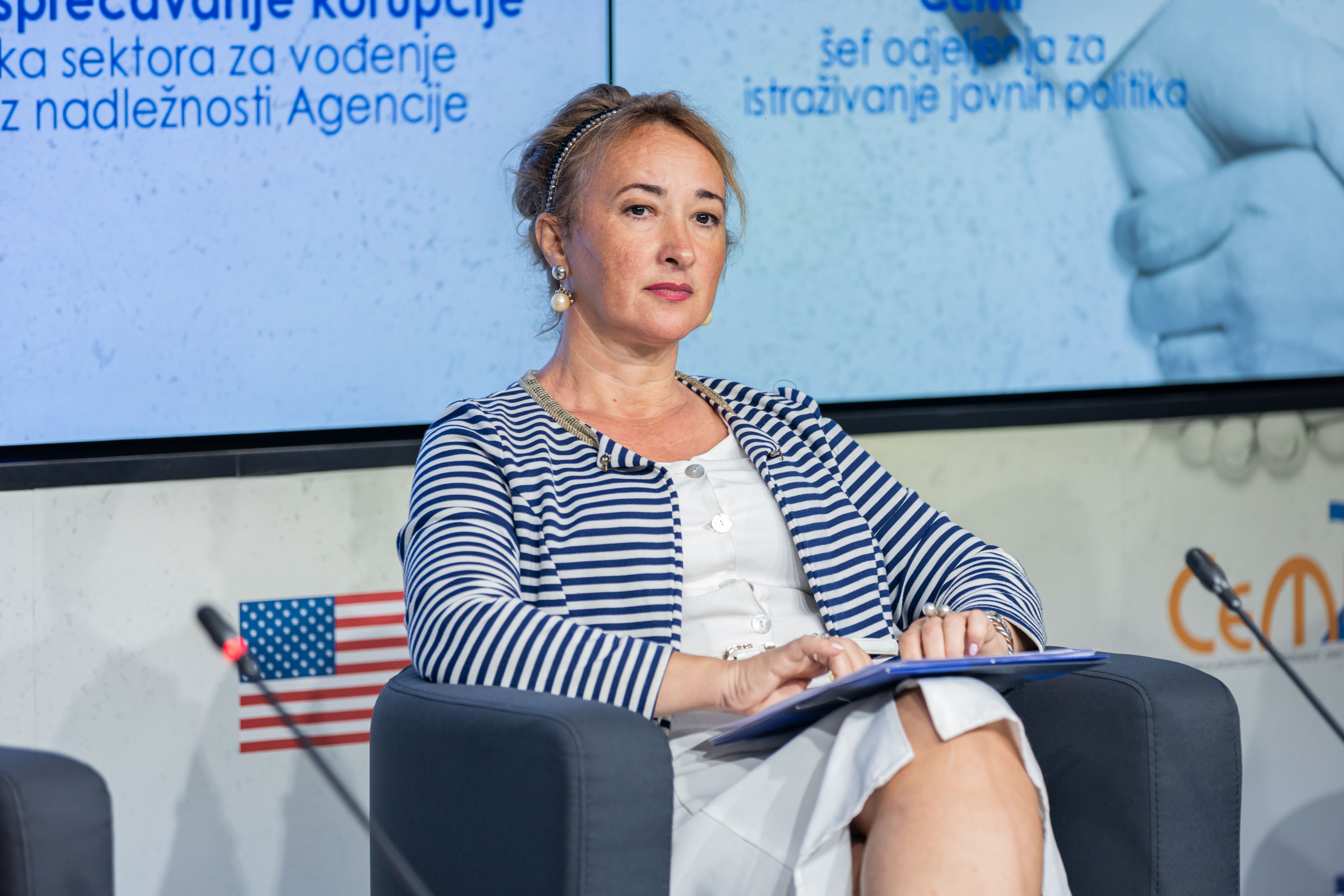
Maja Karas Bošković, Coordinator of the Sector for Conducting Procedures within the Agency for Prevention of Corruption, highlighted that the new legal solution is significantly improved, especially in defining related persons of public officials.
“Now not only family and kinship ties are covered, but also political and business relations that exist in personal interest, which was not the case before,” Karas Bošković said.
She stressed that the introduced changes will enable the Agency greater operational capacity and clarity in interpreting legal norms.
“Special attention was given to the definition of gifts, increasing monetary limits for certain relations with authorities (from the previous 1,000 to 5,000 euros), as well as expanding competencies in requesting evidence from related persons,” Karas Bošković stated.
She pointed to challenges related to reporting virtual assets, i.e., cryptocurrencies, which public officials were not previously obliged to report, but have now done so for the first time within the 2024 reporting period.
The Agency, she noted, is preparing to monitor this type of digital asset through new mechanisms.
“Regarding the verification of public officials’ credit indebtedness, there were obstacles due to data protection regulations. However, the Ministry of Justice, in cooperation with the Agency, found a solution that allows full insight while preserving privacy,” Karas Bošković said.
She explained that access to bank accounts is exclusively granted to officers of the Property Verification Sector, and every action is automatically recorded in electronic records.
“The Agency now has the authority to request data on assets and income from abroad, which is an important step in preventing hidden enrichment of public officials. The law gives us broader discretionary powers to request data from related persons themselves, which was not possible before. This is extremely important for the effective implementation of the law,” Karas Bošković added.
She emphasized that the Agency has expert capacities and strong international support, but staffing strengthening remains necessary.
“If we maintain the current support of the Ministry of Justice, Parliament, and other competent bodies, I believe we will fully implement the law’s goals,” Karas Bošković concluded.
Nemanja Stankov, Head of the Public Policy Research Department at CeMI, assessed that the public consultation process during the amendments to the Law on Prevention of Corruption was inclusive and constructive, with genuine efforts to adopt comments from the civil sector.
“There really is an impression that the authorities have taken into account a large number of suggestions from NGOs. Deficiencies were noticed in the initial draft law, and during the public consultation process, certain changes were made that improved its content,” Stankov said.
He stressed that the consultation process should not end with the formal adoption of the legal text.
“At the moment the process formally ends, new dilemmas, doubts, and proposals often arise. We believe that the space for dialogue is still necessary, especially regarding issues that attract great public attention,” Stankov concluded.