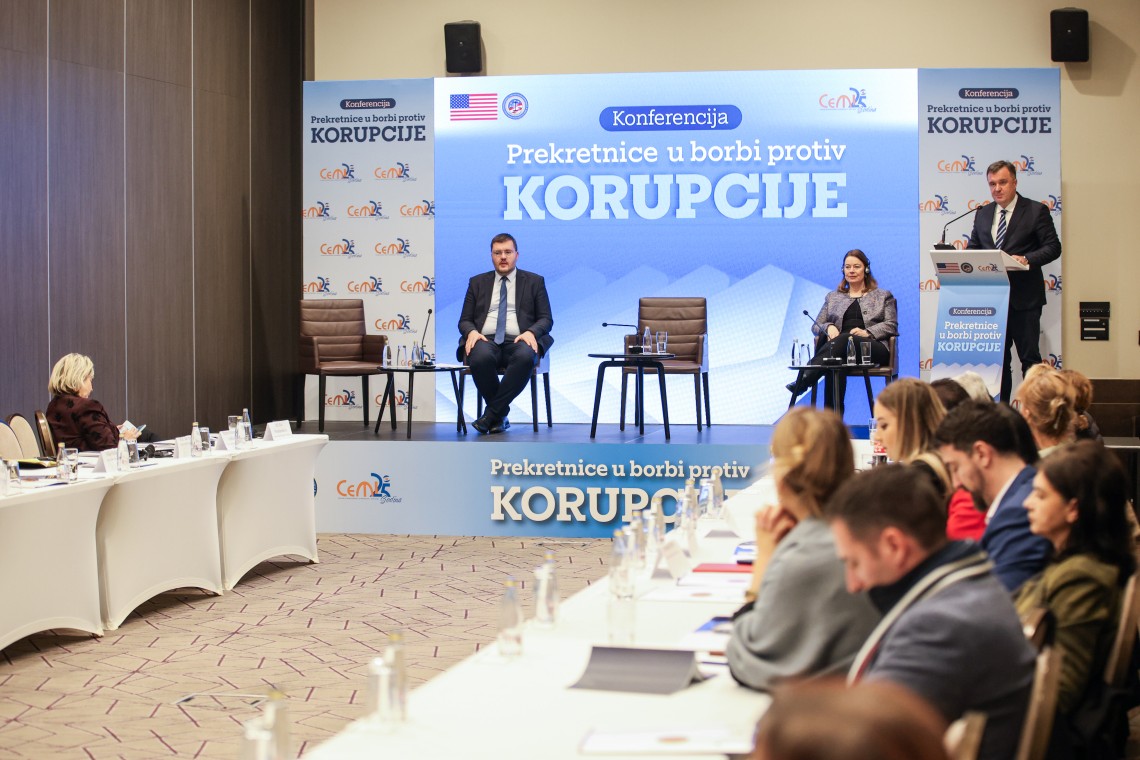
The fight against corruption remains a key condition for closing negotiations with the European Union, despite the strengthening of numerous institutions within the system—primarily the Special State Prosecutor’s Office, the Agency for the Prevention of Corruption, the Tax Administration, and the Customs Administration. However, without measurable and sustainable results in prosecuting corruption, especially at the high level, Montenegro will not be able to achieve this goal.
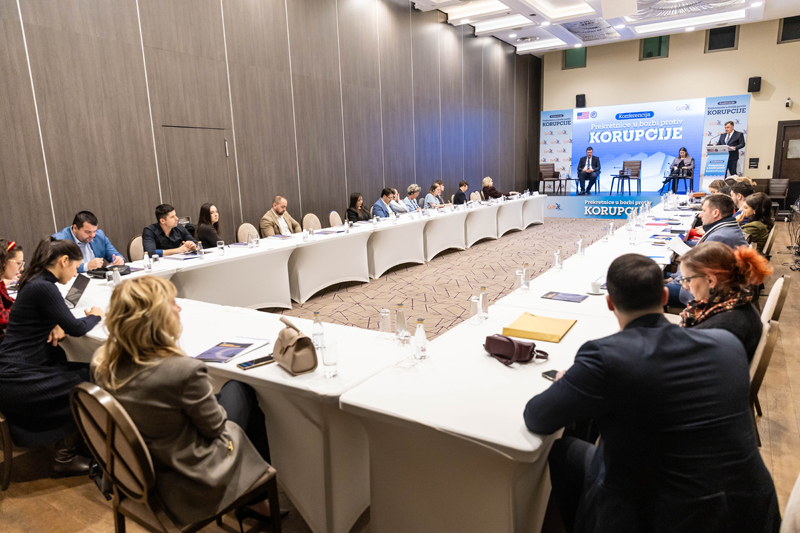
This message was delivered at our conference “Turning Points in the Fight against Corruption,” where the Report on the Implementation of Anti-Corruption Policies and Reforms in Montenegro for the period 2024–2025 was presented.
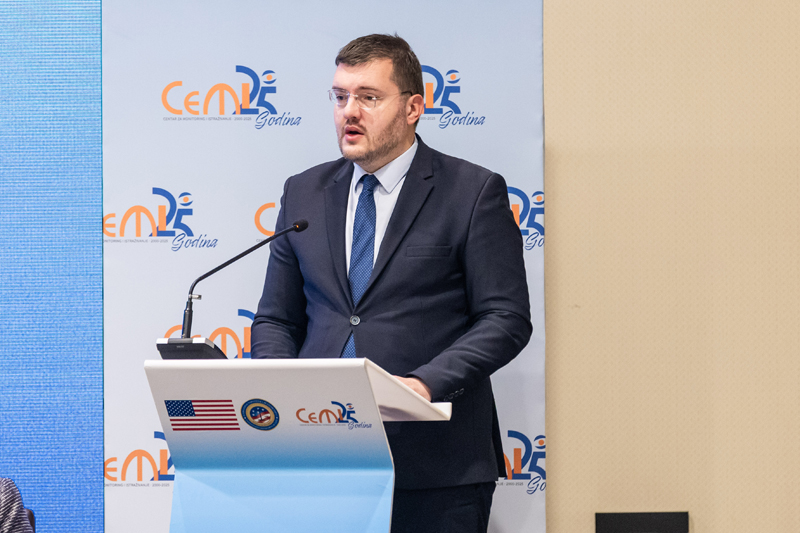
Zlatko Vujović, President of the Governing Board of CeMI, said that despite an improved normative framework and strategic documents, Montenegro continues to record limited progress when it comes to final court outcomes in high-level corruption cases.
“The gap between normative solutions and their implementation in practice remains one of the central challenges,” Vujović said.
He noted that the Report is the result of systematic, months-long research conducted by CeMI, which included an analysis of the legislative and institutional framework, as well as monitoring concrete results in practice.
“The particular value of this document lies in the fact that the Report was officially submitted to the European Commission even before today’s public presentation and was used as a source of information in the preparation of the European Commission’s Annual Report on Montenegro, especially in the sections related to negotiation chapters 23 – Judiciary and Fundamental Rights, and 24 – Justice, Freedom and Security,” Vujović stated.
He emphasized that for achieving measurable and sustainable results in the fight against corruption, political will, better institutional coordination, and the building of a credible track record are crucial for the next phase of negotiations and for Montenegro’s goal of closing EU negotiations by the end of next year.
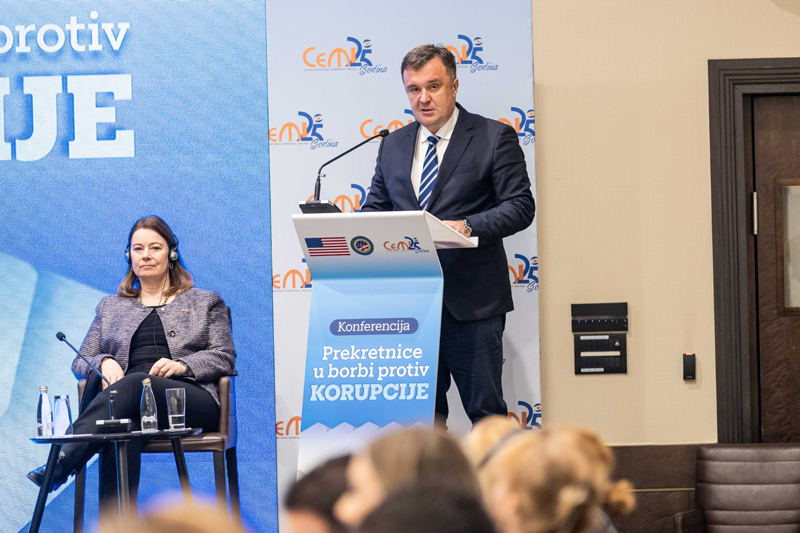
Deputy Prime Minister Momo Koprivica stated that turning points in the fight against corruption can only be discussed once the starting point is clearly understood, reminding that Montenegro previously experienced a period of closed institutions.
He said that the first real and substantive turning point in overcoming that situation was the reform of the Special State Prosecutor’s Office.
“The reformed Special State Prosecutor’s Office has begun to demonstrate genuine independence and readiness to confront the most serious forms of high-level corruption and organized crime, regardless of the political or economic power of those under investigation,” Koprivica said.
Speaking about further steps, Koprivica emphasized the importance of the work of anti-corruption bodies, particularly the Agency for the Prevention of Corruption, stressing that, “as a preventive institution, it has full meaning only if it acts non-selectively, without cases left in drawers and without political calculations.”
According to him, the next turning point comes through the activation and strong reform of the Tax Administration, the Customs Administration, and the Police Directorate, which for decades were perceived as closed institutions rather than institutions serving the rule of law.
“The readiness of the Tax Administration to knock on doors that for years were oases of lawlessness and to place formerly privileged entities at the very top of the blacklist of tax debtors represents a clear break with the practice of privileges and selective application of the law,” Koprivica said.
“At the same time, the strong will of the Government and the professional conduct of the Customs Administration, including the seizure and destruction of smuggled tobacco, have both symbolic and practical significance, because by destroying smuggled tobacco, channels of corruption are also being destroyed,” Koprivica added.
He recalled that during this year a record destruction of tobacco products in European terms was carried out, with the participation of international partners and the application of modern methodologies.
“Today, for the first time, we can speak of a broader front of institutions becoming more resistant to political and criminal influences and transitioning from a passive to an active fight against corruption and abuse,” Koprivica assessed.
He added that judicial and anti-corruption legislation has been reformed in line with European standards, receiving positive assessments from the European Commission and the Venice Commission, but that consistent implementation of these regulations remains an obligation.
He also recalled that the Anti-Corruption Strategy, adopted in 2024 after a decade without such a document, received the approval of the European Commission and represents a clear roadmap for a comprehensive fight against corruption until 2028.
In conclusion, Koprivica stressed that the key question remains whether the achieved turning points will become a lasting practice or short-lived exceptions, emphasizing that the answer depends on persistence in the principles of independence, non-selectivity, and accountability-a task not only for the authorities, but for all institutions and society as a whole.
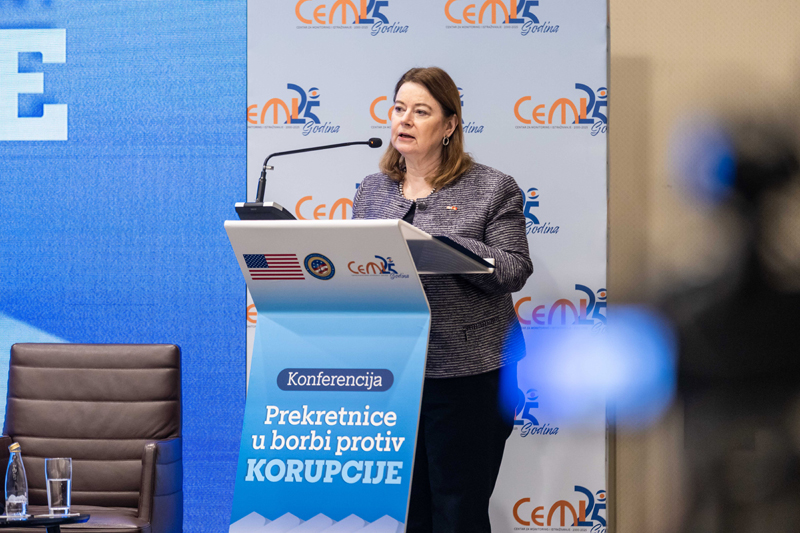
The Ambassador of the United States of America, Judy Rising Reinke, stated that the fight against corruption must be continuous, coordinated, and collective, because corruption destroys societies, undermines the rule of law, and enables organized crime to operate across borders.
“Corruption stifles economic opportunities, weakens democracies, and undermines public trust. No country and no institution are immune, which is why long-term cooperation and coordinated efforts are the only way to achieve real and sustainable results,” Rising Reinke said.
“Corruption is a transnational challenge and therefore requires cooperation across borders, sectors, and societies,” she added.
Ambassador Rising Reinke praised CeMI for its leadership and for producing a thorough and informative report on the implementation of anti-corruption policies in Montenegro, noting that it is a valuable tool in the fight against corruption.
Highlighting the strategic priorities of the United States, Reinke emphasized that the fight against transnational organized crime is a matter of U.S. national interest.
“Organized crime survives precisely because of corruption-through bribery, nepotism, blackmail, and other forms of abuse,” Rising Reinke said.
She called for long-term and coordinated action aimed at strengthening integrity, transparency, accountability, and the rule of law, emphasizing that through joint efforts it is possible to achieve real change and improve the quality of life of citizens.
The conference was organized within the framework of the project “Raise Your Voice: For a Corruption-Free Montenegro,” implemented by CeMI with financial support from the Bureau of International Narcotics and Law Enforcement Affairs (INL) of the U.S. Embassy in Montenegro.