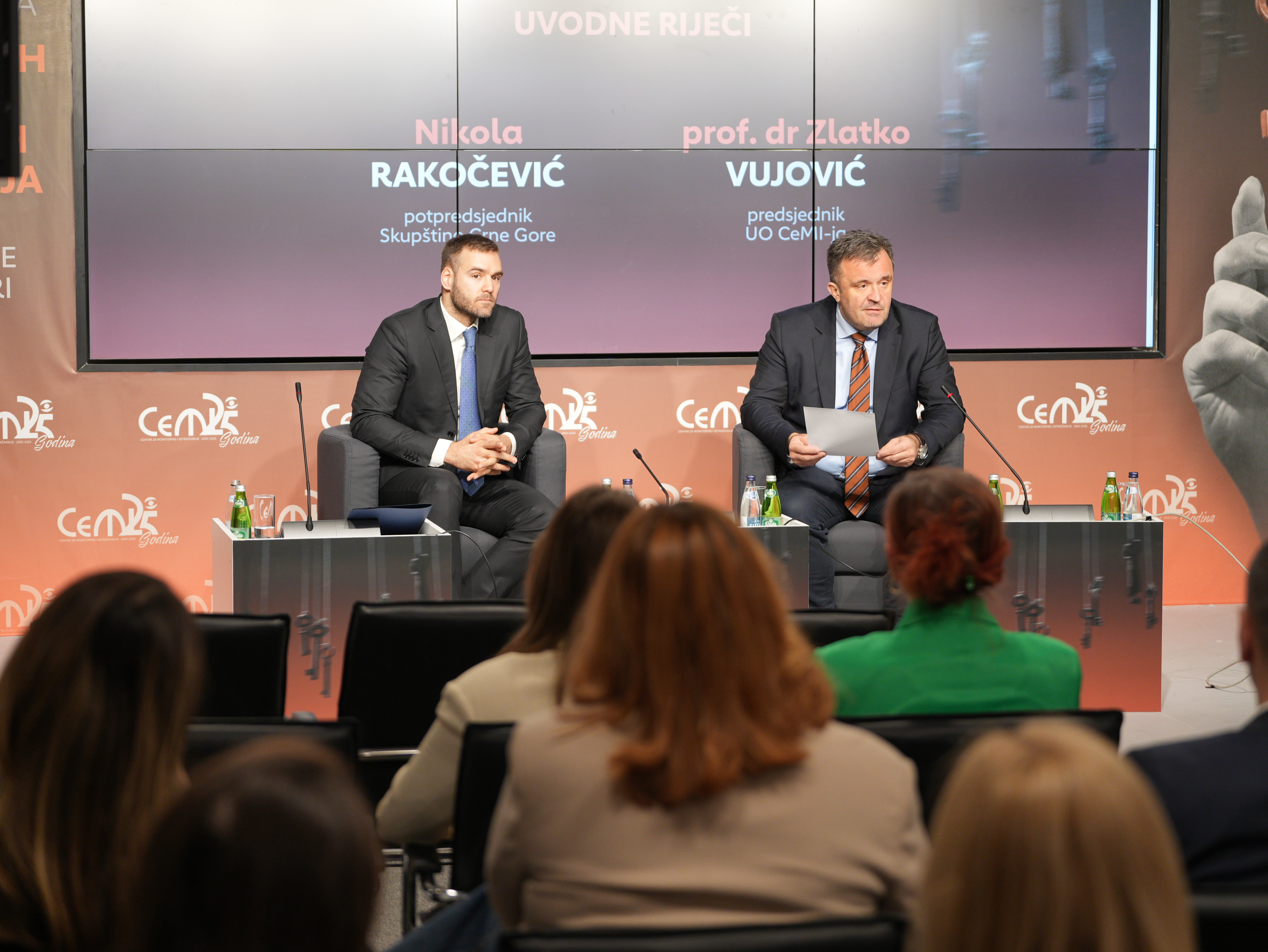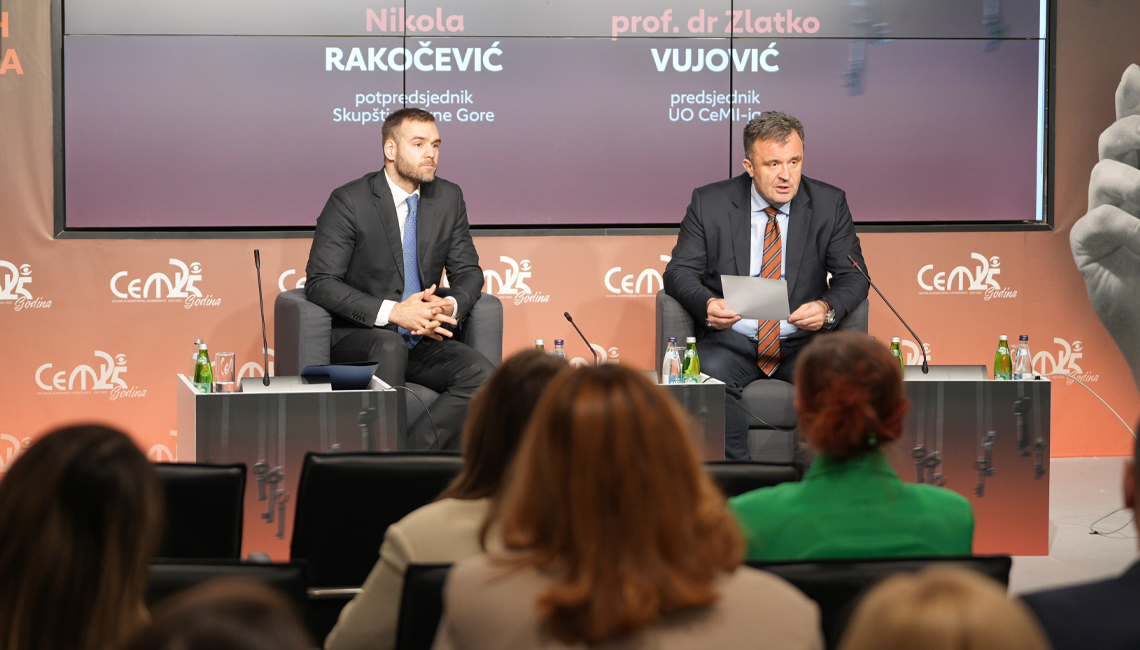
There is no unified register of amnestied persons in Montenegro, which represents a serious challenge to transparency and the responsible application of the institution of amnesty. Amnesty must be implemented with full transparency and institutional accountability, a unified record of amnestied individuals, and strong democratic oversight—particularly by the Parliament of Montenegro.
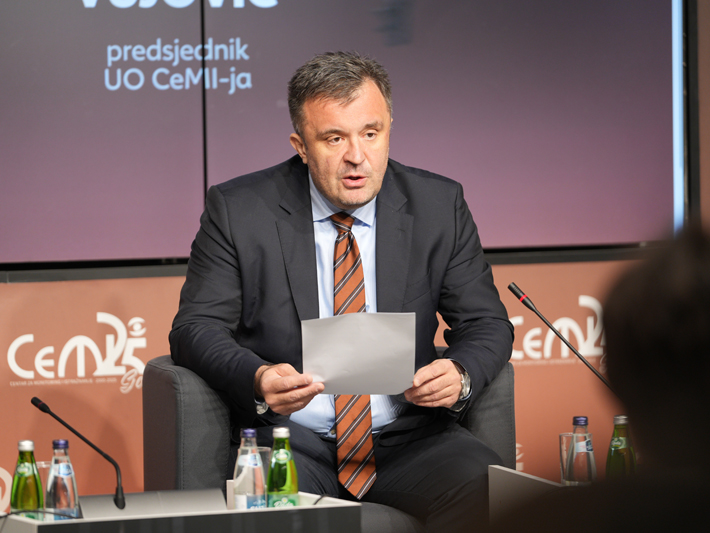
This was stated by Zlatko Vujović the President of the Governing Board of CeMI, at the conference “From Mass Releases to Targeted Interventions – Amnesty and Pardon in Montenegro,” organized by the organization.
Speaking about the findings of the research on amnesty and pardon, Vujović pointed to serious challenges CeMI faced during data collection, emphasizing that the unavailability and inconsistency of statistical information in the judiciary represent a systemic problem rather than an exception.
“Without reliable and comparable data, it is impossible to conduct an informed public debate, adopt quality public policies, or objectively assess the effects of legal solutions. This report does not address only amnesty and pardon, but clearly indicates the state of data governance within the judicial system. Without systemic solutions in the areas of records, statistics, and institutional openness, judicial reforms remain fragmented and difficult to measure,” Vujović said.
Vice President of the Parliament of Montenegro, Nikola Rakočević, stated that the institution of amnesty must be carefully regulated and free from day-to-day political interests.
“The institutions of amnesty and pardon do not represent a deviation from the rule of law, but rather its corrective mechanism, applied exclusively in clearly defined and exceptional circumstances,” Rakočević said, emphasizing that decisions in this area must be made responsibly, transparently, and in line with European standards.
According to him, amnesty lies at the intersection of law, politics, and social responsibility, and therefore its legal treatment must be free from daily political calculations and partial interests.
“Parliament plays a key role not only as the formal adopter of amnesty laws, but also as an institution that must guarantee the legitimacy, fairness, and consistency of this instrument,” Rakočević stated.
Pointing out that the last amnesty law in Montenegro was adopted in June 2020, Rakočević noted that the country is currently experiencing the longest period since the restoration of independence without such legislation, despite objective indicators pointing to serious systemic overload.
“Draft amnesty laws appear without prior public debate, without substantive discussion in Parliament, and without consideration by competent parliamentary bodies, which opens space for potentially selective solutions,” Rakočević said.
He assessed that if an amnesty law is not accompanied by a long-term and systemic approach, based on relevant data and European standards, “such solutions may jeopardize the rule of law and a clearly defined penal policy.”
Rakočević concluded that it is necessary to clearly regulate the institution of amnesty, ensure full transparency in decision-making processes, and eliminate any suspicion of selectivity, with an active and responsible role of Members of Parliament.
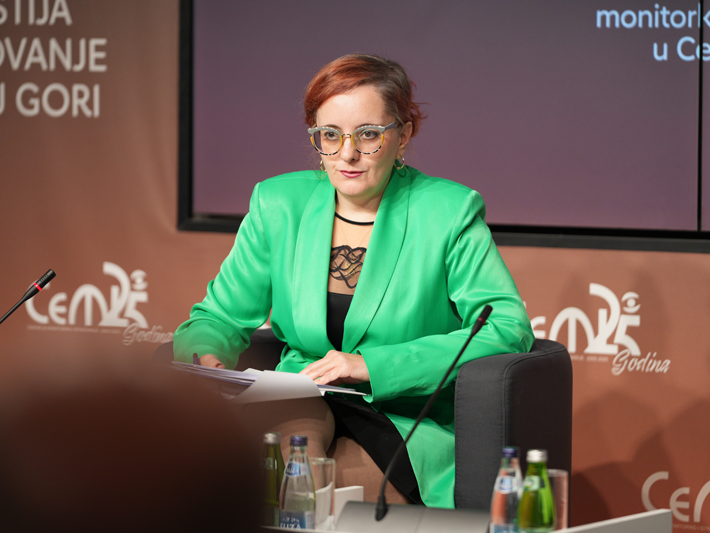
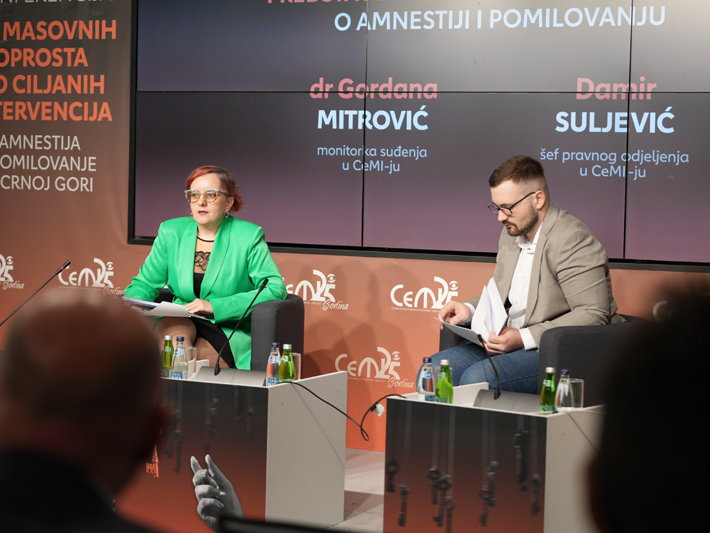
During the presentation of the research findings on amnesty and pardon, Dr. Gordana Mitrović from CeMI pointed out that Montenegro lacks a unified register of amnestied persons, noting that this poses a serious challenge to transparency and the responsible application of amnesty.
She emphasized that a new amnesty law should specifically use mandatory record-keeping and regular updating of decisions, explaining that this would ensure greater institutional accountability and enable a well-founded analysis of the effects of this legal instrument.
Mitrović recalled that the constitutional basis for amnesty is defined in the Constitution of Montenegro, which assigns this authority to Parliament, while further specification is found in the Rules of Procedure of Parliament, the Criminal Code, and the Criminal Procedure Code.
She noted that since the restoration of independence in 2006, Montenegro has adopted six amnesty laws, which differed in the percentage of sentence reduction and in the criminal offenses excluded from amnesty“a list that expanded over time to include offenses against marriage and family, criminal association, as well as the illegal production and distribution of narcotic drugs.”
“The analysis shows that the number of amnesty decisions issued by courts is approximately proportional to their overall caseload. Courts with the highest number of cases, such as the basic courts in Podgorica, Nikšić, Bar, and Kotor, also record the highest number of amnesty decisions,” Mitrović stated.
According to her, the largest number of amnesties was applied to prison sentences of up to six months, followed by sentences of one to three years, while the fewest amnesties were recorded for sentences of three to five years and over five years. In terms of frequency, amnesty decisions for sentences of six months to one year follow those for sentences of one to three years.
“At the same time, the structure by percentage of sentence reduction and the share of suspended sentences did not show a clear or discernible pattern,” Mitrović said.
She added that the research also showed that although the legal framework allows for amnesty to apply to security measures, no decision was recorded during the research period in which an individual was exempted from the execution of such measures.
“In the future, when considering new amnesty laws, it is necessary to take into account their impact on reducing the accommodation burden of the Administration for the Execution of Criminal Sanctions (UIKS), as well as to avoid adopting such laws in election years, in order to reduce the risk of political misuse,” Mitrović emphasized.
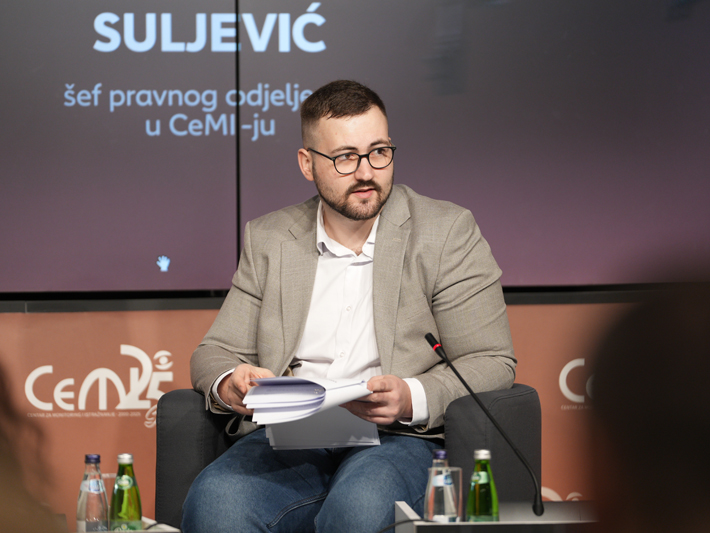
Damir Suljević, Head of the Legal Department at CeMI, stated that the application of the institution of pardon in Montenegro shows a clear trend toward a more restrictive approach, particularly following the adoption of the Law on Pardon in 2012.
“The current Law on Pardon introduced significant changes compared to the previous 1995 law, primarily by removing certain restrictions regarding the criminal offenses for which the President of the state may grant a pardon, as well as by changing the procedure itself, whereby the pardon process was removed from the jurisdiction of courts and entrusted to the Ministry of Justice,” Suljević said.
According to him, this change led to the “dejudicialization” of the pardon procedure, with applications now submitted directly to the Ministry of Justice, which collects relevant information before forwarding it to the Cabinet of the President of Montenegro.”
Suljević noted that the number of pardon applications peaked in 2013, when a total of 337 requests were recorded, followed by a continuous decline.
In the period after 2013, the number of applications ranged from 213 in 2016 to only 29 in 2020.
“The data clearly show that although the institution of pardon is applied continuously, the number of approved pardons remains relatively low, especially after 2014, which indicates a change in the understanding of its purpose,” Suljević stated.
The analysis showed that between 2006 and 2025, a total of 2,534 pardon applications were submitted, of which 533 were approved, representing 21 percent.
Suljević added that “President Filip Vujanović approved the largest number of pardon requests during his term in office.”
“Today, pardon is increasingly viewed not as an instrument of broader correction of penal policy, but rather as an exception intended for clearly limited and specific situations,” Suljević concluded.
The conference is part of the project “Support to Montenegro’s EU Integration – for an Independent and Professional Judiciary as a Key Prerequisite!”, implemented in cooperation with the Center for Investigative Journalism of Montenegro (CIN-CG) and the Center for Civil Liberties (CEGAS), funded by the European Union and co-financed by the Ministry of Public Administration of Montenegro.